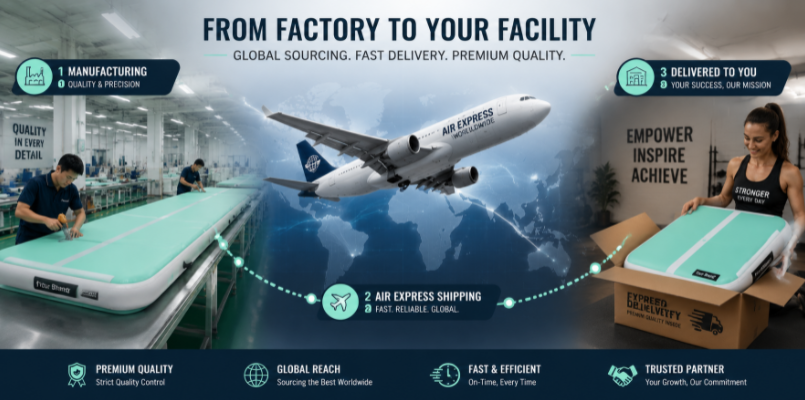
Imagine building a house without looking at the architectural blueprints, or buying a fleet of cars without taking a single one for a test drive. You probably wouldn't do it. In the world of international trade, ordering a product sample is your ultimate test drive. When you are looking to purchase high-end fitness equipment, getting a physical product in your hands is the single most important step in the entire purchasing journey.
For businesses looking to source wholesale air tracks, the path to a successful product launch always starts with a sample. But when you are dealing with overseas suppliers, timing is everything. A single delay can throw off your entire marketing calendar, push back your launch date, and cost you thousands of dollars in lost holiday sales.
If you are currently planning your inventory, you are likely asking one major question: What is the typical air track sample delivery time when importing from China? Understanding this timeline requires looking at two distinct phases: how long the factory takes to build your sample, and how long the shipping company takes to bring it to your door. Let's break down the exact timelines, hidden bottlenecks, and expert strategies you need to know to get your samples delivered quickly and safely.
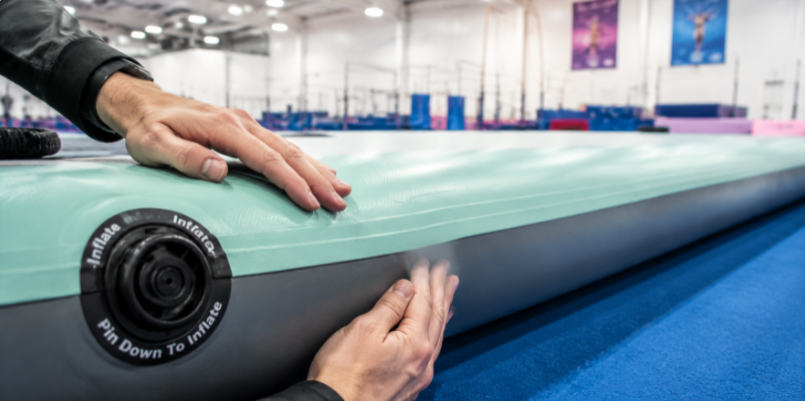
When you are importing gymnastics mats from China, time is your most valuable asset. It is easy to look at digital pictures or watch glossy factory videos online, but nothing replaces the value of a physical inspection. You need to touch the PVC material, test the air valves, check the neatness of the seams, and bounce on the mat yourself to ensure it meets your brand's standards.
Sourcing a physical sample is the absolute best way to ensure quality before risking your hard-earned capital on a massive container order. If a factory uses cheap glue, weak internal drop-stitch threads, or thin outer walls, you want to discover those flaws on a single sample, not on a bulk order of 500 units.
However, waiting for that sample can feel like watching paint dry. If you do not plan your timeline carefully, a slow sample process can stall your business growth. For instance, if a factory takes too long with the sample, you might miss the crucial back-to-school buying season or the holiday rush.
Before you can even begin calculating transit times, you must confirm that your chosen inflatable gymnastics mat manufacturer China is actually set up to handle small, one-off prototype runs. Many top-tier facilities have clear policies regarding providing samples to serious B2B buyers. Once you verify that they can build your prototype, you can start mapping out your delivery schedule.
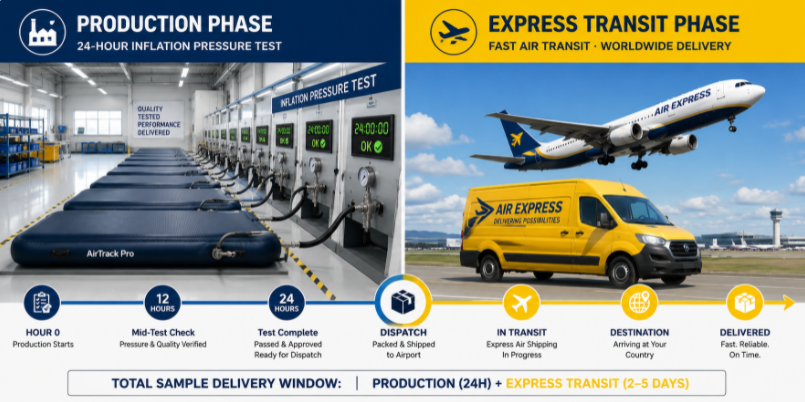
The total time it takes for a sample to arrive at your office or warehouse is split into two parts: production time and shipping time. You cannot have one without the other.
On average, the total window from the moment you pay your sample fee to the moment the delivery truck arrives at your door ranges between 10 to 25 days. Let’s break down these two phases so you can see exactly where those days are spent.
Even though it is just a single sample, a professional air track factory sample lead time is rarely instant. The factory doesn't simply pull a pre-made mat off a dusty shelf. To give you an accurate representation of their work, they build your sample from scratch.
Because samples are time-sensitive, they are almost always sent via air express couriers rather than slow ocean freight. Companies like DHL, FedEx, and UPS are the industry standards for this type of delivery.
Under normal global conditions, express air shipping from major Chinese manufacturing hubs (like Guangdong or Zhejiang) to most cities in the United States takes between 7 to 15 days. This window includes picking up the package from the factory, flying it across the Pacific, clearing U.S. Customs, and transporting it via local delivery trucks to your doorstep.
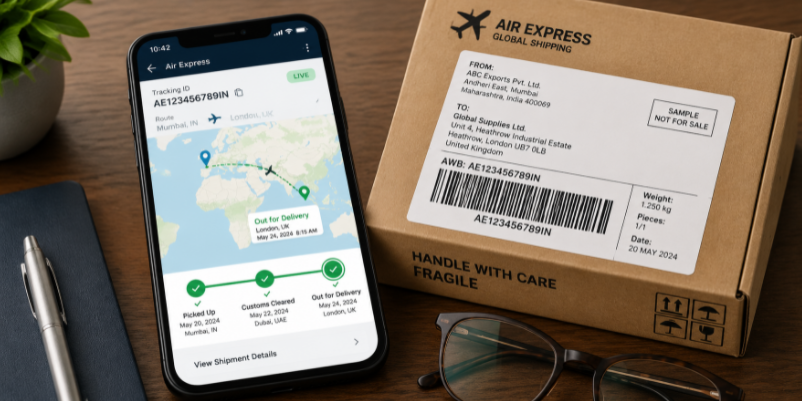
Once your package leaves the factory gates, you shouldn't have to guess where it is. Tracking an international shipment is very straightforward if your manufacturer uses top-tier express couriers.
As soon as the courier picks up the package from the factory, they generate an Air Waybill number. Your factory account manager should email or text you this 10-digit to 12-digit tracking code immediately. If they forget, do not hesitate to ask for it.
Instead of manually copying and pasting the tracking number into a search engine every morning, go directly to the courier's official website (such as DHL or FedEx). Enter your tracking number and sign up for SMS or email notifications. This ensures you get a ping on your phone the moment your gymnastics mat clears customs, lands in the country, or goes out for final delivery.
International tracking can sometimes look confusing. Here are a few common terms you will see on your tracking dashboard:
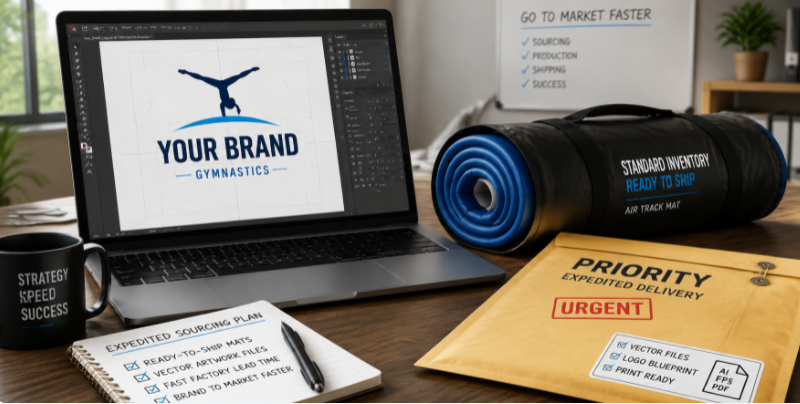
In business, time is money. If you are operating on a razor-thin schedule, waiting three weeks for a sample might not cut it. While you cannot physically make an airplane fly faster, there are several practical, real-world strategies you can use to squeeze days out of the timeline.
If you want to test the raw quality of a manufacturer's materials, stitching, and valves, you do not necessarily need your custom logo printed on the first sample. Asking for a standard, in-stock color and size (like a basic 10-foot blue air track) can slash factory production time down from a week to just 24 or 48 hours. The factory can simply grab a standard unit from their quality-testing bay and ship it immediately.
Most shipping companies offer different tiers of speed. There is standard air express, and then there is priority air express. Priority shipping costs more, but it ensures your box gets placed on the very next outgoing flight and receives fast-track handling through customs hubs. This can reduce transit time from 12 days down to 5 to 7 days.
If you do want a fully customized sample with your brand logo, any delay in your artwork files will stall production. Do not send low-resolution JPEG images or rough screenshots. Provide high-quality, print-ready vector files (such as .AI or .EPS formats) during your very first conversation. This allows the factory's design team to create the digital printing blueprints without any back-and-forth delays.
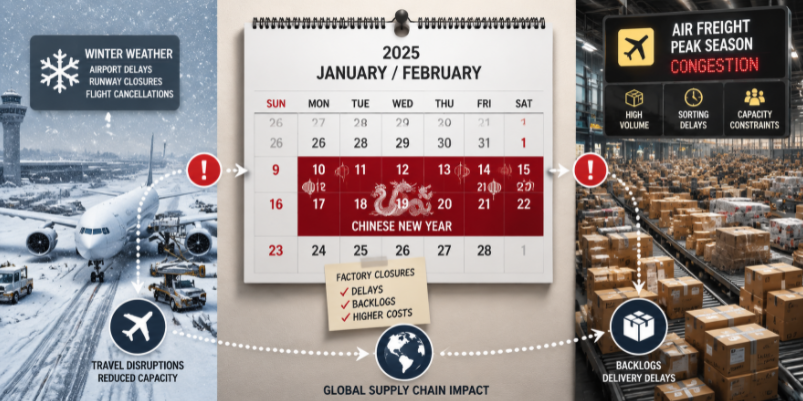
International supply chains have a lot of moving parts. Sometimes, despite the best efforts of both you and your manufacturer, unexpected delays happen. Understanding the major factors that influence timelines helps you anticipate issues before they disrupt your business.
This is the single biggest cause of sudden delays when dealing with overseas factories. During major national holidays in China, the entire country's manufacturing and logistics infrastructure pauses.
The shipping world experiences major seasonal rushes. The busiest time of the year for global logistics runs from September through December as retailers worldwide stock up for the holiday rush. During these months, cargo planes are packed to maximum capacity, air freight rates spike, and packages can sit in sorting hubs for several days simply waiting for an available flight.
Just like a popular local restaurant, an elite manufacturing facility gets busy. If a factory is currently running around the clock to fulfill a massive multi-container order for a global retail brand, your single sample order might get pushed down the priority list. Understanding the broader production lead time of the factory gives you a realistic idea of how quickly they can slot your prototype into their active production schedule.
Sourcing a high-quality product sample is the bridge that takes your business from an exciting idea to a tangible, profitable reality. While a typical delivery window of 10 to 25 days requires patience, it is a tiny investment of time that protects your business from major quality risks down the road.
The secret to seamless importing is proactive planning. Never treat the sample stage like an afterthought. Build a buffer into your product launch timeline, communicate clearly with your account manager, and use reliable air express carriers to track your investment every step of the way.
Once your sample arrives, inspect it thoroughly. Check the pressure retention, look closely at the valve seals, and put it through rigorous stress tests. The moment you are completely satisfied with the quality, you are ready to take the next big step in growing your brand. From there, you can confidently transition from prototype testing to discussing your first official minimum order quantity with your factory partner, paving the way for a highly successful product launch.
A: In the B2B importing industry, the buyer almost always covers both the sample manufacturing fee and the express air shipping costs. Because air tracks are large and relatively heavy, air express shipping for a single unit can range from $150 to $400 depending on the size of the mat. However, many professional manufacturers will agree to credit the sample fee back to your account once you place your first full container bulk order.
A: A complete sample package should mimic exactly what your end-consumers will receive when they buy your product. Ensure your factory packs the inflatable gymnastics mat along with a high-pressure electric air pump (with the correct plug style for your country's electrical outlets), a durable storage transportation bag, a user manual, and a small repair kit containing matching PVC patches and a valve tightening wrench.
A: Think of a sample like a custom-made suit. When a factory builds a single sample, they must stop their automated production lines, manually adjust their printing machinery for your specific logo, and task an expert senior craftsman with building and testing your individual unit by hand. This individual attention requires significant labor. When you buy wholesale gymnastics air tracks in bulk, those setup costs are spread across hundreds of units, which drops the price per mat dramatically.
A: Small, single-item product samples shipped via express couriers like DHL or FedEx often fall under what is called a de minimis value threshold in many countries (for example, up to $800 in the United States). If the declared value of your sample package is below this limit, it will usually clear customs quickly without facing heavy import tariffs or formal customs entry fees. Always ask your supplier to clearly label the commercial invoice as a "Product Sample for Evaluation" to ensure smooth processing.


![What Is an Air Track in Gymnastics? [Complete Guide]](http://ueeshop.ly200-cdn.com/u_file/UPBF/UPBF509/2605/13/photo/WhatIsanAirTrackinGymnastics.png)


