An air track for gymnastics is an inflatable training mat designed to give athletes a softer landing, better rebound, and safer skill progression than many hard surfaces. It has quickly become a core tool in modern gymnastics because it combines protection, performance, and portability in one product.
Think of it as a “smart runway” for skills. A regular mat is like a pillow on the floor. An air track is more like a tuned suspension system—you can adjust pressure, control bounce, and match the feel to the athlete and drill.
For gyms, schools, and wholesale buyers, this matters. The right gymnastics air track can reduce injury risk, improve class efficiency, and support more training styles without expanding floor space. In this guide, we’ll break down how air tracks work, why they are replacing traditional mats, how to choose the right specs, and how to maintain them for long commercial life.
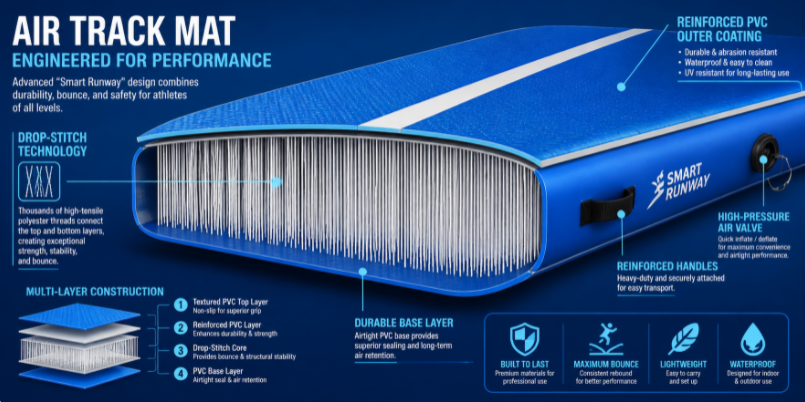
At a basic level, an air track is a high-pressure inflatable gymnastics mat made from reinforced fabric and airtight coating. Once inflated, it becomes firm enough for tumbling and jumps, yet soft enough to absorb impact.
Unlike simple inflatable toys, a gymnastics air track is built for repeated athletic use. It is engineered to hold shape under dynamic movement—cartwheels, round-offs, handsprings, back tucks, and full tumbling passes.
The “bounce” comes from controlled internal air pressure plus structural fabric support. More pressure generally means firmer feel and faster rebound. Less pressure gives softer cushioning and easier landings for beginners.
This adjustability is one reason facilities prefer a commercial air track over fixed-density mats. One track can serve warm-ups, beginner skill learning, and advanced drills just by changing pressure settings.
If you want a broader foundational breakdown, this internal resource on air track basics gives a strong overview of safety, uses, and value.
The core technology behind performance air tracks is usually Double Wall Fabric (DWF) with drop-stitch construction.
Here’s a simple way to picture it:
Those internal threads act like tiny pillars in a building. They stop the mat from ballooning outward and keep it flat and stable. This is why a good air track feels like a firm platform, not a soft pool float.
Most commercial models then add PVC or TPU coating for airtight performance, abrasion resistance, and durability. Seams are welded or bonded to reduce leakage and improve lifespan.
Why should buyers care? Because DWF and drop-stitch quality directly affect:
In short: better internal structure = better training performance and lower long-term replacement cost.
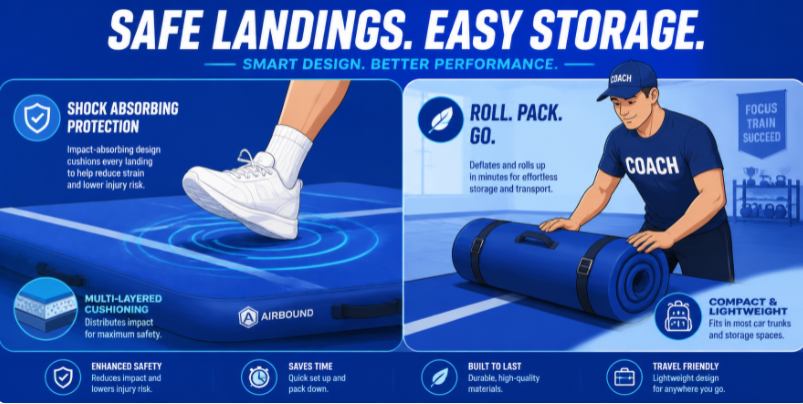
The move toward air tracks is not a trend. It’s a practical shift based on safety, coaching results, and facility operations.
Landing force is one of the biggest stress points in gymnastics. Harder surfaces push impact back into ankles, knees, hips, and wrists. A gymnastics air track cushions that force and helps reduce repetitive strain.
It works like shock absorbers on a car: the impact still happens, but the system manages it better.
For youth classes and beginner athletes, this is especially important. Confidence increases when fear of hard landings decreases.
Skill learning often depends on repetition. Athletes need many quality attempts to build timing and body awareness. Air tracks create a more forgiving space, so athletes can repeat drills with less impact fatigue.
Coaches can also tune pressure for learning stages:
That flexibility supports faster, safer progression.
Traditional mat systems can be heavy and space-consuming. Air tracks deflate, roll, and store compactly. This helps multi-use facilities where one room serves gymnastics, fitness, PE, and events.
For business buyers, portability also improves shipping and warehousing efficiency—especially for bulk or wholesale programs.
A quality inflatable gymnastics mat can support:
That “one mat, many roles” value is a major reason commercial facilities invest in air tracks.
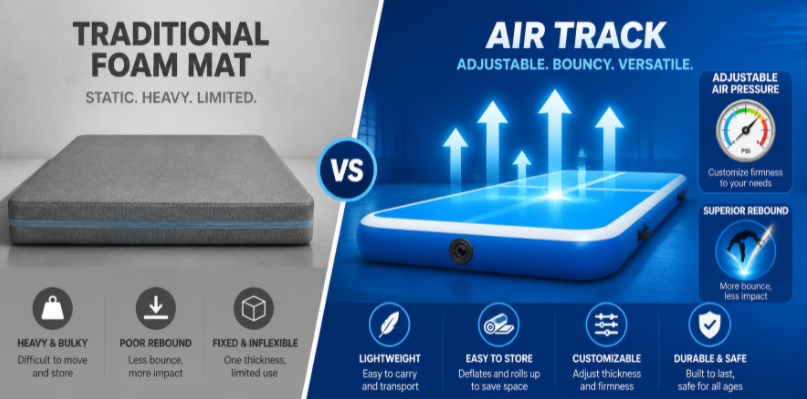
This is one of the most common buyer questions. The honest answer: it depends on use case. But for many modern programs, air tracks offer broader value.
For a deeper side-by-side breakdown, see this detailed vs foam mats comparison.
| Feature | Air Track for Gymnastics | Traditional Foam Mats |
|---|---|---|
| Cushioning control | Adjustable via PSI | Fixed |
| Rebound | Medium to high (tunable) | Low to medium |
| Portability | Deflate and roll | Bulky, harder to move |
| Storage | Compact when deflated | Requires larger storage space |
| Multi-use flexibility | High | Medium |
| Setup time | Fast with pump | Minimal setup, but heavy handling |
| Commercial lifespan | Strong if maintained | Varies; compression over time |
| Skill progression support | Excellent (pressure tuning) | Good for basics only |
Best for facilities that need versatility, adjustable performance, and better portability. Strong option for classes with mixed levels.
Still useful for static drills, floor protection, and some beginner exercises. They remain part of many gym setups.
If the goal is high repetition tumbling, progression-friendly training, and efficient space use, air tracks usually win. If the goal is simple floor padding at low intensity, foam mats can still work.
Many professional setups use both—foam mats for base protection, air tracks for dynamic skill training.
Choosing the right model is where many buyers either save money long-term—or create expensive problems. Here is a practical step-by-step framework.
Start with layout and training flow:
Common lengths range from 3 m to 15 m+. Width usually varies from 1 m to 2 m+. Longer/wider models support advanced drills and multiple users, but require more space and budget.
This internal size guide helps match dimensions to training scenarios.
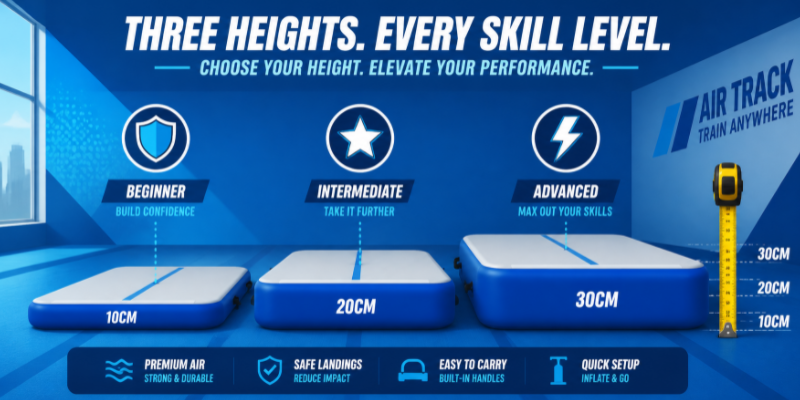
Thickness changes feel and function:
If your audience is mixed, a 20 cm model often provides a good balance.
Buy for the real user mix, not ideal conditions.
Ask for clear specs:
For commercial air track use, material quality is non-negotiable.
Operational details matter:
A track that performs well but slows class turnover can hurt daily efficiency.
Look for:
Safety should be built into the product system, not treated as an accessory.
Lowest price often means lower-grade material or weak quality control. Compare total ownership value:
For wholesale buyers, consistent batch quality is often worth more than a small unit discount.

A good air track can last for years in heavy-use environments—but only with proper care. Maintenance is like brushing teeth: small habits prevent expensive problems.
For a full care checklist, review these practical maintenance tips.
After cleaning or outdoor use, make sure the mat is completely dry before folding. Trapped moisture can cause odor, mildew, and coating damage over time.
Store in a cool, dry place away from direct sunlight, sharp edges, and heat sources. UV and heat can age material faster.
Do regular inspections:
Catch small issues early and repair quickly.
Avoid shoes with sharp edges, metal objects, or dragging the mat over rough ground. Use protective base layers outdoors when possible.
Under-inflation can feel unstable. Over-inflation increases seam stress. Follow recommended PSI ranges and recheck pressure during temperature changes.
Commercial tip: Keep a basic maintenance log for each mat. This helps track wear and plan replacement cycles before problems affect classes.
An air track for gymnastics is used for tumbling, jumps, flips, handstands, and conditioning drills. It supports both beginner learning and advanced skill progression.
Yes, when used correctly and supervised. It provides softer landings than many hard surfaces and helps reduce impact stress.
With quality materials and proper maintenance, commercial-grade models can last several years, even with frequent use.
10 cm is often good for basics; 20 cm is common for broader gymnastics use. Choose based on skill level and training goals.
Yes, but use on clean, smooth surfaces and avoid sharp debris. Dry and clean thoroughly before storage.
Base it on available space, athlete level, and drill length. Longer tracks are better for full tumbling passes; shorter units fit compact training zones.
For dynamic skills and adjustable performance, often yes. Foam mats still work well for static drills and general floor padding.
Confirm material specs, seam quality, pressure retention tests, valve quality, warranty terms, and pre-shipment inspection process.
Most manufacturers offer private-label options including colors, logos, and custom dimensions, depending on MOQ.
Ideally before each training block, especially in commercial gyms with high daily usage.
If you’re planning to add or scale air tracks for gymnastics in your facility or distribution program, now is the time to choose a system that matches your users, space, and long-term goals.
Whether you need standard models, private label options, or bulk procurement support, customization can help you create better fit and better value. Explore options to customize airtracks for your business.
A well-chosen air track is more than equipment. It’s a training upgrade, a safety investment, and a competitive advantage.


![What Is an Air Track in Gymnastics? [Complete Guide]](http://ueeshop.ly200-cdn.com/u_file/UPBF/UPBF509/2605/13/photo/WhatIsanAirTrackinGymnastics.png)


