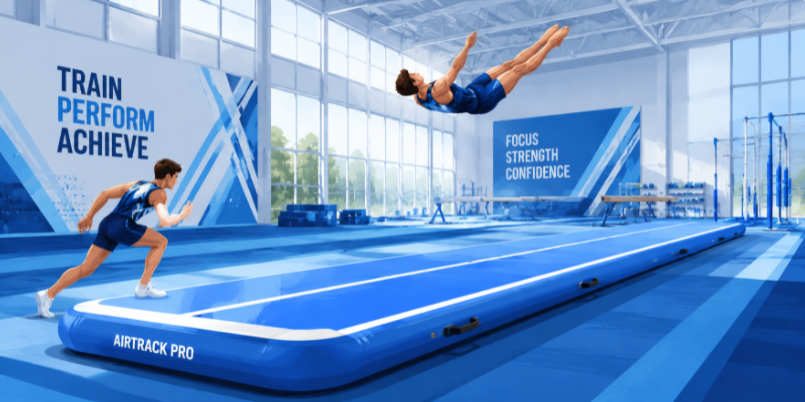
If you work in gymnastics, fitness, or sports equipment sourcing, you’ve likely heard people ask: “What is an air track in gymnastics?”
In simple terms, an air track is an inflatable training mat that gives athletes a safer, bouncier surface for tumbling and skill practice.
It looks simple from the outside, but inside, it works like a carefully tuned spring system. That’s why it has become a key tool for gyms, clubs, schools, and wholesalers focused on safe progression and better training results.
In this guide, we’ll break down what a gymnastics air track is made of, why it bounces, how it compares with traditional mats, and how to choose the right model for commercial use.
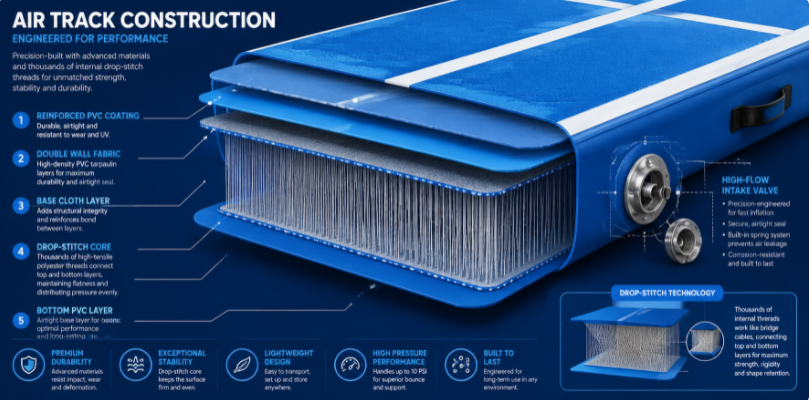
A quality gymnastics air track is not just plastic filled with air. It is built with technical layers designed for strength, stability, and long-term performance.
Inside the mat are thousands of fine vertical threads connecting the top and bottom layers. This is called drop-stitch construction.
Think of these threads like tiny bridge cables. They hold the structure together under pressure and stop the mat from ballooning out. That’s what gives an air track its flat shape and stable feel.
The core is wrapped in strong woven fabric layers, often called double wall fabric. This adds tensile strength and helps the mat hold high internal pressure.
Most commercial models use reinforced PVC coating for:
For deeper technical insight into coatings and durability, this guide on airtrack materials is very useful.
Seams are welded or bonded to prevent leaks. High-quality valves allow fast inflation and stable pressure control.
In commercial environments, valve quality matters more than many buyers realize. A weak valve can cause pressure loss and inconsistent rebound during training.
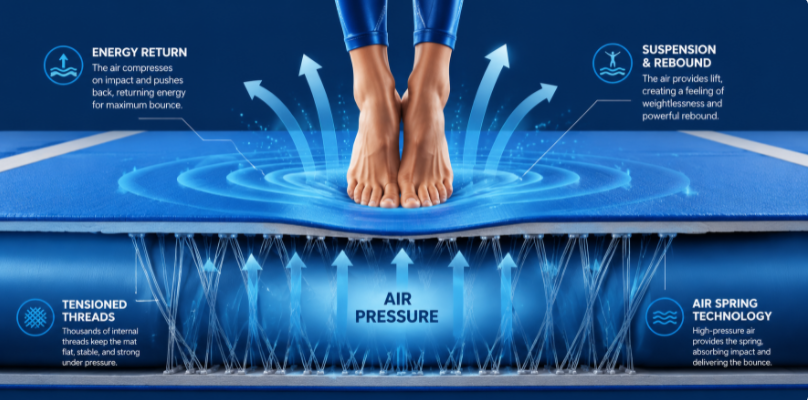
The bounce comes from two things working together:
Air pressure stores and releases energy when athletes jump or land. The drop-stitch threads control that energy so the surface stays stable and responsive.
A simple analogy:
A trampoline gives a lot of spring but less control.
A foam mat gives control but little spring.
An air track sits in the middle—like a controlled suspension system.
This controlled bounce helps with:
Another key benefit is adjustability. You can tune firmness by changing PSI:
This makes air track gymnastics training more flexible than fixed-density mats.
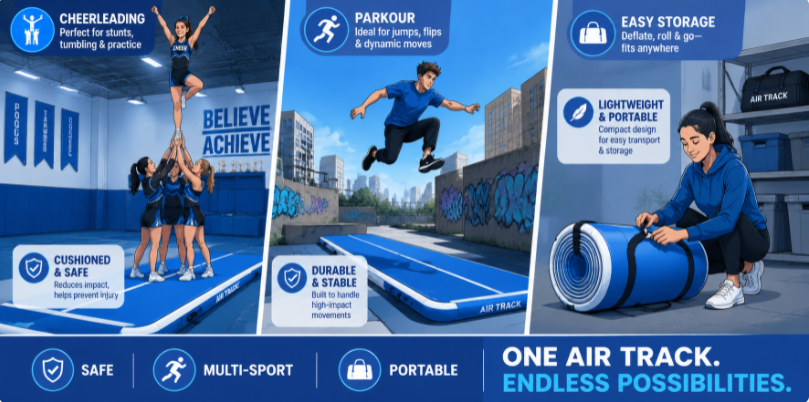
A quality inflatable gymnastics mat gives practical benefits for both athletes and business buyers.
Air tracks absorb impact better than many hard surfaces. This helps reduce stress on wrists, ankles, knees, and hips during repeated drills.
Because pressure is adjustable, coaches can match the mat feel to skill level. Beginners gain confidence. Advanced athletes get enough rebound for dynamic sequences.
One mat can support:
For facilities, this means better equipment utilization.
Unlike bulky foam systems, an air track can be deflated and rolled up. This is ideal for shared training spaces, events, and mobile programs.
For wholesalers and gym owners, a commercial air track offers strong resale and repeat demand because buyers value safety, portability, and versatility.
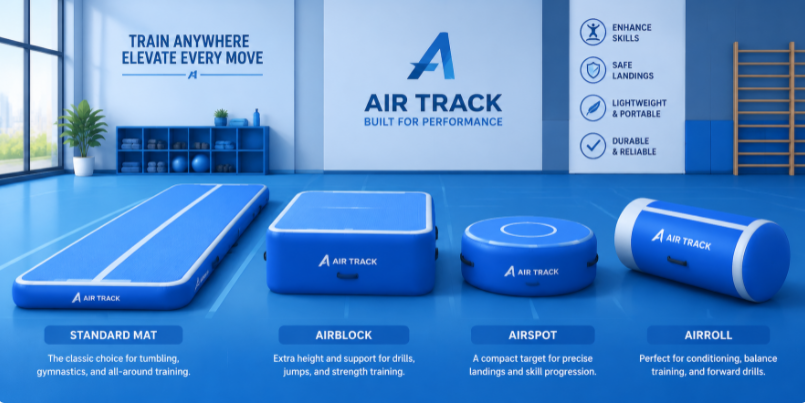
Not all air tracks are the same. Choosing the right type depends on usage, space, and athlete level.
Long rectangular mats used for general tumbling and gymnastics drills. Most common option for clubs and schools.
Smaller inflatable blocks used for jump drills, strength movements, and progression support.
Round mats often used as takeoff or landing stations for focused skill training.
Cylindrical models used for flexibility, body control, and some progression drills.
For a full breakdown of categories and recommended use cases, check this size & type guide.
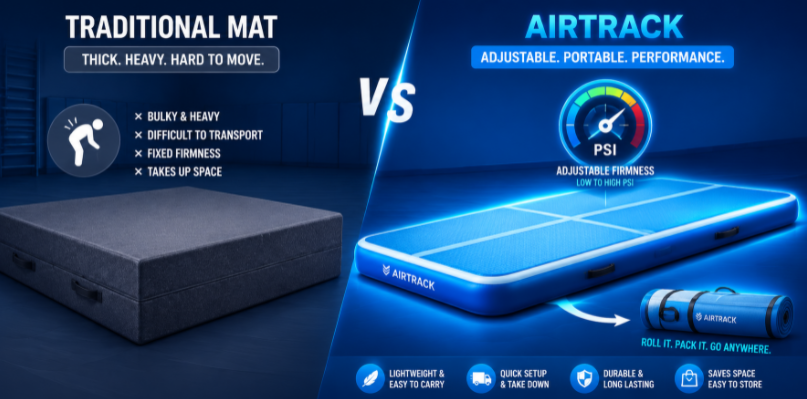
Many buyers compare air tracks with foam mats before purchasing. Both have value, but they serve different priorities.
For a deeper side-by-side review, see this direct comparison: vs foam mats.
Pros
Cons
Pros
Cons
Foam mats are like fixed cushions.
Air tracks are like adjustable training surfaces.
For dynamic skill learning, most facilities now prefer air tracks as the main lane and use foam mats as support.
If you buy only by price, you may spend more later on repairs and replacement. Here’s a smarter selection framework.
Ask:
Your answers should shape specs.
Check:
Lower-grade materials may look similar at first but wear faster in high-volume gyms.
A mat that is too short disrupts tumbling rhythm. Too wide or too long may waste space. Plan training flow, not just room dimensions.
For wholesale and facility buyers, support quality is critical:
Request inflation videos, seam close-ups, and pressure retention proof before bulk purchase.
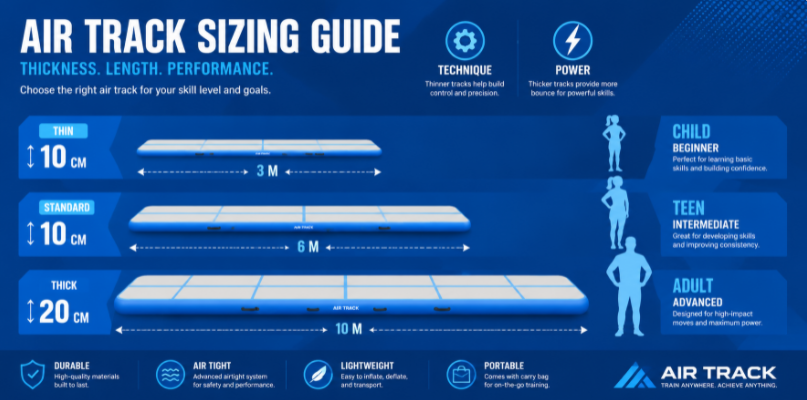
Size and thickness are the two most important specification choices.
The gymnastics air mat 10m format is popular because it balances training length and space efficiency.
Again, for detailed sizing logic, use this size & type resource.
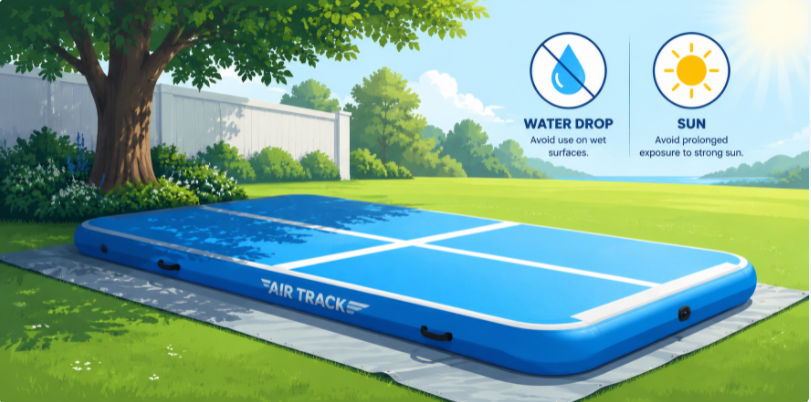
Yes, you can. Many users train outdoors on grass or smooth surfaces. But conditions matter.
Outdoor use is practical, but care discipline is essential to protect lifespan.
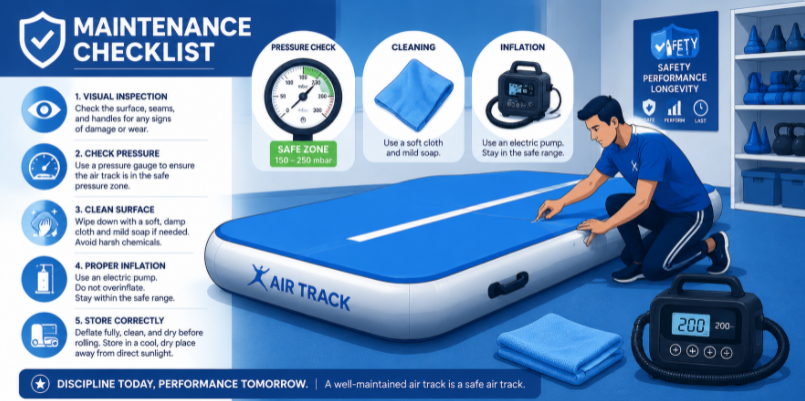
Air tracks are safer than many alternatives when used correctly. The key is consistent habits.
Think of maintenance like brushing teeth: small daily effort prevents big repair bills later.
A trampoline gives higher lift but less landing control. An air track gives controlled bounce and better spotting conditions for skill progression.
For many facilities, 6m–10m is a practical range. Advanced tumbling often needs longer lanes. Choose based on space and skill level.
No. Air tracks are used by all age groups, including advanced athletes and professional programs. Pressure can be tuned for different users.
Yes, if the ground is clean and smooth. Avoid sharp objects, excessive heat, and wet storage.
With quality materials and proper care, a commercial model can last several years under regular use.
So, what is an air track in gymnastics?
It’s an adjustable, impact-friendly training platform that helps athletes train safer and progress faster.
For gym owners, wholesalers, and sports businesses, the gymnastics air track is more than equipment—it is a long-term investment in training quality, user confidence, and operational flexibility.
If you choose the right specs, maintain it properly, and match pressure to skill level, an inflatable gymnastics mat can become one of the most valuable tools in your facility lineup.


![What Is an Air Track in Gymnastics? [Complete Guide]](http://ueeshop.ly200-cdn.com/u_file/UPBF/UPBF509/2605/13/photo/WhatIsanAirTrackinGymnastics.png)


