"To confirm the quality of inflatable gymnastics mats when importing from China, request detailed quality checks from the supplier, including material tests and certifications. You should also verify durability and ensure safety standards are met."
Introduction: Why Quality Matters When Importing Inflatable Gymnastics Mats
What Certifications Should Be Provided for Quality Assurance?
Conclusion: Ensuring the Quality of Your Inflatable Gymnastics Mats for a Successful Import
As a B2B buyer importing inflatable gymnastics mats from China, quality assurance is the cornerstone of your purchasing decision. You’re investing in products that need to withstand heavy use in sports facilities, so it’s crucial to confirm that the mats meet the required standards for safety, durability, and performance. Without rigorous quality checks, you risk receiving defective products, which could lead to operational delays, increased costs, or even customer safety issues.
The process of importing inflatable gymnastics mats involves numerous steps, but verifying quality is one of the most critical aspects. It’s not just about getting a product at the right price, but about ensuring that it provides the long-term value and reliability your business needs. In this article, I’ll walk you through how to effectively confirm that the quality of the mats meets the required standards before placing a bulk order.
When importing inflatable gymnastics mats from China, it's essential to ensure that the products meet your quality expectations. As a B2B buyer, requesting specific quality checks from your supplier will help you avoid costly mistakes. Below are some key checks to request:
Material Quality Testing:
One of the most important aspects of inflatable gymnastics mats is the material used in their construction. Ask the supplier to provide material certification or test reports that verify the quality and strength of the materials. The material should be durable, non-toxic, and resistant to wear and tear. The most common material used in these mats is PVC tarpaulin or Oxford cloth, which should be both water-resistant and tear-resistant. Be sure to ask for lab test results for these materials.
Seam Strength and Durability:
The seams of inflatable gymnastics mats are crucial for their durability. Poor seam construction can result in leaks or product failure over time. Request information on how the mats are sealed—are they heat-sealed or glued? Heat-sealing is generally more durable, as it provides stronger bonding. Also, inquire about the stitching quality and how many layers of stitching are used.
Inflation and Deflation Tests:
Since inflatable mats need to be easy to inflate and deflate, request a demonstration of the inflation and deflation process. Check how long it takes to inflate the mat, whether it holds air properly, and if there are any issues with leaking. Ensure that the valves used for inflation are durable and easy to operate.
Weight and Size Verification:
To ensure that the mats meet your specifications, confirm the dimensions and weight of the sample. While the size is often predetermined, it’s essential to ensure that the mats meet your specific needs (e.g., for gymnasium use, competition mats, or home gyms). Weighing the mats will also give you an idea of the quality of materials used—lighter mats might be lower quality.
Product Durability Under Use:
Ask for samples of the mats that have already been tested under normal use conditions. A reliable supplier will have experience testing their products for endurance, particularly under high-impact use such as gymnastics, cheerleading, or parkour. Request any data or reports on product longevity and wear resistance.
Safety Checks and Compliance:
For peace of mind and to ensure that the mats are safe to use, request that the supplier provide safety certificates such as CE (Conformité Européenne) or RoHS (Restriction of Hazardous Substances). These certifications ensure that the mats meet international safety and environmental standards, and that they do not contain harmful substances. Additionally, make sure the mats comply with any local regulations in your country, especially if they are to be used in commercial settings.
Visual Inspection for Defects:
Before committing to a larger order, visually inspect the sample for any visible defects such as scratches, uneven stitching, or faulty valves. The aesthetic appearance of the product may seem minor, but for a B2B buyer, consistent visual quality indicates a well-managed production process.
By requesting these quality checks, you’re ensuring that your purchase of inflatable gymnastics mats from China will meet both your business needs and safety standards. Don’t hesitate to ask the supplier for detailed testing reports, photos, or videos of their process. Being thorough in this initial stage can save you significant time and money in the long run.
Ensuring the durability and safety of the inflatable gymnastics mats you import from China is essential for the success of your business. These mats are used in environments where they endure a lot of physical activity, so it’s important to make sure they can handle the demands placed on them. Here's how you can confirm the durability and safety of the mats before finalizing your purchase:
Material and Construction:
The first step in ensuring durability and safety is to verify the quality of the materials used. As mentioned earlier, PVC tarpaulin and Oxford cloth are common materials used in inflatable mats, and they should be strong enough to resist tears, punctures, and abrasions. You should request information about the thickness of the materials, as thicker mats generally offer better durability.
Additionally, make sure that the materials used are non-toxic and meet international safety standards such as REACH or RoHS. These certifications ensure that the materials are free from hazardous substances and are safe for athletes to use.
Inflation and Deflation Mechanism:
The ability to inflate and deflate quickly is crucial for both safety and convenience. Mats that take too long to inflate or deflate may pose a risk in emergency situations, especially in a gym setting where quick setup and breakdown are often required.
Make sure the valves used in the mats are of high quality and can withstand multiple uses without malfunctioning. Request a demonstration of how the mat inflates and deflates, and check for any leaks or loss of air over time. Durability tests under real-life conditions should be conducted to ensure that the inflation system holds up during continuous use.
Load-Bearing Capacity:
Another important factor in durability is the load-bearing capacity of the mat. It’s vital to ensure that the mats can withstand the weight and impact that comes with frequent use, especially in high-intensity environments.
Ask the supplier about the maximum weight capacity the mat can support. For example, mats used for gymnastics or cheerleading must be strong enough to handle the weight of multiple athletes during practice or performance. Request that the supplier provide testing reports or certifications that confirm the mats can safely handle the weight and pressure typically exerted on them.
Safety Features:
In addition to durability, safety is a top concern. You’ll want to ensure that the mats are designed with features that minimize the risk of injury. Look for mats with rounded corners and smooth edges, which can help prevent injuries from accidental bumps or falls.
Furthermore, check if the mats are equipped with anti-slip surfaces. Gymnastics mats should have a secure grip to prevent slipping, even in wet conditions. The texture of the surface should offer sufficient traction for athletes without compromising their performance or comfort.
Conducting Stress and Durability Tests:
Request that the supplier performs stress tests on the mats to simulate long-term use. These tests will show how the mats hold up under repeated jumping, rolling, and landing. Additionally, you can request that the mats undergo abrasion resistance testing to ensure they don’t wear out prematurely.
Some suppliers may even be able to provide third-party testing results, which can give you further peace of mind that the mats have been independently tested for both durability and safety.
Factory Inspections and Certifications:
Another way to ensure that the mats are durable and safe is by inspecting the factory or requesting third-party inspection services. An on-site visit allows you to verify that the manufacturing processes are aligned with industry standards, and that the production facility adheres to safety protocols.
If visiting the factory is not feasible, request that the supplier provides third-party inspection reports from reputable agencies. This will give you an impartial assessment of the mats' quality and ensure that they meet the required safety and durability standards.
Product Testing by End Users:
If possible, test the mats with actual users (athletes or gym professionals) to ensure they perform as expected in real-world conditions. You can even request feedback from the supplier about how the mats have held up in other environments or businesses. This user feedback can help you gauge the long-term performance of the mats.
By following these steps, you can ensure that the inflatable gymnastics mats you import from China are not only durable but also safe for use in demanding environments. Safety and durability go hand in hand—while durability ensures the mats last over time, safety features ensure the well-being of your customers and athletes.
Verifying the material quality of inflatable gymnastics mats is critical to ensure that they perform well and last long, especially in demanding environments. As a B2B buyer, you need to be certain that the materials used meet both safety standards and performance requirements. Here’s how you can verify the quality of the materials used in the mats:
Request Material Certifications and Reports:
One of the first steps in confirming the quality of the material is to ask the supplier for material certifications. Reliable suppliers will provide certifications that show the materials used are of high quality and compliant with international standards. Look for certifications such as REACH (Registration, Evaluation, Authorization, and Restriction of Chemicals) or RoHS (Restriction of Hazardous Substances), which ensure that the materials are free from harmful chemicals and safe for use.
Additionally, ask for test reports on the specific materials, particularly for the PVC tarpaulin or Oxford cloth commonly used in inflatable gymnastics mats. These reports should verify key properties such as tear strength, abrasion resistance, and waterproofness. High-quality mats should be able to withstand wear and tear over time, even under constant pressure and heavy use.
Check for Durability Tests:
Materials used in inflatable gymnastics mats must be tested for durability. The supplier should be able to provide results from tests that evaluate the resistance of the material to abrasion, UV degradation, tear strength, and puncture resistance. Durable materials should not easily wear out or lose their integrity after prolonged use, which is especially important in environments like gyms and training centers.
Ask the supplier for specific lab test reports that demonstrate how the material has performed in these tests. For example, materials that are more prone to abrasion will show visible damage after repeated use, so ensuring that the mats pass these tests is crucial.
Assess Material Thickness and Weight:
The thickness of the material is another key indicator of quality. For inflatable mats, thicker materials generally offer greater strength and durability. Ask the supplier to confirm the thickness of the material in millimeters and to provide you with a sample that matches these specifications. You can also request the weight of the mats to ensure that they align with the advertised quality.
While thicker materials are generally more durable, they should not be too heavy to the point where they become difficult to move or set up. Make sure the weight and thickness are balanced to ensure both durability and ease of use.
Verify the Use of Non-Toxic Materials:
Safety is paramount when importing inflatable gymnastics mats, as they are used by athletes of all ages. Therefore, it’s essential to ensure that the materials are non-toxic and safe for prolonged skin contact.
Request that the supplier provides documentation that the materials used do not contain harmful substances like phthalates, lead, or formaldehyde. The supplier should be able to provide safety data sheets (SDS) or material composition reports that confirm the materials are free from these harmful chemicals. Certifications such as OEKO-TEX or CPSIA (Consumer Product Safety Improvement Act) can also be requested to verify that the materials comply with safety standards.
Sample Inspection:
One of the most effective ways to verify material quality is through a physical inspection of the sample. When you receive a sample from the supplier, examine the material closely. Check for the following:
Third-Party Lab Testing:
If you want an extra layer of verification, you can request that the supplier send the material for third-party lab testing. Independent labs can assess the material’s quality and provide an unbiased evaluation. Some suppliers may already have established relationships with testing labs and can easily arrange this for you.
Third-party testing can include a range of factors, such as checking fire resistance, chemical composition, and environmental impact. If the supplier is unwilling or unable to provide these results, it could indicate potential issues with their quality control processes.
Material Samples for Field Testing:
If you’re still uncertain about the material’s quality, you can perform your own field testing. If possible, test the sample in real-world conditions—how does it perform after being inflated and used for a day of gymnastics practice or in other high-intensity activities? Does it hold up to the expected wear and tear? Field testing gives you the opportunity to evaluate the material’s quality and performance firsthand.
By following these steps, you can ensure that the materials used in your inflatable gymnastics mats meet the necessary standards for durability, safety, and performance. This thorough approach to material verification will help you make an informed decision before committing to a bulk order.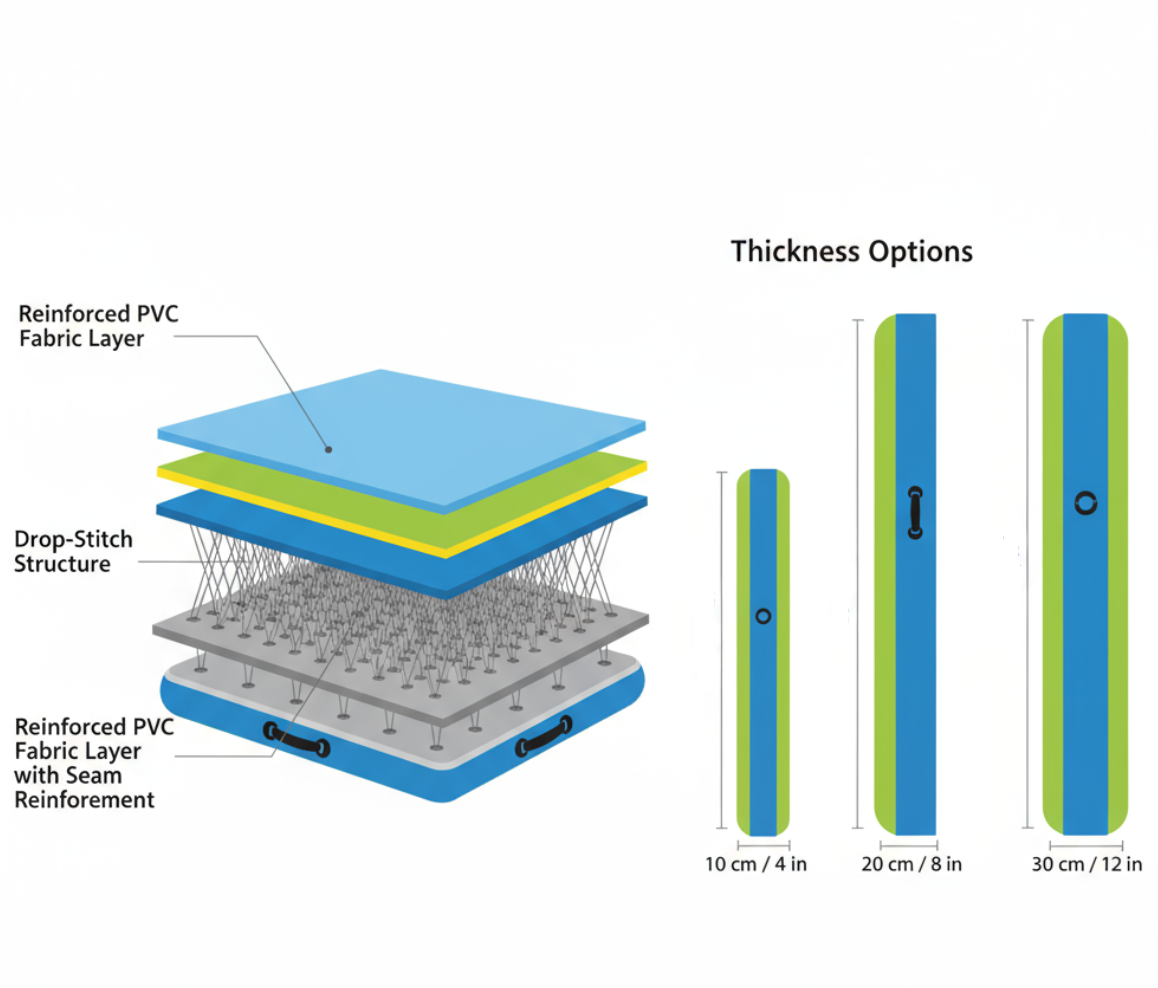
When importing inflatable gymnastics mats from China, certifications ensure that the mats meet international safety, durability, and material standards. Below is a concise table summarizing the essential certifications you should request from the supplier:
| Certification | Description | Importance |
|---|---|---|
| ISO Certifications | Includes ISO 9001 (quality management) and ISO 14001 (environmental management). | Ensures the supplier follows structured, high-quality manufacturing processes and environmental management. |
| CE Certification | Confirms compliance with EU safety, health, and environmental standards. | Essential for selling in the European market, ensuring the mats meet safety regulations for consumer products. |
| SGS Certification | Third-party certification for product testing, including material strength, durability, and compliance with standards. | Verifies that the inflatable mats are safe, durable, and conform to international quality standards, such as abrasion resistance and chemical safety. |
| RoHS Certification | Confirms that the mats do not contain hazardous substances like lead or mercury. | Guarantees that the mats are non-toxic and safe for use, particularly in environments involving children or athletes. |
| REACH Certification | Ensures compliance with REACH regulations regarding the use of chemicals in the EU. | Validates that the mats’ materials do not contain harmful chemicals, ensuring both safety and environmental sustainability. |
| CPSIA Certification (For U.S. Imports) | Ensures safety for products intended for children under 12 years old, especially regarding lead content and phthalates. | Required for inflatable mats sold in the U.S., ensuring they comply with safety standards and are free of harmful substances. |
| BSCI Certification | A social compliance certification that ensures ethical labor practices in the production process. | Provides assurance that the supplier meets ethical labor standards, which is important for businesses concerned with corporate responsibility. |
By requesting and reviewing these certifications, you can ensure that the inflatable gymnastics mats meet both safety standards and quality expectations. Certifications provide peace of mind, helping you avoid potential issues down the road. They also help maintain compliance with international regulations, ensuring that you can import the mats legally and sell them without complications.
As a B2B buyer importing inflatable gymnastics mats from China, ensuring the quality of the mats is paramount to the success of your purchase and long-term business operations. By following the steps outlined in this article, you can take proactive measures to verify the mats' material quality, durability, and safety before committing to a large order. Here's a summary of what you should do to ensure that the inflatable gymnastics mats you import meet the required standards:
Request Comprehensive Quality Checks:
Always ask the supplier to provide detailed information on the materials used, the manufacturing process, and the quality checks they implement. Key tests, such as material strength, tear resistance, and inflation durability, should be performed to ensure the mats will withstand heavy use. Request certification reports and lab test results for material properties like abrasion resistance, flexibility, and waterproofness.
Verify the Durability and Safety of the Mats:
Ensure that the inflatable gymnastics mats meet both durability and safety requirements by testing them for load-bearing capacity, inflation and deflation speed, and anti-slip features. Durability tests under real-life conditions and a thorough inspection of the seams and materials will give you confidence that the mats will perform well in demanding environments.
Confirm Material Quality with Certifications:
To ensure that the materials used are of the highest quality, request important certifications such as ISO, CE, SGS, RoHS, REACH, and CPSIA. These certifications will confirm that the mats comply with international safety and environmental standards, and that they are safe for use in public and athletic environments. Don't hesitate to ask for test reports to verify the material properties and to ensure the absence of harmful substances.
Perform Physical and Field Testing:
Before making a bulk order, requesting a sample is one of the best ways to ensure that the mats meet your quality expectations. Conduct your own field testing by using the mats in actual gym environments or under conditions similar to those they will be exposed to. This will allow you to assess the mats’ performance and durability in real-world conditions.
Check Supplier’s Reputation and Compliance:
Work with reputable suppliers who can demonstrate a consistent track record of delivering high-quality products. Look for suppliers with certifications like ISO 9001 and BSCI to ensure they are committed to quality management and ethical practices. A transparent supplier will readily provide the certifications and testing reports you request, and will be open to addressing any concerns you may have.
By carefully verifying these aspects before placing a large order, you can avoid costly mistakes and ensure that the inflatable gymnastics mats you import meet the high standards required for your business. This diligence not only protects your investment but also ensures that your customers receive safe, durable, and high-quality products that they can trust.
What are the most common quality issues when importing inflatable gymnastics mats from China?
Common quality issues include leaks, poor seam integrity, material defects, and inconsistent inflation performance. Ensuring that the supplier provides detailed quality checks and certifications can help prevent these problems.
How do I request a sample to check the quality before committing to bulk orders?
When contacting the supplier, specify that you would like to receive a sample of the inflatable gymnastics mat for testing. Ask them to provide test reports, material certifications, and a demonstration of the mat's durability and safety features.
Can I visit the factory to inspect the quality of inflatable mats?
Yes, visiting the factory is a great way to ensure that the mats are being produced according to your specifications. If an in-person visit is not feasible, you can request third-party inspection services to evaluate the factory and products before shipment.
What are the safety standards for inflatable gymnastics mats?
Inflatable gymnastics mats must meet CE, ISO, and other relevant certifications to ensure they comply with safety standards, including flammability, chemical content, and load-bearing capacity.


![What Is an Air Track in Gymnastics? [Complete Guide]](http://ueeshop.ly200-cdn.com/u_file/UPBF/UPBF509/2605/13/photo/WhatIsanAirTrackinGymnastics.png)


