In the world of unbranded industrial inflatables, "counterfeit" rarely means a fake brand logo. Instead, it means material fraud: receiving a 0.18mm balloon when you paid for a 0.4mm commercial sphere, or getting a dull gray film instead of a true mirror finish.
The risk isn't just financial—it's reputational. A "fake" mirror ball looks cheap, leaks air, and ruins the event aesthetics you promised your client. The solution lies in strict verification and knowing exactly what to ask for. If you need a trusted source for specific designs, check customize inflatable mirror balls.
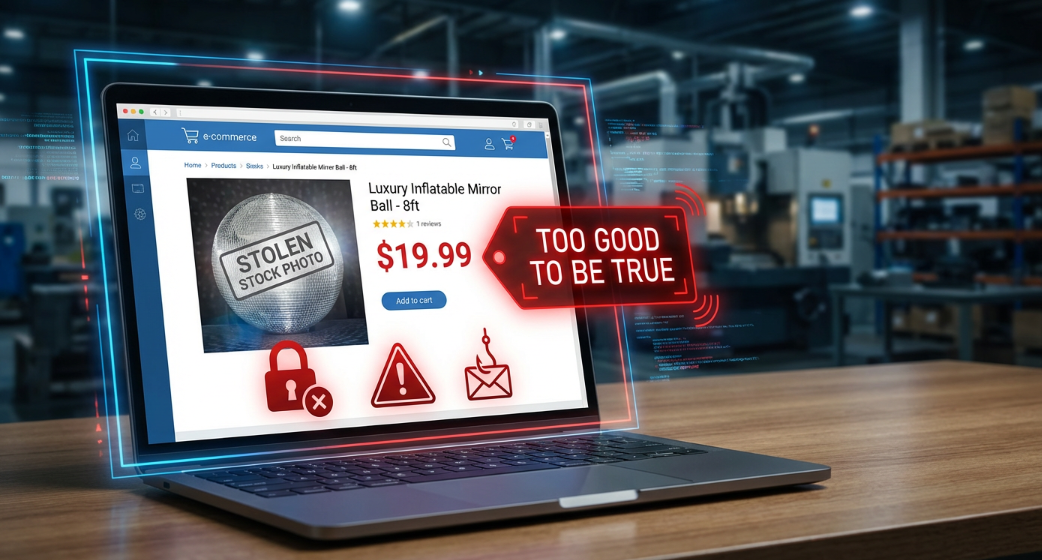
Scammers and low-quality workshops often give themselves away before you even speak to them. Watch for these common indicators of material fraud or capability misrepresentation:
| Red Flag | What It Means |
|---|---|
| Price >30% below average | Likely using thin toy-grade PVC (0.18–0.2mm) instead of commercial grade (0.4mm+). |
| Stolen stock photos | If you see the exact same glossy photo on five different supplier pages, reverse-search it. The one with the original high-res watermark is usually the real manufacturer[1]. |
| Vague specs | Refusal to specify material thickness (e.g., "Standard material") or distinguishing between PVC and TPU. |
| "In Stock" for everything | Real commercial orders are usually made to order. Having thousands of large custom units "in stock" suggests mass-produced, low-quality inventory. |
| No factory video | Unwillingness to do a quick live video call to show the production line or raw material stock. |
If a supplier promises a "mirror finish" but only shows 3D renders or blurry photos, assume the reality is disappointing.
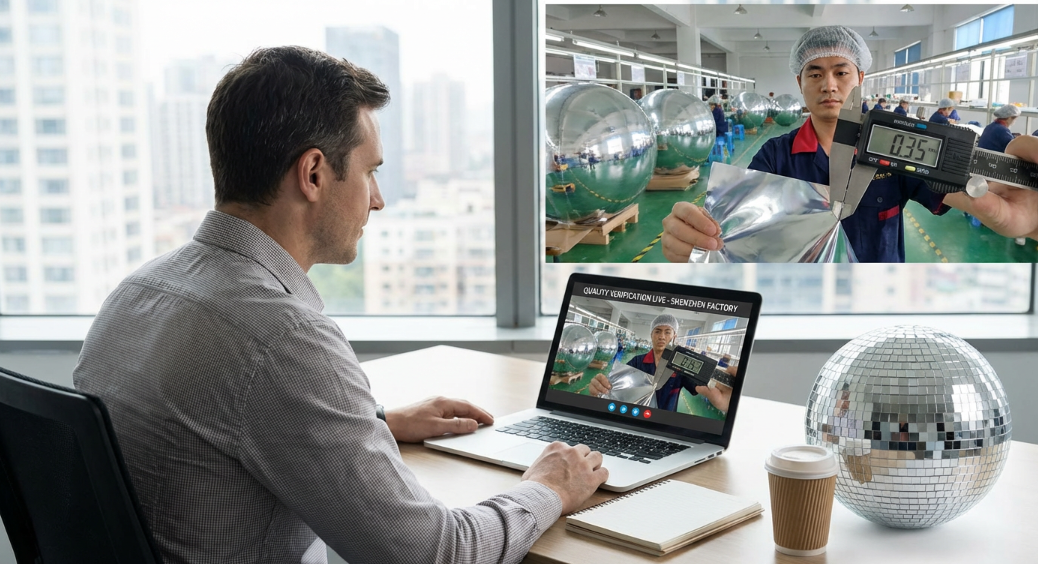
Since these are often unbranded goods, "authenticity" means verifying capability. You need to prove they can actually make what they claim.
Verification Checklist:
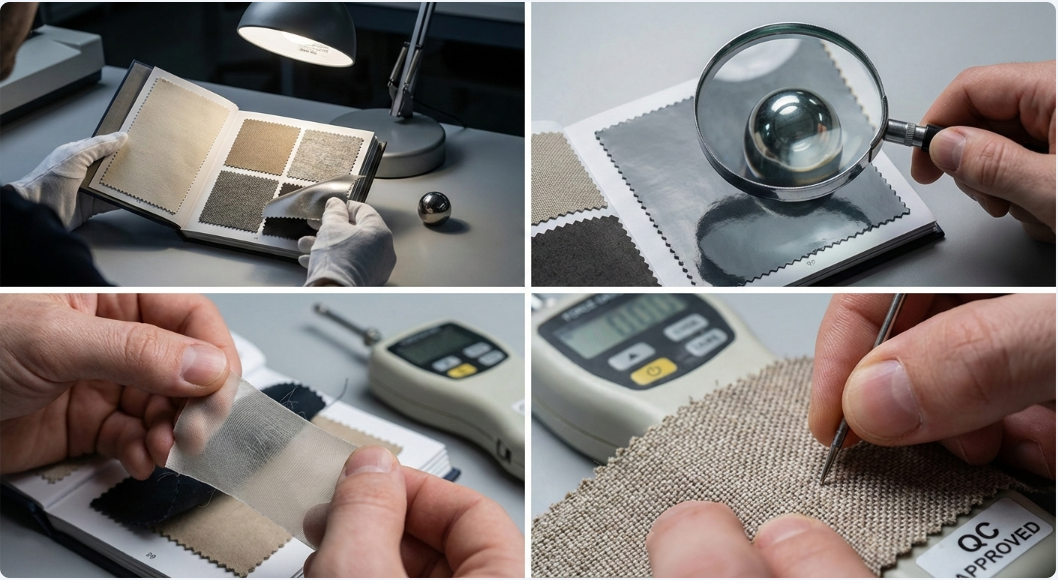
Yes. While shipping a full-size 2-meter ball is expensive, there are cost-effective ways to sample.
Sample Strategy:
What to test on the sample:

If you receive goods that are clearly inferior to the sample or description (e.g., dull grey instead of chrome, or thin plastic that bursts), take immediate action.
Action Plan:
Avoiding "counterfeit" inflatable mirror balls is about defending your specifications. The market is flooded with toy-grade balloons masquerading as event decor.
By identifying price anomalies, verifying factories via video, testing samples for thickness and seam quality, and using secure payment methods, you can filter out the noise. The goal is to find a partner who delivers the durability you paid for, not just a photo that looks good online. If you need verified quality and custom specs, visit customize inflatable mirror balls.
[1] Google Images — Reverse Image Search Guide
https://images.google.com/
[2] ASTM D6988 — Standard Guide for Determination of Thickness of Plastic Film Test Specimens
https://www.astm.org/d6988
[3] ASTM D1003 — Standard Test Method for Haze and Luminous Transmittance of Transparent Plastics
https://www.astm.org/d1003
[4] Alibaba Trade Assurance — Buyer Protection Guide
https://tradeassurance.alibaba.com/
[5] SGS — Consumer Goods Inspection Services
https://www.sgs.com/en/consumer-goods-retail/hardgoods/home-furnishings-and-houseware/inspection


![What Is an Air Track in Gymnastics? [Complete Guide]](http://ueeshop.ly200-cdn.com/u_file/UPBF/UPBF509/2605/13/photo/WhatIsanAirTrackinGymnastics.png)


