To ensure inflatable gymnastics mats (Air Tracks) imported from China are fire-resistant, B2B buyers must specify Flame Retardant (FR) PVC—typically treated with additives like antimony trioxide—during the manufacturing process. Standard mats are often made from high-tenacity DWF (Double Wall Fabric), but they are not inherently fireproof unless they meet specific standards like EN 71-2 or NFPA 701. Professional buyers should request a formal test report from a certified lab (e.g., SGS or Intertek) and include fire-resistance requirements in their Proforma Invoice (PI) to ensure compliance with local safety regulations.
Table of Contents
- How Can I Ensure the Mats are Fire-Resistant?
- Are Fire-Resistant Mats More Expensive?
- What Materials Make Inflatable Mats Fire-Resistant?
- How Do I Request Fire-Resistant Mats from the Supplier?
- Interactive Quiz: Is Your Stock Safety-Compliant?
- Conclusion
- References
1. How Can I Ensure the Mats are Fire-Resistant?
For B2B buyers, especially those supplying schools or public gymnasiums, "fire-resistant" isn't just a feature—it's a legal requirement. In the UK and USA, indoor gym equipment must often pass strict flammability tests.
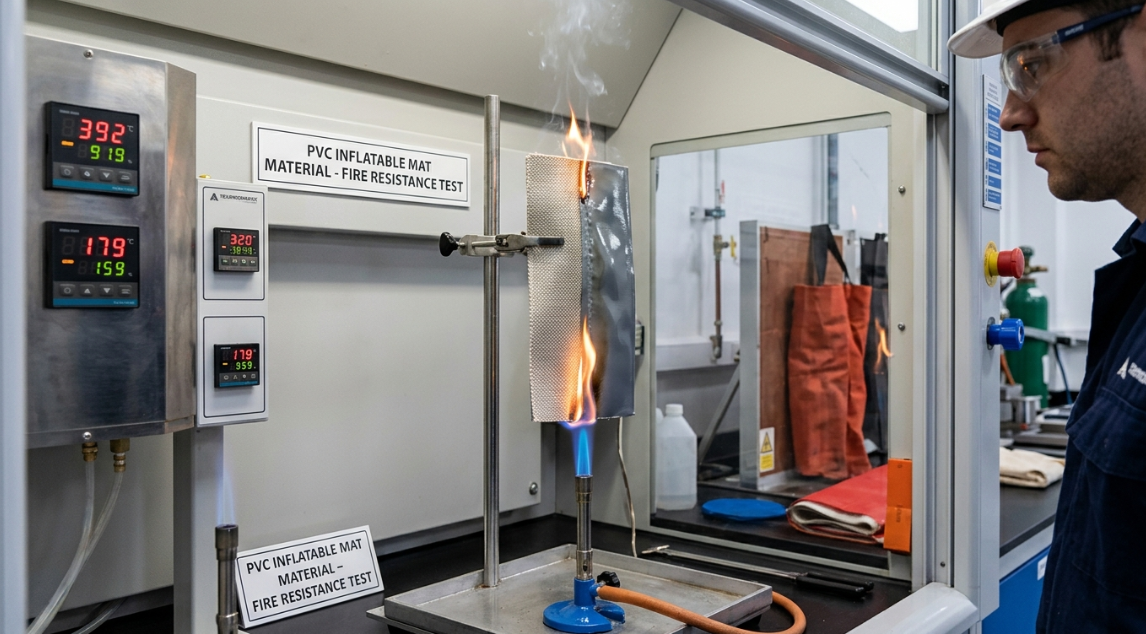
- Third-Party Certification: Do not take a supplier’s word at face value. Request valid test reports for EN 71-2 (Europe) or NFPA 701 (USA). These certifications ensure that the PVC material will self-extinguish within seconds once the flame source is removed.
- Physical Testing: If you are visiting the factory in China, you can perform a "Cigarette Test" or a small-scale flame test on a material swatch. The material should char rather than melt and drip.
- Batch Verification: Ensure the Customize Air Tracks process includes a requirement for the specific batch of PVC used in your order to be tested, as material quality can vary between production runs.
2. Are Fire-Resistant Mats More Expensive?
The short answer is: Yes. Adding fire-retardant properties to PVC requires specialized chemical additives, which increases the raw material cost.
- Premium Pricing: Typically, fire-resistant Air Tracks cost 10% to 20% more than standard versions. This covers the cost of the FR-grade PVC and the specialized manufacturing process required to maintain material flexibility.
- Wholesale Strategy: While the upfront cost is higher, fire-resistant mats carry a higher retail value on platforms like Amazon and eBay. Buyers are often willing to pay a premium for "Professional Grade" or "Commercial Grade" safety features.
- Insurance Benefits: For gym owners, using fire-certified mats can significantly lower liability insurance premiums, making the initial investment highly cost-effective in the long run.
Cost vs. Safety Comparison
| Feature |
Standard Air Track |
Fire-Resistant Air Track |
| Material |
Standard 1000D PVC |
FR-Additive 1000D PVC |
| Manufacturing Cost |
Base Price |
+15% Average |
| Market Positioning |
Home/Recreational Use |
Professional/Commercial Use |
| Compliance Risk |
Moderate (Region Dependent) |
Low |
3. What Materials Make Inflatable Mats Fire-Resistant?
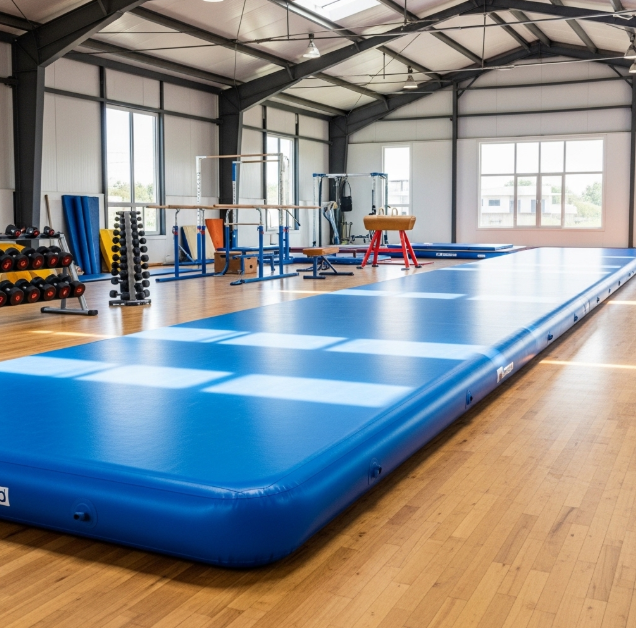
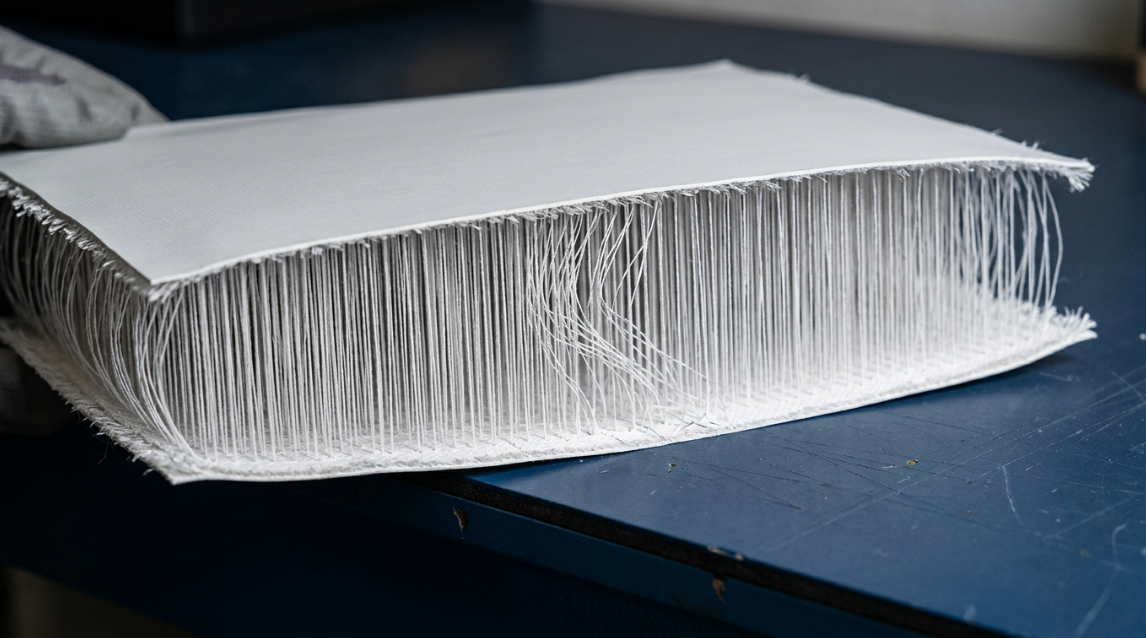
The "fire-resistant" nature of a mat is determined by the chemistry of its skin—the Double Wall Fabric (DWF) and the PVC coating.
- Flame Retardant PVC: The coating is infused with chemical agents (like Antimony or Brominated compounds) that interfere with the combustion cycle. This prevents the fire from spreading across the surface of the mat.2
- Heat-Welded Seams: High-quality mats use heat-welding rather than just glue. Glues can be flammable, whereas heat-welded seams maintain the integrity of the fire-resistant PVC envelope.
- Internal Fiber Core: While the external PVC is the primary barrier, a high-quality DWF core ensures that even if a small area is damaged by heat, the mat will not experience a catastrophic structural failure.
4. How Do I Request Fire-Resistant Mats from the Supplier?
When sourcing from China, clarity in your Purchase Order (PO) is the difference between a compliant product and a shipment held at customs.
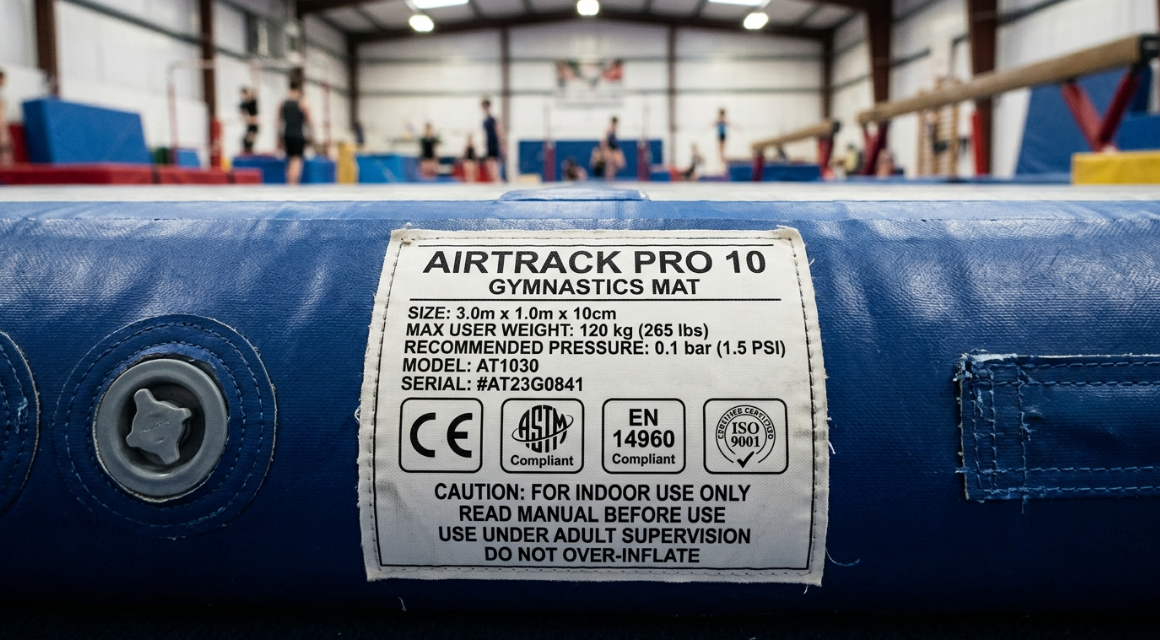
- Use Precise Language: Instead of "fireproof," use "Flame Retardant (FR)" or reference specific standards like BS 5852 (UK) or California Technical Bulletin 117 (USA).
- Sample Testing: Always order a sample from the FR batch first. Use this sample to conduct your own local testing before committing to a full container.
- Include in the Contract: Explicitly state: *"All products must comply with EN 71-2 fire safety*"All products must comply with EN 71-2 fire safety standards. Supplier must provide a corresponding test report for this specific batch."*
Interactive Quiz: Is Your Stock Safety-Compliant?
1. A customer asks if your mats are safe for a public school. What should you provide?
- A) A screenshot of the factory's website saying "High Quality."
- B) A verified EN 71-2 or NFPA 701 test report from a third-party lab.
- C) A photo of the mat with a "Fireproof" sticker you printed.
2. What happens to fire-resistant PVC when exposed to a small flame?
- A) It bursts into flames immediately.
- B) It melts into a liquid and continues to burn.
- C) It chars and self-extinguishes once the flame is removed.
*(Answers: 1-B, 2-C. If you answered correctly, you'(Answers: 1-B, 2-C. If you answered correctly, you're ready to dominate the high-end gymnastics market!)
Conclusion
Inflatable gymnastics mats from China can have fire-resistant features, but they are not standard. As a B2B buyer, you must be proactive in specifying materials and verifying certifications. By investing in fire-resistant features, you not only meet legal requirements but also build a brand that stands for safety and professionalism—protecting your margins and your customers.
References
- ISO Standards: https://www.iso.org/standard/71618.html — Safety requirements and test methods for gymnastics equipment.
- ASTM International: [https://www.astm.org/f2970-22.html]— Standard Practice for Design and Manufacture of Inflatable Sports Equipment.
- National Fire Protection Association (NFPA): https://www.nfpa.org/codes-and-standards/all-codes-and-standards/list-of-codes-and-standards/detail?code=701 — Standard Methods of Fire Tests for Flame Propagation of Textiles and Films.


![What Is an Air Track in Gymnastics? [Complete Guide]](http://ueeshop.ly200-cdn.com/u_file/UPBF/UPBF509/2605/13/photo/WhatIsanAirTrackinGymnastics.png)


