Introduction
Gymnastics training demands equipment that balances safety, performance, and practicality. Two primary options dominate the market: inflatable air tracks (lightweight, air-filled mats) and traditional gym mats (rigid foam/rubber pads). But which is better for amateur practice, competitive training, or studio use?
This guide provides a data-driven, user-focused comparison of inflatable air tracks and traditional gym mats across four critical dimensions: impact absorption, storage, long-term costs, and real-world feedback. By the end, you’ll know which option aligns with your training goals.
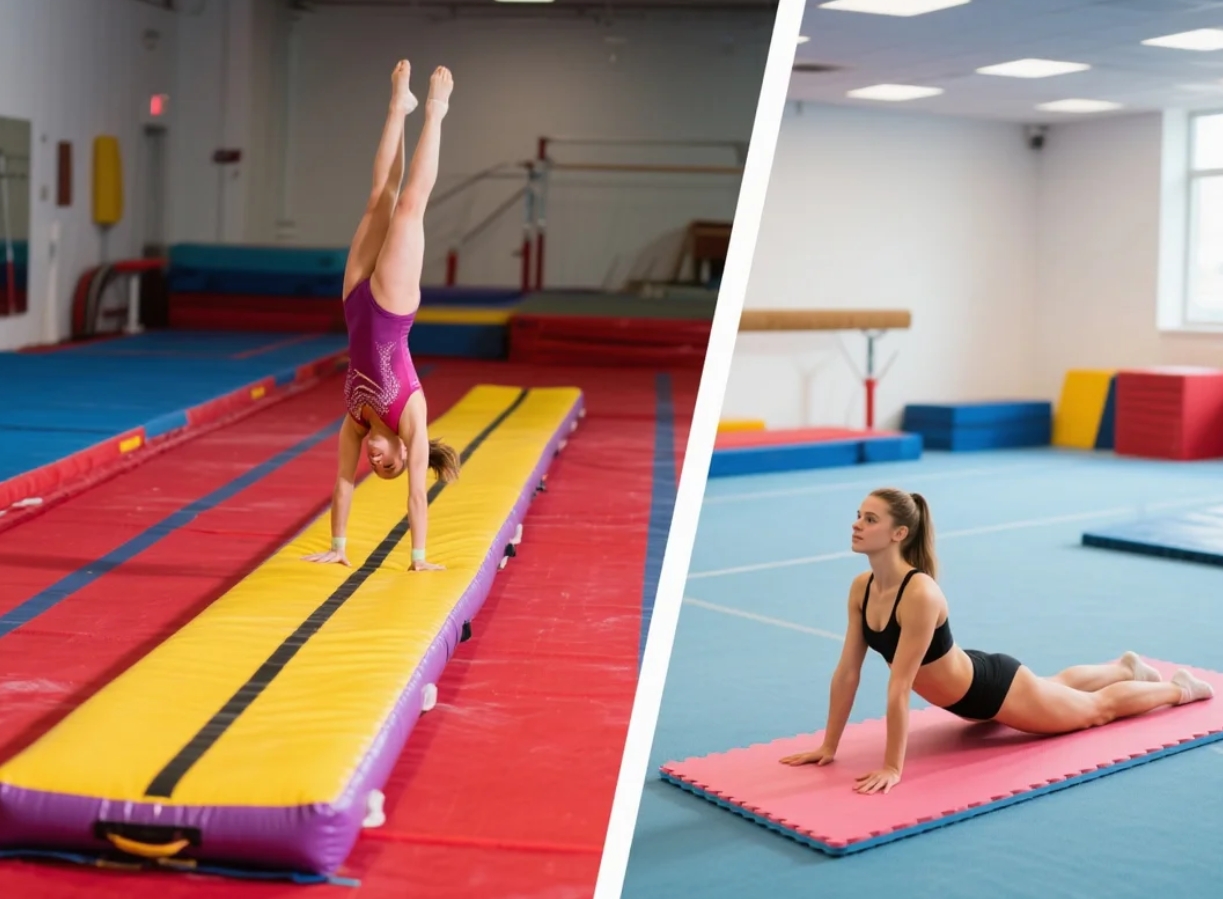
Table of Contents
- Impact Absorption: Safety and Training Efficiency
- Storage & Portability: Space and Flexibility
- Long-Term Costs: Repair vs. Replacement
- User Feedback: Insights from Gymnastics Studios
- How to Choose: Match Your Training Goals
1. Impact Absorption: Safety and Training Efficiency
Impact absorption is critical for reducing injuries during flips, landings, and dynamic movements. Here’s how the two options compare:
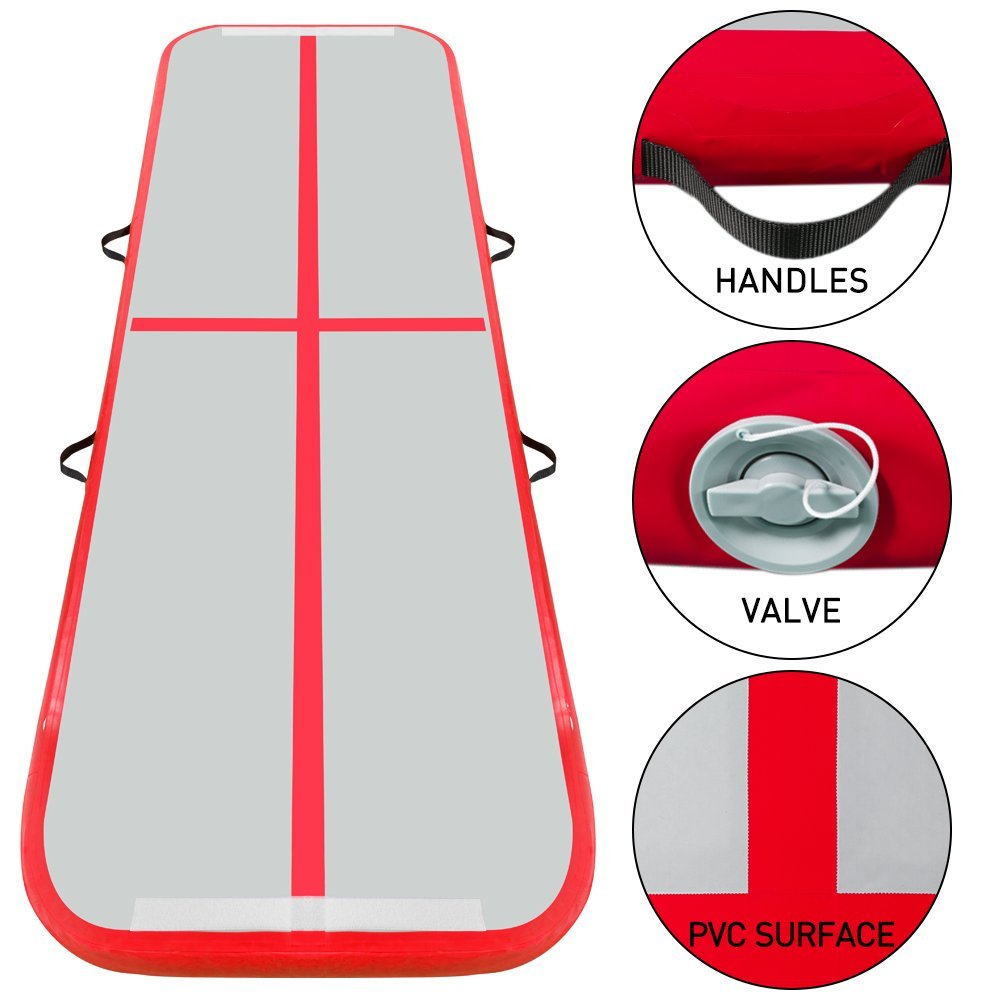
Inflatable Air Tracks
- Mechanism: Use a high-pressure air layer + elastic PVC material to dynamically distribute force. For example, a backflip landing triggers air compression, cushioning the impact while maintaining stability.
- Performance Data: Lab tests show premium inflatable tracks absorb 95% of impact force (certified by independent safety organizations), minimizing strain on joints and bones.
Traditional Gym Mats
- Mechanism: Rely on static foam/rubber density to compress and absorb force. Thickness (e.g., 10–20cm) directly impacts performance.
- Performance Data: Standard foam mats absorb 70–80% of impact force, while high-end memory foam mats reach 85% (at a higher initial cost).
Table 1: Impact Absorption Comparison
2. Storage & Portability: Space and Flexibility
Training environments vary—home gyms, outdoor parks, or large studios. Storage and portability determine practicality.
Inflatable Air Tracks
- Foldability: Deflating reduces volume by 90% (e.g., a 6m track folds to 0.5m³), fitting in closets or car trunks.
- Portability: Ideal for outdoor use (parks, camps) or small spaces (living rooms).
Traditional Gym Mats
- Rigidity: Non-foldable design requires dedicated storage (e.g., a 6m mat needs a 2m-wide room).
- Portability: Heavy and bulky; moving requires 2+ people. Not suitable for outdoor or home use without extra logistics.
Table 2: Storage & Portability Comparison
3. Long-Term Costs: Repair vs. Replacement
Cost isn’t just about upfront price—it includes maintenance, repairs, and replacements over time.
Inflatable Air Tracks
- Initial Cost: $300–$800 (mid-range).
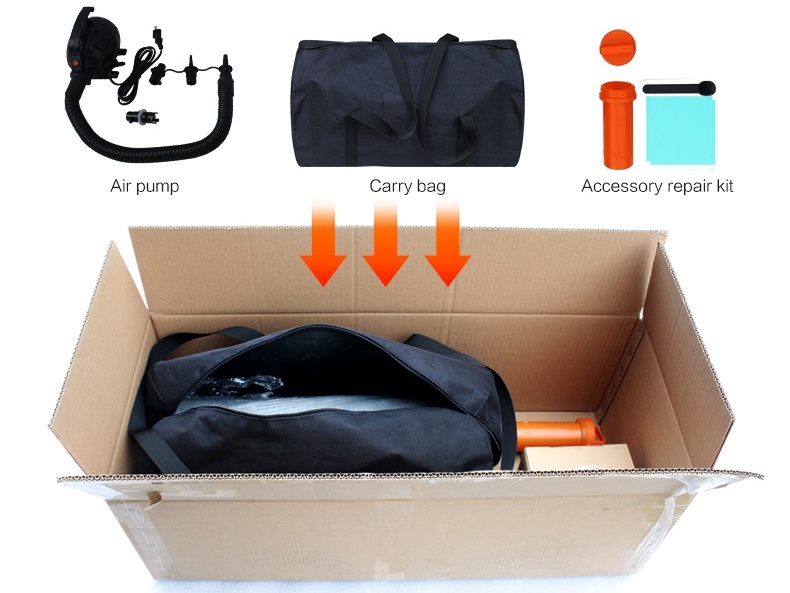
- Maintenance: Repairable (small leaks fixed in 10 minutes with a patch kit). Long-term costs: $50–$100/year (gas pump or patches).
Traditional Gym Mats
- Initial Cost: $150–$500 (standard foam).
- Maintenance: Non-repairable (wear/tear requires full replacement). Long-term costs: $100–$200/year (replace every 2–3 years).
Table 3: Long-Term Cost Comparison
4. User Feedback: Insights from Gymnastics Studios
Real-world users—amateurs, coaches, and professionals—share their experiences:
Amateur & Home Users
- Parent: “The inflatable track folds under my bed. We take it to the park for weekend flips—it’s a game-changer for family training!”
- Community Coach: “Traditional mats clutter small studios. Switching to inflatable tracks let us train 8+ kids in the same space.”
Competitive & Studio Users
- National Team Coach: “Air tracks’ adjustable pressure mimics different floor hardness, helping athletes adapt to new competition venues faster.”
- Studio Manager: “We replaced 5 sets of traditional mats in 3 years. Inflatable tracks lasted 4 years with only 2 minor repairs—saving 30% on budget.”
5. How to Choose: Match Your Training Goals
- Amateurs/Home Users: Prioritize inflatable air tracks for portability and low maintenance.
- Community/Small Studios: Inflatable tracks maximize space and accommodate more trainees.
- Professional Teams/High-Use Studios: Combine inflatable tracks (dynamic training) with traditional mats (static exercises) for optimal results.
Conclusion
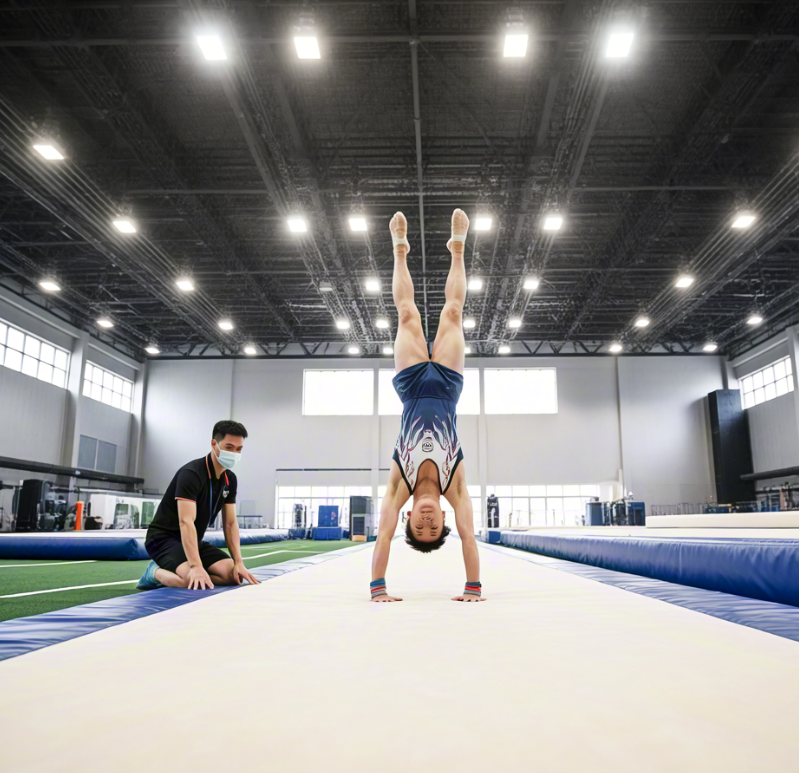
For gymnastics training, the choice between inflatable air tracks and traditional gym mats depends on your goals, space, and budget. Inflatable tracks excel in dynamic safety, portability, and long-term savings—ideal for home, outdoor, or small-studio use. Traditional mats remain valuable for fixed, static training. By aligning your needs with these strengths, you’ll elevate your training experience.


![What Is an Air Track in Gymnastics? [Complete Guide]](http://ueeshop.ly200-cdn.com/u_file/UPBF/UPBF509/2605/13/photo/WhatIsanAirTrackinGymnastics.png)


