While premium inflatable wrestling mats are designed for versatility, they are
not recommended for permanent outdoor installation unless specifically engineered with marine-grade UV stabilizers. Standard PVC will begin to degrade (brittleness/fading) within 6–12 months of constant UV exposure. However, for "event-based" outdoor use (training sessions or tournaments), they are perfectly safe provided they feature
heat-welded seams and are treated with
UV-resistant additives.
Will UV exposure degrade the PVC material on my mats over time?
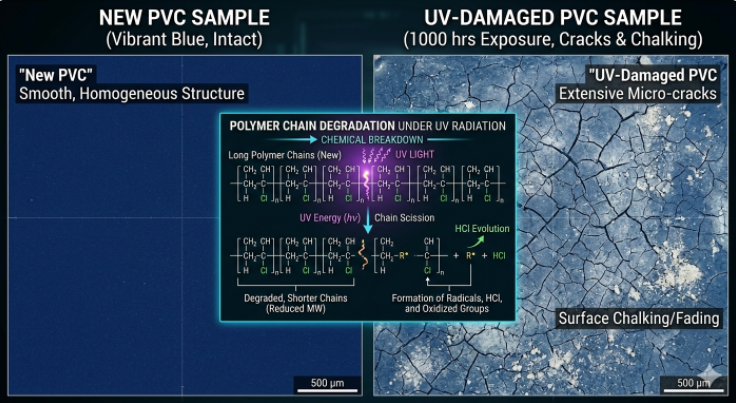
Yes, UV radiation is the primary enemy of PVC. Unprotected PVC undergoes a process called photodegradation.
- Loss of Plasticizers: UV rays break down the chemical bonds that keep the PVC flexible. This leads to "chalking" (a white powdery residue) and eventual brittleness.
- Color Fading: Without high-quality pigments, bright colors like red or blue will fade into a dull grey within one summer season.
- Seam Failure: In glued mats (as opposed to heat-welded ones), UV heat can re-liquefy the adhesive, causing the mat to literally pull apart at the seams.
What specific weather-resistant treatments should I ask the factory to apply?
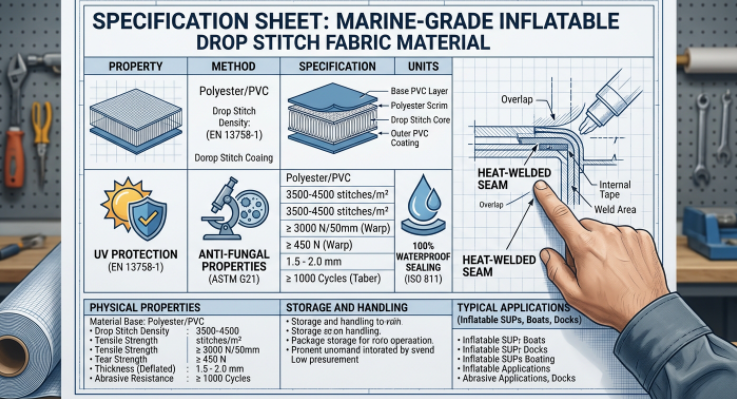
When negotiating your Proforma Invoice (PI) with a Chinese supplier, don't just ask for "outdoor use." Be specific about these technical requirements:
- UV Stabilizers (Grade 4-5): Demand that the PVC resin includes UV-absorbing additives. On the international scale, you want a "Color Fastness to Light" rating of at least Grade 4 or 5.
- Heat-Welded Seams (Critical): For outdoor use, do not accept glued seams. Heat-welding (High-Frequency Welding) fuses the PVC layers into a single piece. Glued seams will fail in the sun.
- Anti-Fungal/Anti-Mildew Coating: If the mat will be used in humid outdoor environments or on grass, ask for an anti-microbial treatment to prevent "black spots" from forming inside the drop-stitch core where moisture can get trapped.
How does extreme heat or cold affect the air pressure and seams?
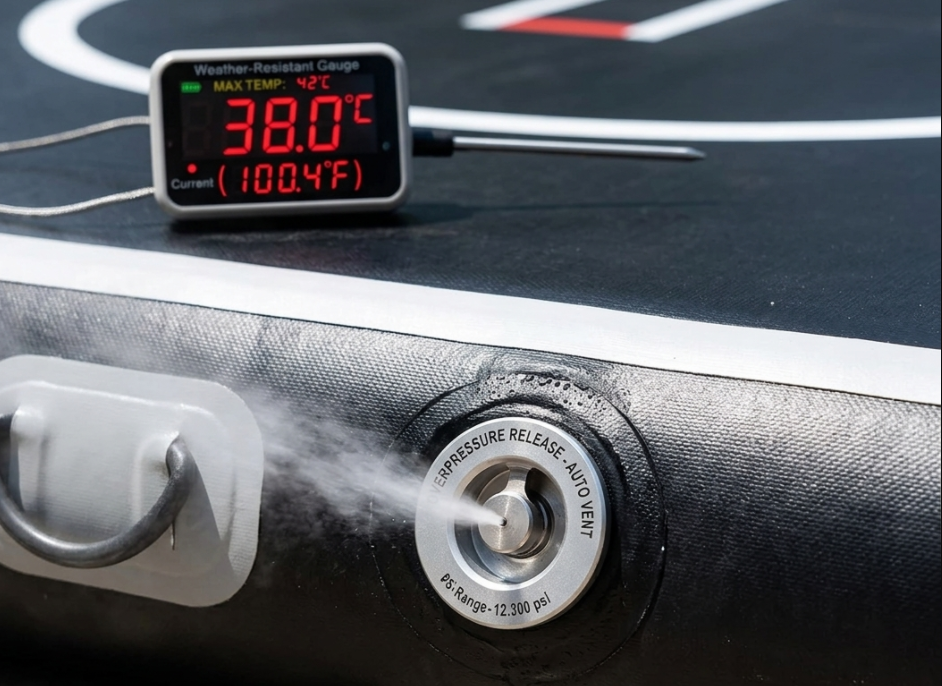
This is where the Ideal Gas Law (PV=nRT) becomes a liability.
- Extreme Heat (The Expansion Risk): If a mat is inflated to 5 PSI in a cool 20°C garage and then moved into 35°C direct sunlight, the internal pressure can spike by 20% to 30%. Without a Pressure Relief Valve, the seams may burst.
- Extreme Cold (The Contraction Risk): In cold weather, the air molecules contract, making the mat feel soft and "leaky." This is often misidentified as a technical defect when it is actually just thermal physics.
- Material Rigidity: In sub-zero temperatures, PVC becomes rigid and prone to "cold-cracking" if folded or rolled.
Should I warn my customers about leaving the mats outside permanently?
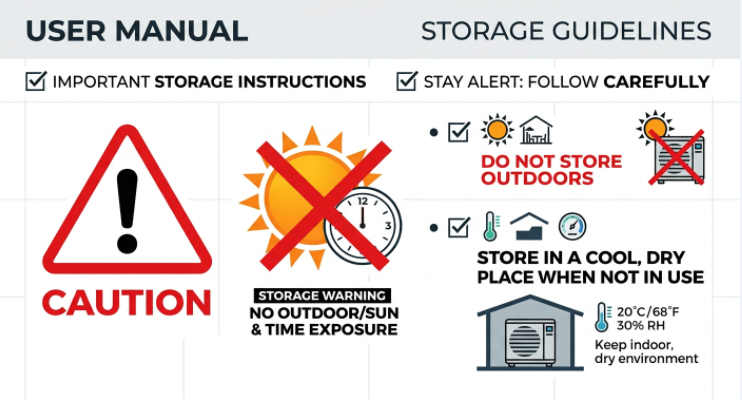
As a B2B seller, managing expectations is key to reducing warranty claims. Your product documentation should state:
- "Event-Only" Use: Clarify that the mat is designed for outdoor sessions, not permanent installation.
- Pressure Management: Instruct users to slightly deflate the mat if it is being left in the sun for several hours to allow for air expansion.
- Dry Before Storage: Never roll up a mat that is wet from rain or dew; this will lead to mold growth that is impossible to remove from the internal drop-stitch.
Interactive Outdoor Durability Quiz
1. Why are heat-welded seams superior to glued seams for outdoor mats?
- A) They are cheaper to produce.
- B) They don't melt or "creep" when exposed to high solar heat.
- C) They make the mat lighter.
- (Answer: B - Glue is a chemical bond that can soften in the heat; welding is a physical fusion.)
2. What happens to a mat's internal pressure when moved from a cold gym to a hot outdoor parking lot?
- A) Pressure decreases.
- B) Pressure increases significantly (risk of over-expansion).
- C) Pressure remains constant.
- (Answer: B - Heat causes the air inside to expand.)
3. What is "chalking" on a PVC mat?
- A) A type of grip powder athletes use.
- B) A sign of polymer breakdown due to long-term UV exposure.
- C) A factory cleaning residue.
- (Answer: B - It indicates the PVC is becoming brittle and losing its structural integrity.)
Conclusion
Inflatable wrestling mats are rugged, but they aren't invincible against the elements. By sourcing UV-stabilized, heat-welded mats and equipping them with pressure relief valves, you provide your customers with a high-performance outdoor-capable product. Just remember: education is the best warranty. Tell your clients to "bring it inside" at night, and your return rate will stay near zero.
References
- ISO 4892-2:2013: Plastics — Methods of exposure to laboratory light sources — Part 2: Xenon-arc lamps. (The standard for testing UV resistance in PVC products). View ISO Standard
- ASTM D1435-20: Standard Practice for Outdoor Weathering of Plastics. (Guideline for evaluating how plastics hold up in real-world outdoor conditions). View ASTM Standard
- Vinyl Institute: Technical Report on UV Stabilizers in Flexible PVC. Technical Resource


