Whether you run a professional gymnastics facility, coordinate a cheerleading squad, or want to level up your tumbling skills at home, choosing the right gear is a big decision. You have likely seen these long, air-filled mats popping up everywhere from commercial training centers to backyard setups.
But when you see the price tag, a major question comes up: Are airtracks worth it?
Investing in high-quality training equipment involves balancing safety, performance, and cost. In this comprehensive guide, we will break down the true value of these mats. We will explore how they work, compare them to traditional gym alternatives, and look at the real-world performance benefits to help you make a smart investment choice.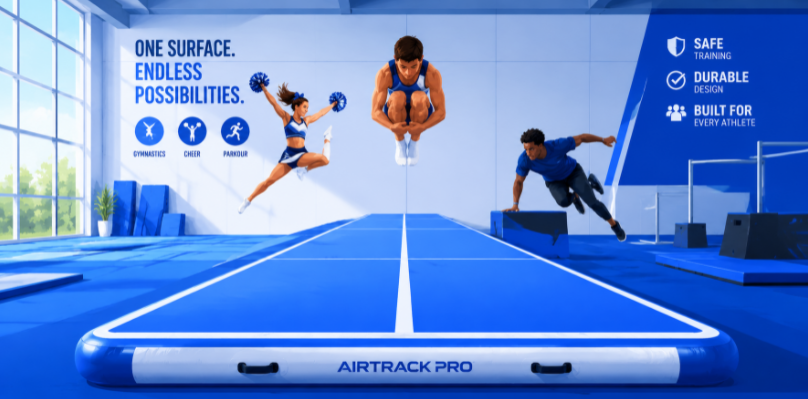
If you only have a minute, here are the most important things to know:
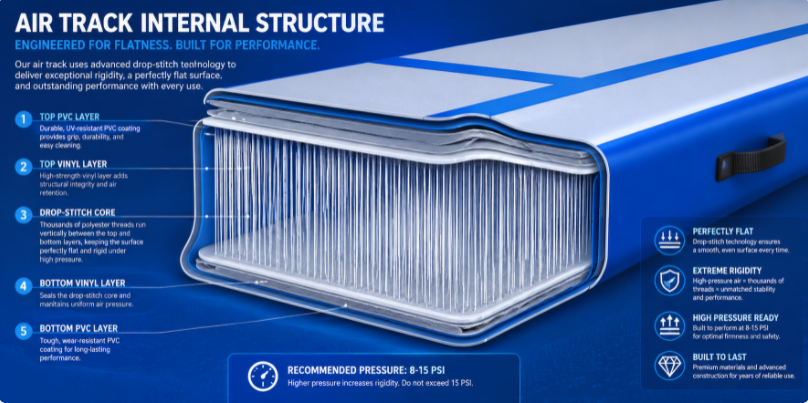
To understand if an air track justifies its cost, it helps to know how it is built. An air track is a heavy-duty, inflatable training platform. However, it is completely different from a cheap pool float or an air mattress.
If you pump up a standard air mattress until it is hard, it balloons out in the middle and becomes round. An air track stays completely flat. It can handle intense high-impact landings because of a specialized manufacturing process called drop-stitch technology.
Inside every high-grade air track are thousands of strong, polyester threads connecting the top and bottom vinyl walls. When you fill the mat with air, these internal threads pull tight at a specific length. This creates a flat, incredibly rigid surface. The core is then wrapped in a heavy-duty Double Wall Fabric (DWF) and sealed with a commercial-grade PVC outer coating. This creates an airtight, rock-solid training lane that responds directly to an athlete's movements.
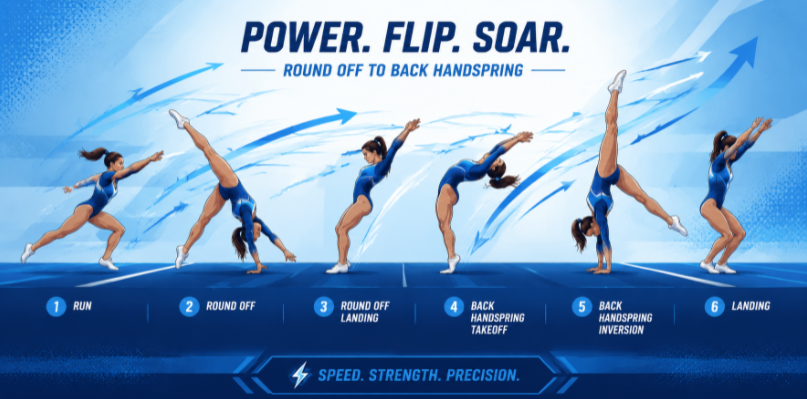
To understand why this gear is so popular, let’s look at the movement it is built for. Tumbling is a dynamic discipline within gymnastics, cheerleading, and acrobatics. It does not use specialized apparatus like the balance beam, pommel horse, or uneven bars.
Instead, tumbling focuses entirely on explosive, acrobatic floor elements. A tumbling routine consists of a fast-paced sequence of skills executed down a straight path. These skills include:
Because tumbling relies purely on the athlete’s power and the floor's rebound, the quality of the training surface directly impacts how high you can jump and how safely you can land.
Before inflatable options took over the market, gyms relied on a traditional piece of hardware called a tumble track.
A traditional tumble track is a long, raised trampoline surface. It features a heavy steel metal frame fitted with a fabric bed and a series of metal tension springs along the sides. The entire frame is surrounded by thick foam safety pads to protect athletes if they trip or steer off-course.
These tracks are excellent for building momentum and running long tumbling lines. However, they are permanent, heavy fixtures. Once you bolt a traditional metal-frame tumble track into your gym floor, it stays there.
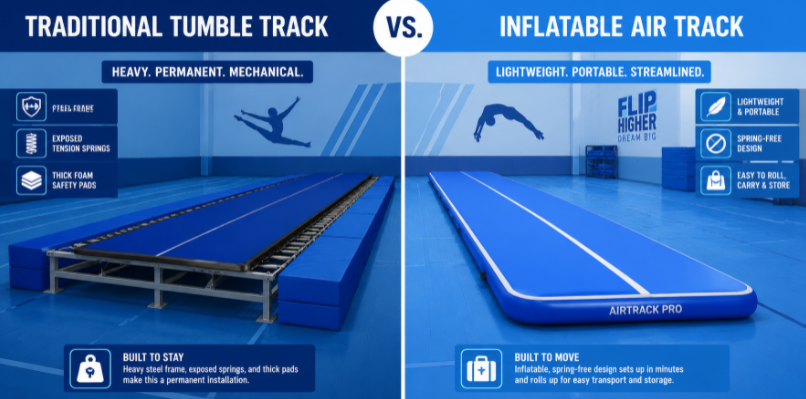
While both tools help you practice tumbling lines, they function in completely different ways. Here is a direct breakdown of how an air track stacks up against a traditional mechanical tumbling track.
| Feature | Inflatable Air Track | Traditional Metal Tumble Track |
|---|---|---|
| Material Base | PVC, Double Wall Fabric, Air Core | Steel Frame, Springs, Trampoline Mat |
| Portability | High (Deflates into a storage bag) | Low (Fixed installation) |
| Surface Feeling | Mimics a spring floor with extra cushion | Feels like a long, narrow trampoline |
| Adjustability | High (Change firmness via air pressure) | Low (Spring tension is fixed) |
| Setup Space | Indoor, outdoor, or mobile setups | Requires a large, permanent indoor footprint |
The biggest difference comes down to flexibility. A traditional tumble track gives incredible height, but it behaves like a trampoline. An air track behaves more like a competition spring floor, but with a customizable safety cushion.
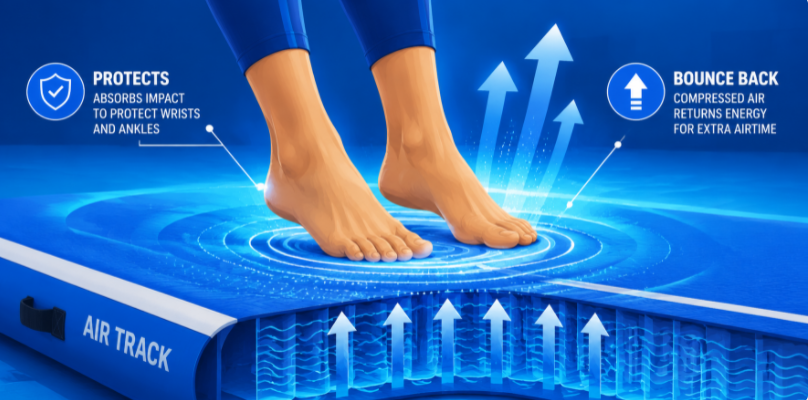
When you read a comprehensive air track gymnastics review or talk to gym owners, the feedback usually highlights the same major advantages. Let's take a look at the specific benefits that make these mats a valuable asset.
In an honest inflatable gymnastics mat review, the first thing athletes mention is the extra lift. When you run into a roundoff or a back handspring on a quality air track, the air pocket compresses and snaps back quickly.
This extra spring gives you valuable micro-seconds of extra airtime. If you are trying to learn a back tuck or a full twist, that extra height makes a huge difference. It gives you the space to finish your rotation and land on your feet instead of under-rotating and landing awkwardly.
Tumbling is tough on the body. Repeating handsprings sends harsh shockwaves through your wrists, elbows, and shoulders. Landing heavy flips can stress your ankles and knees over time.
An air track works like a high-end suspension system for your joints. The compressed air absorbs the sharpest part of the impact force and spreads it out evenly. Coaches find that athletes can perform double the repetitions on an air track without experiencing the chronic joint soreness that comes from training on hard floors.
Fear is a major mental block in gymnastics and cheerleading. Flipping upside down onto a hard surface can be intimidating.
An air track changes the psychological game. Because the surface feels forgiving, athletes feel a lot safer trying new skills. If an athlete messes up a layout or drops out of a handstand, landing on a cushioned pocket of air is much safer than hitting a hard mat. This confidence helps students progress through their skill trees much faster.
For many gym owners and school programs, space is a valuable resource. You cannot easily clear out a room that contains a traditional metal spring track.
An air track solves this problem completely. When your session ends, you simply open the valve, let the air out, roll it up like a sleeping bag, and slide it into a closet or a storage bin. This lets multi-sport facilities switch from a gymnastics setup to a martial arts or dance class in under fifteen minutes.
You are not locked into training inside a gym facility. A durable air track can easily move outdoors to a park, a backyard, or a training field. This versatility makes it a favorite for cheer squads who want to practice outdoors during the summer, or for sports enthusiasts who love training in fresh air.
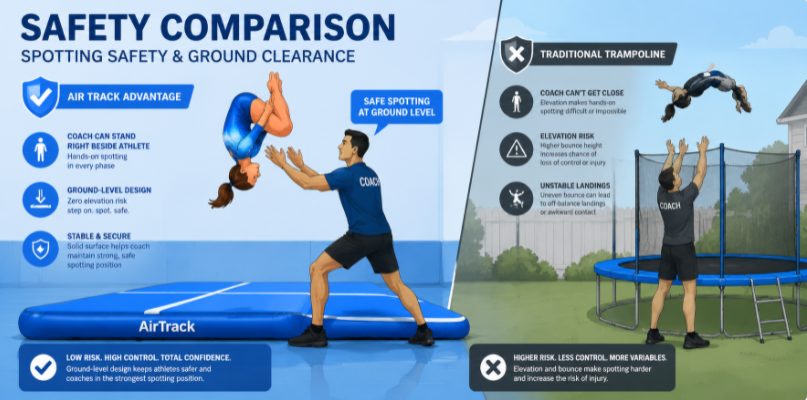
When designing a gymnastics floor layout or a home studio, you have to choose between modern inflatable options and classic gear. Let's look closely at how air tracks compare to traditional foam variants.
To dive deeper into the financial and structural benefits for commercial layouts, take a look at our detailed vs foam mats comparison guide.
Traditional folding tumbling mats (often called panel mats) are made of dense foam covered in a vinyl shell. They are great for basic conditioning, stretching, and beginner cartwheels. However, they offer almost zero rebound. If you run hard and try to tumble on a standard panel mat, it simply dampens your jump.
An air track provides a completely different training dynamic. It combines the safety cushion of a thick foam block with the explosive energy return of a spring floor.
Traditional fixed tracks are fantastic for elite clubs that specialize purely in high-speed power tumbling. They provide immense lift, but they require a permanent layout and a large budget. They also do not prepare an athlete perfectly for a regular competition floor, because the trampoline-style bounce feels very different from a standard gymnastics floor.
Inflatable tracks offer a smart middle ground. They deliver an excellent balance of safety, high performance, and space-saving convenience. This makes them a highly practical choice for modern gyms and home users alike.
[Image comparing a traditional metal spring tumble track with an inflatable air track]
A common question from parents and backyard sports enthusiasts is: “Why should I buy an air track when I can just buy a backyard trampoline?”
While both give great bounce, they serve different goals. Here is an air tumbling mat pros and cons breakdown compared to a trampoline:
In the commercial inflatable market, you will see two main terms used: Air Floors and Air Tracks.
An Air Floor is typically a thinner, wider sheet designed to cover an entire square floor section. It aims to mimic a full gymnastics spring floor. An Air Track is usually built as a distinct, long lane optimized specifically for straight-line tumbling lines.
For a complete breakdown of which style matches your facility layout, read our dedicated air floor comparison analysis.

Now let's look at the financial aspect. These mats represent a real financial commitment. To decide if they are worth the investment, we need to look at the cost versus the value they add over time.
The cost of an air track changes based on its length, thickness, and material quality.
An air track is a highly valuable asset for:
Yes, provided you have the space and follow basic safety rules. They turn a standard backyard or a spacious basement into a safe training zone. Plus, they help save money on extra gym rental hours by letting you get quality practice right at home.
If you decide to buy an air track, avoiding generic options is key to getting a safe, long-lasting product. Here is what to keep in mind when looking for the best air track for gymnastics.
To make sure your mat can handle intense training sessions, always check these four main technical specs before buying.
The length you need depends entirely on the tumbling routines you plan to practice:
To find the perfect fit for your space, check out our comprehensive mat size guide.
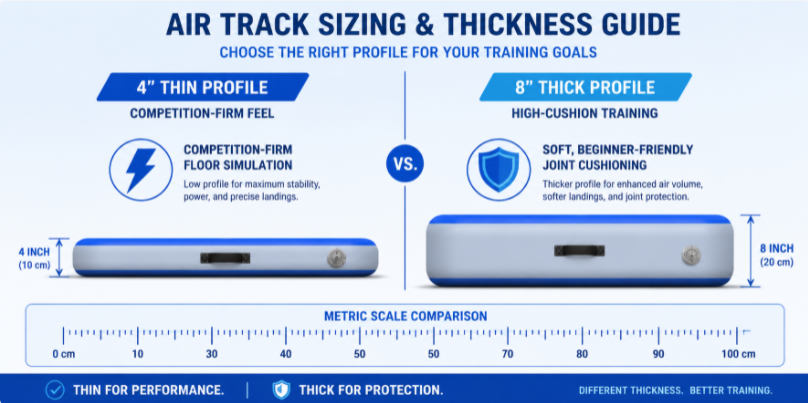
Thickness directly determines the bounce dynamic and how well the mat protects your joints:
Always check the total width of the track. Standard tracks are usually 1 meter (3.3 feet) wide. This is plenty of space for experienced tumblers who can hold a straight line.
If you are teaching young children or working on complex twisting skills where athletes might veer off-course, upgrading to a 1.5-meter or 2-meter wide track offers an extra safety margin.
A commercial-grade PVC air track is heavy because the material is dense and durable. A 10-meter track can easily weigh over 70 pounds. Make sure the mat features reinforced, double-stitched nylon handles along the sides so your coaches or athletes can move it around easily when it is fully inflated.
The ideal pressure changes based on the athlete's weight and skill level. For young, lightweight kids, a softer pressure (1.5 to 2.5 PSI) provides a comfortable, highly cushioned landing. For older, advanced tumblers who need a fast surface that prevents bottoming out, pump the track up firmer (3.5 to 5+ PSI). Always test the mat with a quick hand-press before letting athletes tumble on it.
Every quality air track comes with an electric air pump. You simply attach the pump hose to the airtight valve, lock it in place, and turn the pump on. A standard 5-meter mat inflates completely in less than two minutes.
It feels like a premium, highly responsive gymnastics spring floor. It is completely flat and stable under your feet, but when you jump hard, you feel a clear pushback that helps you gain extra height.
They are designed to stay fully inflated for hours. A high-quality valve keeps the track firm throughout an entire training day. When you want to pack it up, you just switch the valve to the open position, and the mat deflates smoothly in minutes.
Yes, grass is an excellent outdoor surface for an air track. However, you must inspect the lawn carefully first. Clear away any sharp sticks, pine needles, rocks, or hidden roots that could puncture the PVC material. For a full set of safety tips across different setups, check out our outdoor usage guide.
The outer PVC material is completely waterproof. However, you should avoid using an electric air pump near standing water. Always make sure the mat is completely dry before rolling it up for storage, as storing a wet mat can cause mold to grow inside the storage bag.
Yes. Placing a tarp underneath the mat provides an extra layer of protection against dirt, damp grass, and small sharp objects.
A 4-inch track is firmer and mimics a competition floor. An 8-inch track holds more air, provides a softer landing, offers a deeper bounce, and is much easier on your joints.
When you look at the total value—excellent joint protection, faster skill development, and the convenience of portable storage—the answer is clear: Yes, air tracks are absolutely worth the money. They provide a smart, modern solution for gym owners who need a flexible floor layout, and give athletes a safe space to build training confidence. By investing in a high-quality mat with the right length and thickness, you get a durable, versatile training tool that will help athletes progress safely for years to come.


![What Is an Air Track in Gymnastics? [Complete Guide],Aftersea](http://ueeshop.ly200-cdn.com/u_file/UPBF/UPBF509/2605/13/photo/WhatIsanAirTrackinGymnastics.png?x-oss-process=image/quality,q_100/resize,m_lfit,h_475,w_1028)


