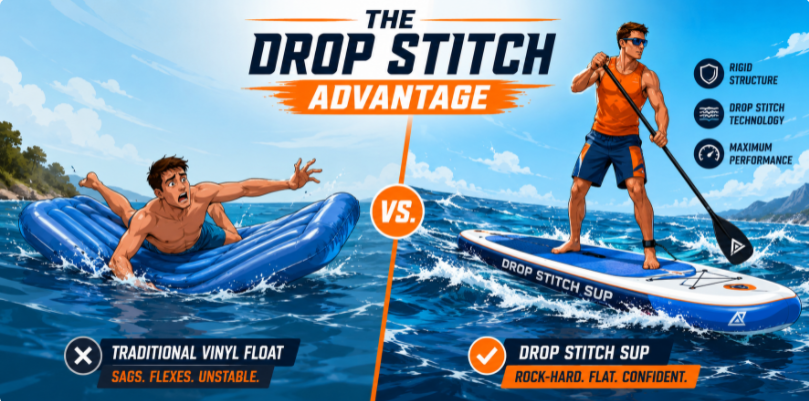
Think about the last time you stepped onto a cheap pool float or an old-school air mattress. It probably wobbled, sagged under your weight, and left you feeling unbalanced. Now, imagine stepping onto an inflatable platform floating out on open water, but instead of sinking, it feels almost as solid as a wooden deck.
How is that even possible? It all comes down to a specialized engineering method that has completely changed the game for water sports and outdoor gear. Understanding this construction style is the secret to choosing gear that can handle real abuse without popping on its first weekend out.
At its core, what is drop stitch comes down to a smart way of connecting two pieces of fabric. Traditional inflatables are basically empty balloons. When you pump them full of air, they naturally want to round out into a cylinder or a ball because air pushes outward evenly in all directions.
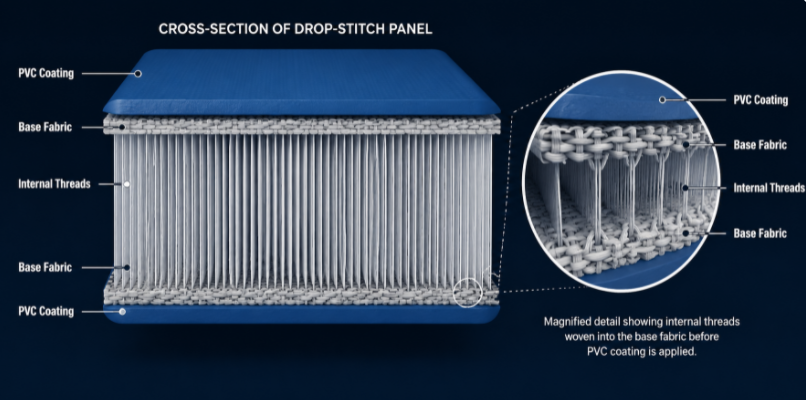
A drop stitch inflatable fixes this shape problem. It uses a specialized base cloth that allows two parallel surfaces to stay perfectly flat even when filled with high-pressure air. By weaving thousands of fine, vertical polyester strands between the top and bottom interior surfaces, the fabric is locked into a fixed thickness.
When air pressure builds up inside, these tiny threads pull tight. They stop the outer walls from bowing or ballooning out. This internal structure transforms what would normally be a soft rubber tube into a rock-hard, uniformly flat panel. It looks and acts like a rigid board, but it still deflates down small enough to throw into a standard backpack.
The engineering behind this material is simple but incredibly effective. It relies on a heavy-duty mechanical connection to fight the natural behavior of compressed air.
Inside every piece of drop stitch fabric, there is a dense grid of vertical fibers. These are not loose threads; they are woven directly into the upper and lower base layers during the manufacturing process. When the product is uninflated, these threads collapse neatly, allowing the material to fold up flat.
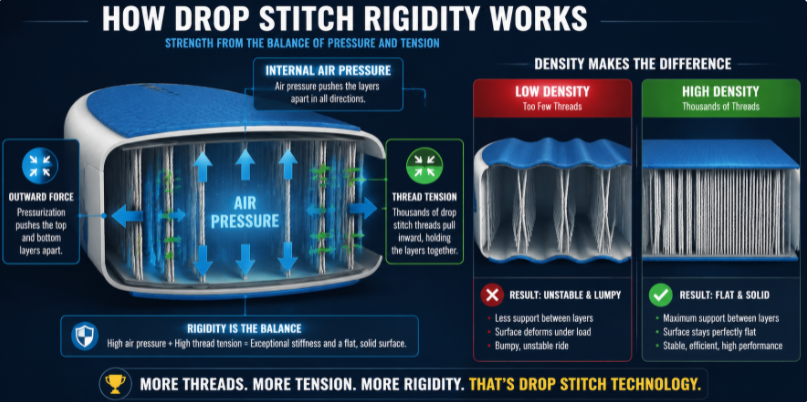
When you attach a pump and start filling the chamber, the air pushes the two main layers apart. However, the walls can only move as far as the internal threads allow. Once those thousands of strands reach their maximum length, they lock up. Because the air keeps pushing outward against these taut threads, the entire structure becomes incredibly rigid. It is a balancing act between outward air pressure and inward thread tension.
If a product only had a few dozen threads inside, the air pressure would cause the fabric to bulge out between them, creating a lumpy, uneven surface. High-quality drop stitch technology relies on sheer numbers. A typical paddle board or floating platform contains tens of thousands of these fibers per square meter. This massive density ensures that your weight is distributed evenly across a massive web of supports rather than bending a single spot.
Because every single internal strand is cut to the exact same length, the top and bottom sheets stay perfectly parallel. Whether you pump it up to 10 PSI or 20 PSI, the surface stays flat. This uniform thickness is what allows athletes, paddle boarders, and boaters to stand on an inflatable surface without the edges curling up or dipping under water level.
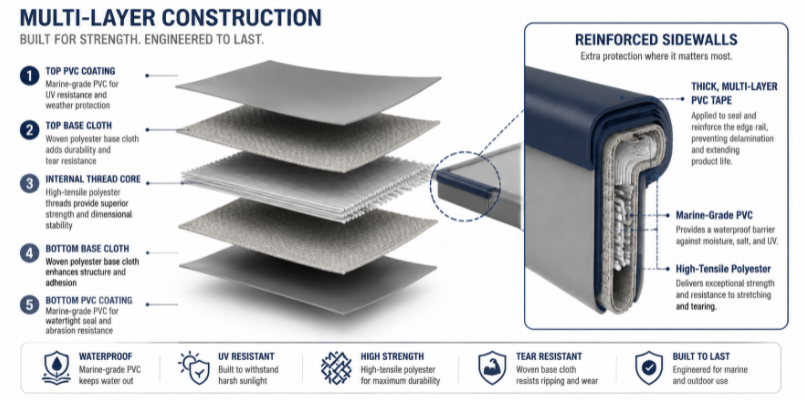
A finished inflatable is not just made of thread. It is a complex, multi-layered sandwich of synthetic materials designed to hold high pressure while surviving salt water, rocks, and baking hot sun.
The internal strands are almost always made from high-tensile polyester. This material is chosen because it resists stretching over time. If the threads stretched under pressure, the board would slowly deform and lose its flat profile after a few uses. Polyester also handles the repetitive stress of inflating and deflating without snapping.
The internal web of threads is woven into a base fabric layer, which is then coated with heavy-duty PVC (polyvinyl chloride). This outer skin acts as the air container. The thickness and quality of this layer determine how tough the product is. When looking closely at different air track materials, you will find that premium gear relies on thick, marine-grade PVC coatings to seal the air in and keep water out.
The weakest point on any inflatable is the edge where the top and bottom sheets meet. To seal this off, manufacturers use wide strips of PVC tape called sidewalls or rails. High-end products often feature double or triple-layer rails. This extra reinforcement prevents side punctures and stops the seams from splitting apart when the board takes a hard impact against a concrete boat ramp or a rocky shoreline.
When shopping around, you will see products labeled as single-layer or double-layer.
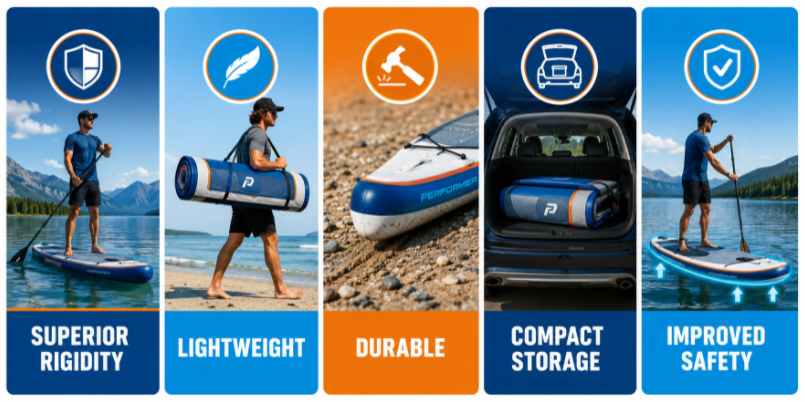
Switching from old-fashioned rigid plastic or basic soft inflatables to drop-stitch gear offers some major advantages for anyone spending time on the water or in the gym.
The most obvious perk is how solid it feels. A properly inflated platform does not sag, bend, or bounce like a pool float. It gives you a stable footing that feels remarkably close to a traditional solid composite board. This stiffness is vital for maintaining balance on moving water.
Even though these products feel like solid wood or molded plastic when fully pumped up, they are mostly just air. A 10-foot drop-stitch platform is likely to weigh a fraction of what a matching hard plastic dock would weigh. This low weight makes it easy for a single person to lift, launch, and carry the gear down to the shoreline.
The combination of thick drop stitch material and reinforced PVC coatings creates a skin that can take a beating. You can drag these products across sand, bump them into wooden docks, and drop them on grass without worrying about instant punctures. They are built to survive the messy, real-world conditions of outdoor recreation.
This is the real selling point for apartment dwellers, small car owners, and boaters with limited cabin space. When you are done for the day, you simply open the valve, let the air rush out, and roll the entire product up. It fits neatly into a closet, a car trunk, or a boat locker, completely eliminating the need for expensive roof racks or massive storage trailers.
Because the surface stays flat and the edges do not curl under load, these platforms provide a highly predictable surface. If you step near the outer edge of a high-quality drop stitch platform, it will support your weight instead of folding under and tipping you into the water. This predictable balance is a huge safety benefit for kids, older adults, and pets.
Cheap PVC toys tend to degrade, soften, and leak after a few months of use in the sun. Premium drop-stitch items are engineered for a much longer lifespan. The interior polyester threads do not easily degrade from repeated pressure cycles, meaning the product retains its original shape, thickness, and performance characteristics for years.
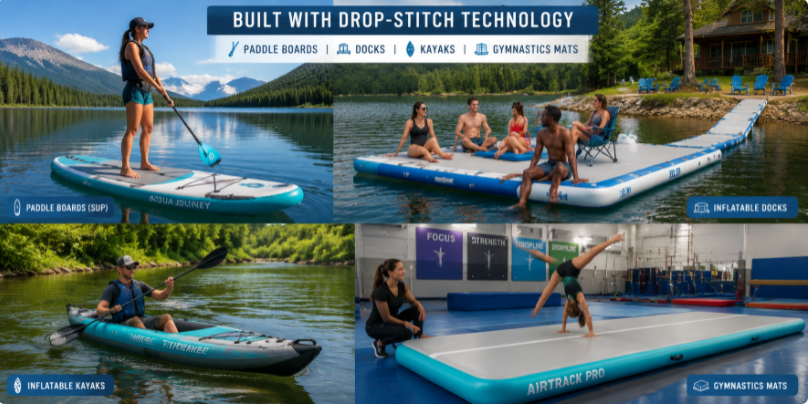
This structural method has moved far beyond specialty military gear and is now found across a wide range of popular water sports and fitness industries.
The stand-up paddle board (SUP) market was the primary driver behind the commercial rise of this technology. A standard hard paddle board is incredibly awkward to store and transport. By using drop-stitch fabric, manufacturers created high-performance boards that roll up into a duffel bag but still glide smoothly across rough ocean water without flexing under the rider's feet.
For lake houses, beach resorts, or boat owners, traditional wooden or plastic docks are expensive and permanent fixtures. Modern inflatable floating docks offer a flexible alternative. They launch in minutes, create an instant swim platform or boat maintenance station, and can be packed away when winter weather rolls in.
In gymnastics, cheerleading, and martial arts, landing safety is everything. Traditional foam mats are bulky to move and lose their cushion over time. Drop-stitch air tracks provide an adjustable tumbling surface. Coaches can lower the pressure for a softer, safer landing or pump it up high to mimic a competitive spring floor.
Whether you need an extended swim step behind a yacht or a stable place to set up lounge chairs in the middle of a calm bay, floating dock platforms provide a rock-solid foundation. They can easily support coolers, lawn chairs, and multiple adults at the same time without dipping below the water line.
Older inflatable kayaks were notorious for having soft, floppy floors that made them difficult to paddle straight or handle in choppy currents. Modern designs often integrate a drop-stitch floor panel. This rigid base keeps the hull tracking perfectly straight through the water, drastically improving paddling speed and overall efficiency.
Even casual pool and lake gear is getting an upgrade. High-end floating loungers, water slides, and wakeboard launch platforms now utilize drop-stitch designs to provide a premium, puncture-resistant experience that outlasts generic vinyl pool toys by several seasons.
To truly understand why this material is worth the investment, it helps to compare it directly against the standard PVC or vinyl construction used in basic inflatables.
| Feature | Drop Stitch Construction | Traditional Inflatable Construction |
|---|---|---|
| Internal Structure | Tens of thousands of woven vertical threads | Empty air chambers or simple vinyl baffling |
| Surface Profile | Perfectly flat, uniform thickness | Rounded, tube-like, or bumpy surfaces |
| Operating Pressure | High pressure (10 to 20+ PSI) | Low pressure (1 to 3 PSI) |
| Rigidity | Rock-hard; behaves like solid wood or plastic | Soft, bouncy, and flexes easily under body weight |
| Weight Capacity | Extremely high; supports heavy furniture and groups | Low to moderate; prone to sagging and tipping |
| Lifespan | Long-term use (multiple seasons/years) | Short-term use (often prone to split seams) |
Traditional inflatables rely on large, open chambers. If they want to create a flat-ish shape, they have to use thick vinyl panels inside, which results in a bumpy, mattress-like top. Drop stitch uses a dense web of micro-threads that holds the two flat surfaces perfectly parallel, avoiding the lumpy look entirely.
A standard inflatable cannot handle high pressure; if you pump too much air into a cheap vinyl raft, the seams will simply pop. Because drop-stitch fibers pull the walls together, the material can safely handle much higher air pressures. This high internal pressure is exactly what makes the surface feel solid under your feet.
Traditional heavy-duty boats (like rigid-hulled inflatables) require heavy fiberglass bases to stay stiff, making them difficult to transport without a trailer. Drop-stitch items achieve a similar level of stiffness using nothing but fabric and air, keeping the overall pack weight low enough for easy travel.
When a traditional inflatable hits a sharp rock, the thin vinyl skin easily tears, and the large air chamber deflates instantly. Drop-stitch products use thick, industrial-grade outer coatings that are highly resistant to abrasions and puncture scratches.
Traditional construction is perfectly fine for cheap beach toys, low-cost pool floats, and casual air mattresses where performance does not matter. However, for sports gear, commercial equipment, or any situation where your safety and balance depend on a solid surface, drop-stitch construction is clearly the better choice.
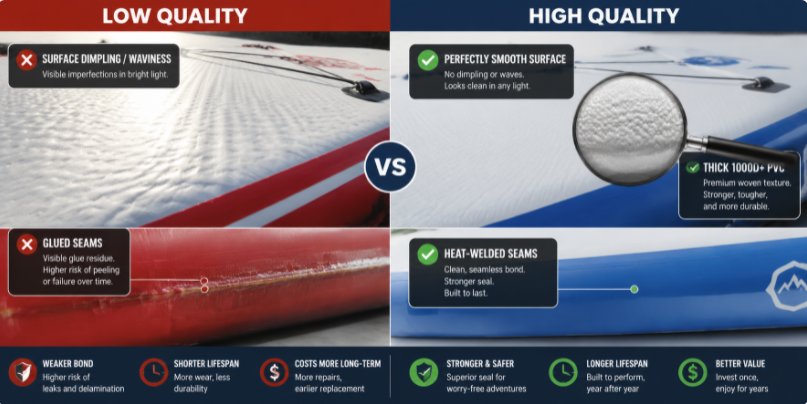
The market is full of lookalike products, but they are definitely not all built to the same standard. Some factories cut corners to offer rock-bottom prices. Here is how to spot a well-made piece of gear.
Check the denier rating of the PVC skin if the manufacturer lists it. High-quality commercial gear typically uses PVC ranging from 1000D to 1500D (denier). Thicker fabric feels substantial, resists scuffs better, and handles regular inflation cycles without showing wear.
A cheap product cuts down on the number of internal threads to save money. You can sometimes spot this by looking at a fully inflated item in bright sunlight; if you see significant dimpling or a wavy pattern across the surface, the internal stitch density is likely too low. A premium product will look completely uniform and smooth.
Look closely at how the side rails are attached. Cheap options use basic industrial glue, which can break down over time when exposed to high heat and baking sun. Top-tier brands utilize heat-welded or fusion-welded seams. This process melts the layers together at a molecular level, creating a permanent bond that will not peel apart on a hot summer day.
A well-made inflatable should hold its pressure without issue. Cheaply manufactured valves and thin seams often suffer from microscopic leaks, causing the board to soften up overnight. High-quality options feature advanced air retention capabilities, maintaining their rock-hard pressure readings through extended multi-day trips without needing constant top-offs.
Check the manufacturer's official weight limit. If a large platform is only rated for a low weight capacity, it may suggest that the internal threads are thin or spaced too far apart to handle real stress. A robust drop-stitch item should easily support multiple people or heavy gear without showing signs of structural flex.
Look for brands that openly share their factory testing protocols. A reliable manufacturer will subject every batch of material to extended pressure inflation tests (often keeping them inflated for 24 to 48 hours in the factory) to catch any potential valve or seam defects before the product ever gets boxed up and shipped out.
When you are ready to buy, matching the product specs to your actual needs will save you from frustration down the road.
Are you planning to leave a dock platform floating in salt water all summer long, or do you just need a light paddle board for occasional weekend lake trips? If your gear will live outdoors or handle commercial rental use, investing extra money into a double-layer, heat-welded model is a smart move. For light, casual use, a single-layer fusion build will save you some cash while remaining highly portable.
Thickness is a major factor in how a drop-stitch item performs:
Always look at the maximum PSI rating on the inflation valve. A board that maxes out at 10 PSI may feel a bit soft under heavy loads. Look for products designed to operate comfortably between 15 and 20 PSI. That higher pressure capability is a clear sign of tight, high-density internal stitching and strong, reliable seams.
Do not just buy the cheapest option on a wholesale marketplace. Look at the details: Are the D-rings made of marine-grade stainless steel? Is the deck pad made of thick, comfortable EVA foam that won't peel off after two weeks? These small exterior details usually tell you a lot about the quality of the hidden drop-stitch core inside.
A company that stands by its manufacturing will offer a solid warranty. Because drop-stitch gear involves complex internal weaving, look for brands that offer at least a 1-to-2-year warranty against structural defects. This gives you peace of mind that you are buying an authentic piece of athletic equipment rather than a disposable pool toy.
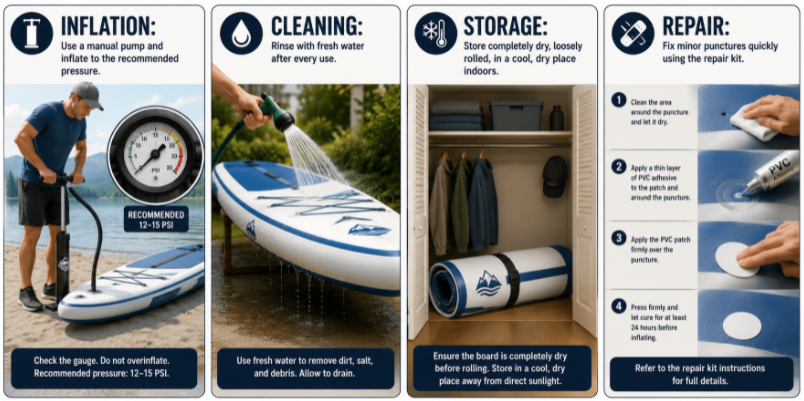
While these products are incredibly tough, a little bit of basic maintenance will extend their useful lifespan by several years.
Always use a pump equipped with an accurate pressure gauge. Avoid using high-pressure commercial air compressors (like the ones at gas stations) because they can pump air in too fast, potentially overheating the valve or blowing out the internal seams before you realize it. Stick to manual hand pumps or specialized electric pumps designed specifically for drop-stitch gear.
Salt water, sand, and lake mud can degrade materials over time if left to sit.
Pro Tip: Give your gear a quick rinse with clean, fresh water after every outing. Let it dry completely in the shade before rolling it up. If you pack a wet board away into a tight storage bag, you are practically inviting mold and mildew to grow all over the deck pad.
Even though the PVC skin is tough, it is still smart to scan your launching area. Avoid dragging your gear across sharp barnacles, broken glass, or jagged concrete boat ramps. If you are using a floating platform near a wooden dock, check for any exposed rusty nails or splintered wood corners that could gouge the sidewalls.
Most quality drop-stitch products come with a basic repair kit containing PVC patches and a valve wrench. If you do happen to get a small puncture, finding it is easy: just wipe the area down with soapy water and look for where the bubbles form. A small dab of marine-grade PVC adhesive and a clean patch will quickly seal the leak, making the board as good as new.
When storing your gear for the winter, try to keep it in a temperature-controlled space like a garage or closet. Extreme freezing temperatures can make PVC stiff and brittle over time. If you have the space, storing the item loosely rolled or slightly inflated with zero pressure is much better for the seams than leaving it crushed down tight under a heavy pile of storage boxes.
Because this material has become popular so quickly, there are plenty of misconceptions floating around online. Let's clear up a few of the most common ones.
While they are incredibly durable compared to a cheap vinyl raft, they are not completely bulletproof. A sharp, jagged rock or an encounter with a rusty metal spike can still cut through the outer PVC skin. Treat your gear with respect, and it will last for years.
Many budget brands use the exact same stock photos as premium companies, but the hidden internal construction is often completely different. Cheaper options typically cut costs by reducing the number of internal threads, using low-grade glue on the seams, or thinning out the exterior PVC skin.
Every product has an optimal pressure range designed by its engineers. Pumping a board past its rated maximum PSI does not make it perform better; it simply puts unnecessary stress on the internal polyester threads and increases the risk of blowing out a seam.
While paddle boards made this technology famous, it is rapidly expanding into other areas. Today, you can find high-pressure drop-stitch construction used in portable ice baths, professional gymnastics mats, military floating bridges, and even lightweight aviation floor panels.
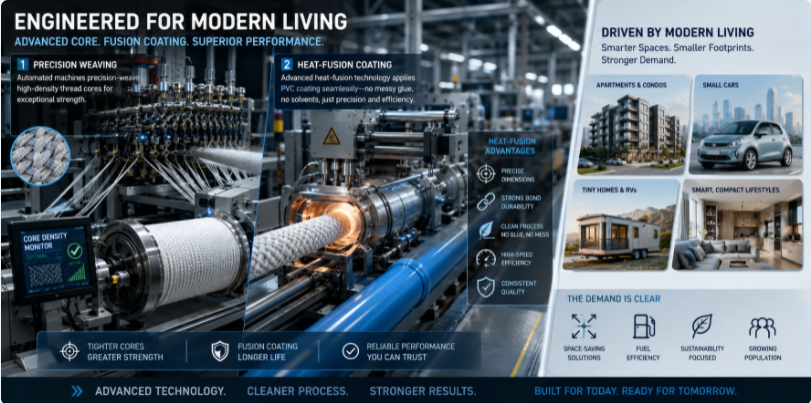
The shift toward drop-stitch manufacturing is not just a passing trend. It has permanently changed how people think about portable outdoor gear.
As more people move into compact apartments and drive smaller, fuel-efficient cars, the demand for high-performance gear that does not require a massive storage shed or a towing trailer continues to climb.
At the same time, major advances in factory automation have made it much easier for manufacturers to produce these complex fabrics with flawless consistency. The transition from heavy, glued construction to lightweight, heat-fused layers has made drop-stitch gear lighter and more reliable than ever before. From casual weekend lake paddlers to commercial resort owners, the industry has realized that you no longer have to sacrifice rigidity and durability just to enjoy the convenience of a portable, inflatable design.
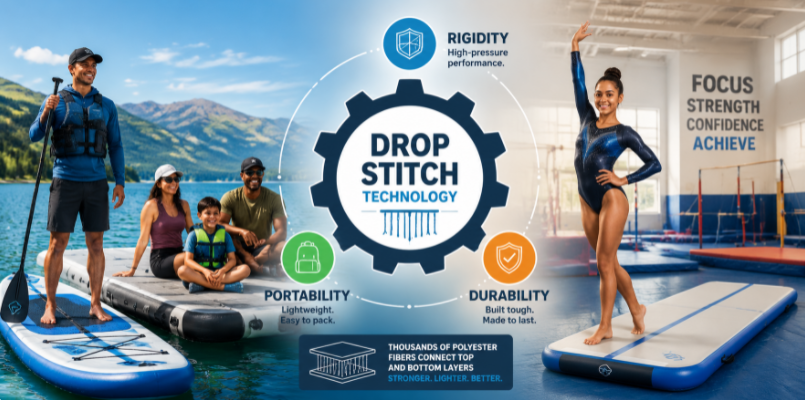
Drop stitch engineering has completely bridged the gap between convenience and high performance. By utilizing a dense internal web of tens of thousands of high-tensile threads, it allows a flexible fabric shell to transform into a rock-hard, perfectly flat surface capable of handling high air pressure and heavy weight loads.
Whether you are looking to buy a new stand-up paddle board, a rugged floating dock for your lake house, or a professional-grade training mat, understanding how this material works helps you make a much smarter purchase. Do not get distracted by cheap price tags alone. Look closely at the stitch density, check the seam construction, and prioritize high-quality materials. Investing in premium drop-stitch gear ensures your equipment will stay safe, stable, and ready for adventure for many seasons to come.
It is primarily used to build rigid, high-pressure inflatable products. You will find it most commonly in stand-up paddle boards, floating docks, gymnastics air tracks, inflatable kayaks, and portable high-end ice baths.
They achieve extreme stiffness because thousands of internal polyester threads connect the top and bottom fabric walls. When air is pumped inside, it creates high internal pressure, but the threads stop the walls from ballooning outward, locking the shape into a solid, flat board.
They are highly durable. They are built from heavy-duty, marine-grade PVC coatings over a core of high-tensile threads. This makes them resistant to scratches, scrapes on sand, and minor bumps against wooden docks.
Yes. If you happen to get a small puncture from a sharp object, it can easily be patched using the PVC material and specialized adhesive included in standard inflatable repair kits.
Most high-quality products operate beautifully between 12 and 18 PSI. Always check the specific pressure recommendation printed directly next to the inflation valve on your product.
The internal core fabric is completely sealed inside layers of waterproof PVC coating. This ensures that water cannot penetrate the internal chambers, preventing mold growth inside the core.
Yes, any reputable inflatable paddle board relies on this construction method. Without it, the board would simply bend into a banana shape as soon as a rider tried to stand up on it.
A well-made product that is properly rinsed with fresh water, dried completely, and stored away from extreme temperatures can easily last between 5 to 10 years of regular recreational use.
Single-layer uses a single coating of PVC over the internal fabric core, making it very light. Double-layer adds a second fused layer of PVC, which increases weight slightly but adds immense stiffness and puncture protection.
Absolutely. While cheap, traditional vinyl inflatables cost less upfront, they flex under weight and tend to pop easily. Drop-stitch gear provides structural safety, acts like a solid board, and delivers far greater long-term value.


