Whether you’re a gymnast, yoga enthusiast, or parent looking for safe play equipment, choosing the right Airtrack can transform your training experience. But with endless options—varying in size, type, and material—how do you pick the best one? This guide answers three critical questions: What are Airtracks? How many types exist? What size airtracks should I buy? By the end, you’ll have the expertise to select an Airtrack that matches your needs perfectly.

An Airtrack is a portable, inflatable training mat designed to absorb impact, enhance performance, and simplify storage. Unlike traditional foam or rubber mats, Airtracks rely on air pressure to create a supportive, springy surface.
Core Structure:
Originally developed for gymnastics and cheerleading, Airtracks have evolved into versatile tools used in yoga, parkour, and family play.
Airtracks stand out for their adaptability. Here’s how they add value:
Common Scenarios:
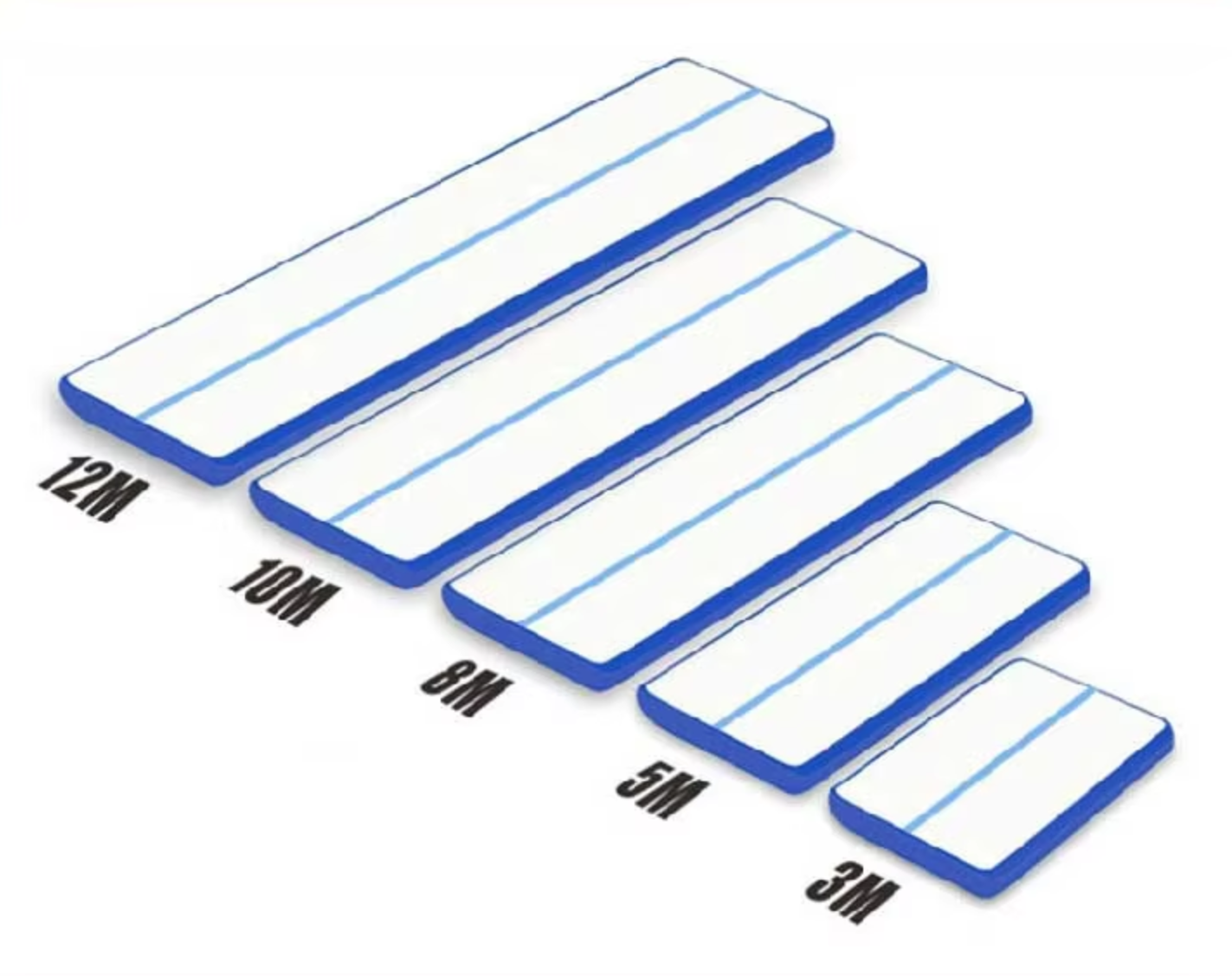
Airtracks are tailored to specific activities. Below’s a breakdown of mainstream types:
| Type | Target Users | Key Features |
|---|---|---|
| Training Airtrack | Beginners/intermediates | Medium thickness (10-20cm), balanced bounce, budget-friendly. |
| Performance Airtrack | Pros/competitive athletes | Thick (25-30cm), high-pressure chambers, extra grip for precise landings. |
| Home Play Airtrack | Kids/family use | Thin (5-10cm), rounded edges, vibrant colors, lightweight for easy moving. |
| Water Airtrack | Pool/beach users | Waterproof TPU material, anti-slip surface, UV-resistant coating. |
Material directly impacts lifespan, weight, and price. Here’s how they compare:
| Material | Durability | Weight | Price Range |
|---|---|---|---|
| PVC | Moderate (resists wear) | Light (5-8kg for 4m mat) | $50-$150 |
| TPU | High (puncture-resistant) | Slightly heavier (7-10kg) | $150-$300 |
| Composite (PVC+TPU) | Premium (best of both) | Varies by design | $200-$400 |
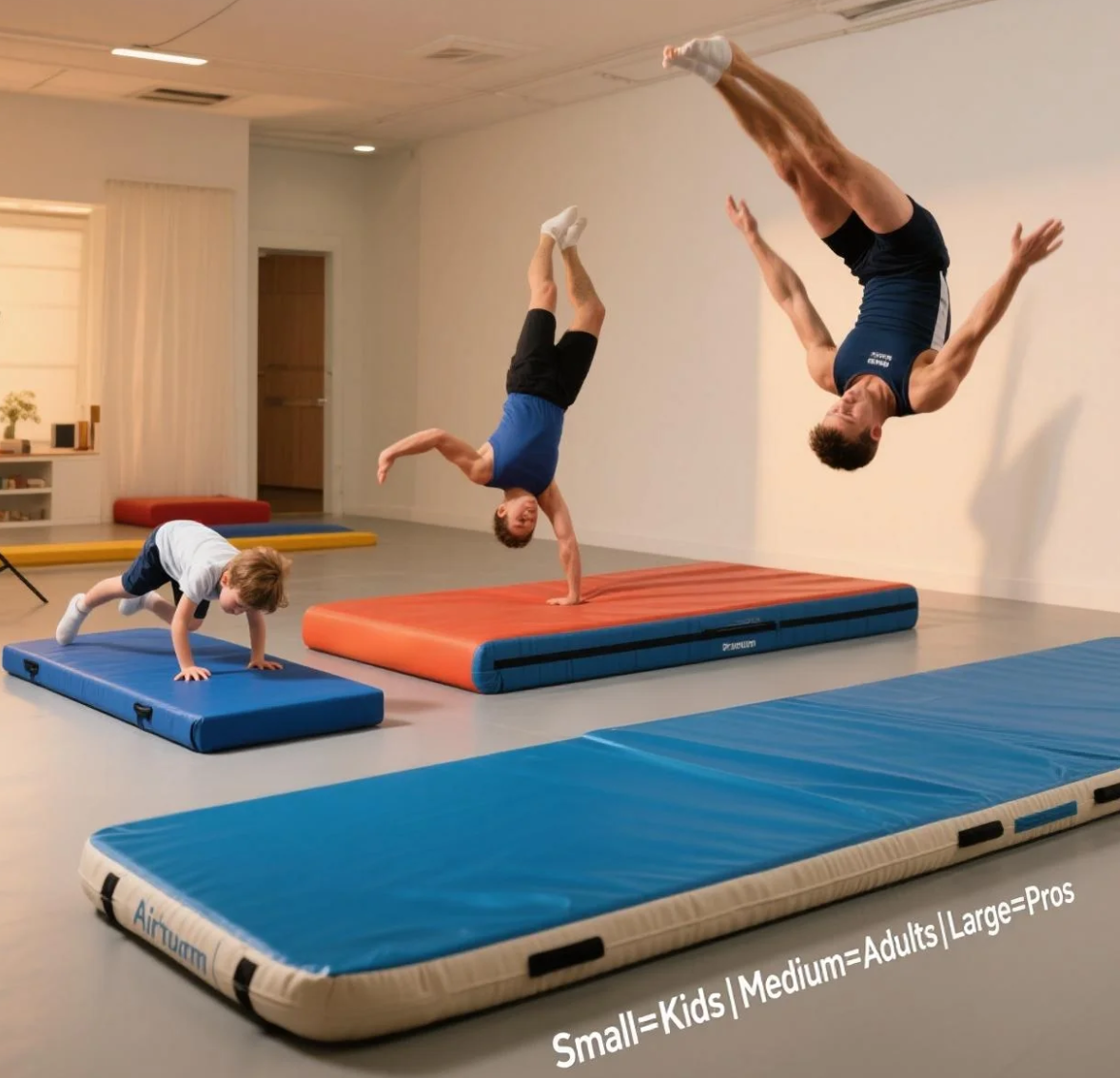
Your Airtrack’s size depends on three core factors:
To simplify your decision, here’s a size guide based on user needs:
| Size Category | Dimensions (L×W×H) | Target Users | Ideal Activities |
|---|---|---|---|
| Small | 2-3m × 0.8-1m × 5-10cm | Kids (≤1.5m), beginners | Front rolls, yoga, family play. |
| Medium | 4-5m × 1-1.2m × 15-20cm | Adults (1.5-1.8m), intermediate users | Backflips, tumbling, group workouts. |
| Large | 6-8m × 1.2-1.5m × 25-30cm | Pros (>1.8m), competitive athletes | Complex routines, high-impact landings. |
Selecting the right Airtrack boils down to three steps: Understand its core function, match the type to your activity, and align the size with your body, moves, and space. Whether you’re a child learning cartwheels or a pro mastering flips, the perfect Airtrack will boost safety, skill, and enjoyment. By prioritizing these factors, you’ll invest in a tool that grows with your training journey—because when it comes to Airtracks, size and type matter!


![What Is an Air Track in Gymnastics? [Complete Guide]](http://ueeshop.ly200-cdn.com/u_file/UPBF/UPBF509/2605/13/photo/WhatIsanAirTrackinGymnastics.png)


