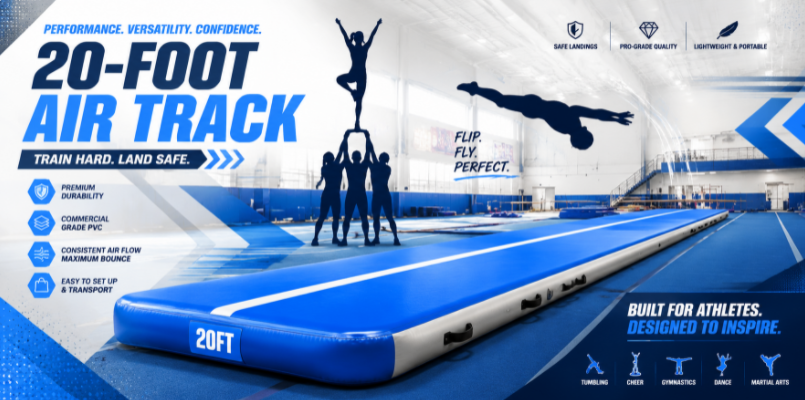
Imagine a busy training floor during peak afternoon hours. Gymnasts are lining up, cheerleaders are practicing their stunts, and martial artists are working on explosive kicks. In a high-energy environment like this, the equipment on your floor determines how fast your athletes progress and how safe they stay while doing it.
For years, commercial facilities relied entirely on traditional foam strip floors or massive, permanent spring setups. While these options have their place, they lack flexibility. They are heavy, difficult to move, and can wear down over time, losing their shock absorption.
The introduction of air-filled equipment changed the game entirely. Among the various sizes available, the 20ft air track mat has become the absolute gold standard for commercial spaces. Also widely known as a 6m air track gymnastics solution, this specific length offers the perfect blend of utility, performance, and adaptability.
Whether you are looking to upgrade an existing gym setup, expand a cheerleading program, or provide competitive athletes with a high-performance training tool, a long air track tumbling mat provides massive benefits. This guide breaks down exactly why a 20 foot airtrack mat is the ultimate upgrade for any serious commercial training facility.
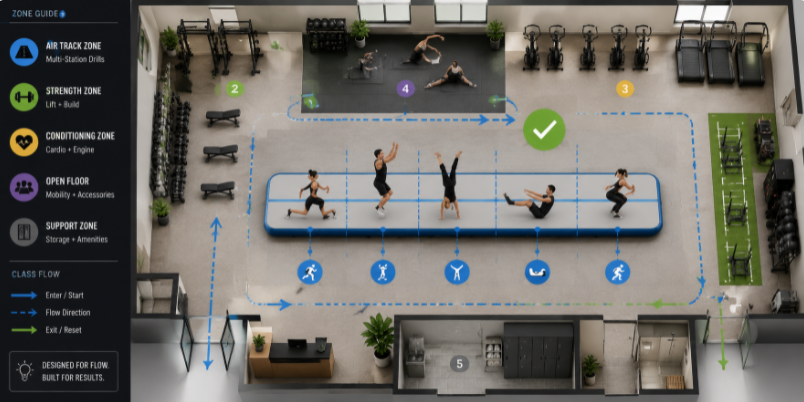
Managing a professional training facility is a continuous balancing act. You have to maximize every square foot of your floor space while keeping athletes of varying ages, weights, and skill levels completely safe. If your gear is too small or single-purpose, you end up with bottlenecks on the floor where students spend more time waiting in line than actually practicing their routines.
Many facilities make the mistake of buying smaller, residential-grade gear to save on initial costs. However, short tracks simply cannot handle the high-volume traffic and intense physical impact of a commercial program. To understand why standard home equipment falls short, it helps to look at why large-scale facilities specifically require oversized mats. These larger systems provide the physical space needed to run multi-station drills simultaneously, allowing coaches to maximize class sizes without compromising safety margins.
When multiple athletes are rotating through a station every minute, a smaller mat quickly becomes a safety hazard. A 10-foot or 13-foot mat leaves zero room for error. If an athlete over-rotates or misjudges their momentum, they can easily fly off the edge onto the hard floor. A commercial space demands equipment that offers a forgiving safety zone, which is exactly where the 20-foot footprint shines.
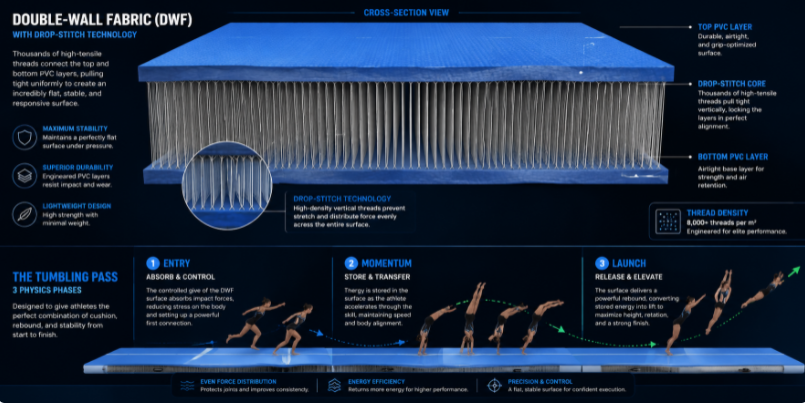
To understand why a 20 foot airtrack mat performs so well, we need to look beneath its rugged exterior shell. The secret lies in a manufacturing method known as Drop-Stitch technology, combined with heavy-duty Double-Wall Fabric (DWF).
Inside the core of a premium professional gymnastics air track, tens of thousands of strong polyester threads bridge the top and bottom PVC surfaces. When the mat is inflated with high pressure, these threads pull perfectly tight. This prevents the mat from bulging or sagging, ensuring a perfectly flat, uniform surface from end to end.
But why is the 20-foot (6-meter) length considered the engineering "sweet spot" for athlete development? It all comes down to the physics of momentum and human biometrics.
Think of a tumbling track like a runway for an airplane. If the runway is too short, the plane cannot safely build enough speed to lift off. In gymnastics and cheerleading, a standard tumbling pass requires a build-up phase, an execution phase, and a safe landing zone.
A 20ft air track mat provides the exact physical distance needed to execute these multi-skill combinations fluidly. On a shorter surface, athletes are forced to hold back or shorten their strides because they are terrified of running out of mat. The 20-foot layout removes this mental block, allowing athletes to train with full power and focus entirely on perfecting their form.
From a business and operational standpoint, your equipment needs to do more than look good—it has to actively improve how your classes run. Integrating a 6-meter track into your daily programming instantly upgrades your facility's workflow.
Using advanced air-filled surfaces directly optimizes your daily operations. Investing in high-performance equipment significantly boosts your training efficiency by reducing structural setup times and protecting your athletes from wear-and-tear injuries. This means faster class rotations, happier parents, and a lower rate of athlete burnout.
Time is money on a commercial floor. If a coach has to spend ten minutes dragging heavy foam panels across the room to set up a single station, that is ten minutes of paid class time completely wasted.
A 20-foot air track can be completely inflated by a high-velocity commercial electric pump in less than two minutes. Because it is incredibly lightweight when filled with air, two coaches can easily move it around the gym, flip it on its side against a wall to clear space, or relocate it from an indoor floor to an outdoor grass area for summer camps.
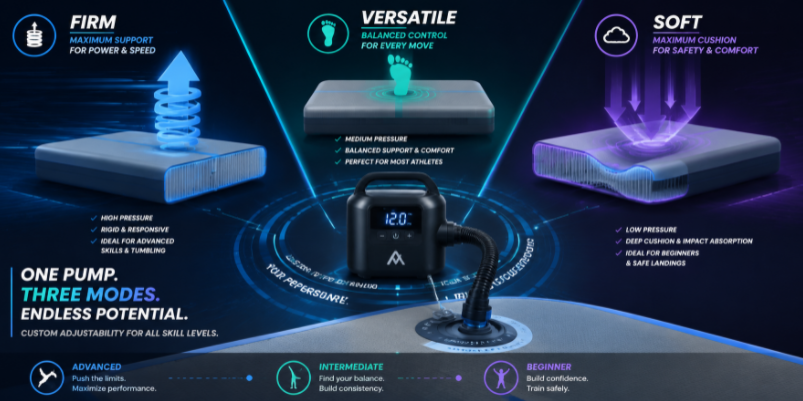
A single 6m air track gymnastics mat can serve completely different groups of students throughout the day simply by adjusting the internal air pressure:
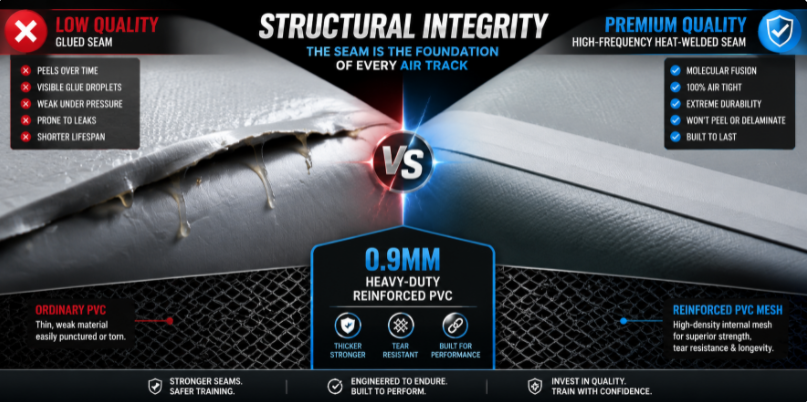
Not all mats are built to survive the grueling environment of a commercial training facility. A mat used at home might only see a few hours of light use per week by a single child. A commercial mat, however, must withstand hundreds of high-impact landings every single day from athletes of all shapes and sizes.
When shopping for commercial air track mats, look closely at the following technical specifications to ensure you are getting a true industrial-grade product.
The outer skin of a professional track must be incredibly thick and puncture-resistant. Look for mats built using a minimum of 0.9mm heavy-duty PVC tarpaulin. This material should feature an internal fiber mesh reinforcement that prevents stretching or tearing under immense pressure. Additionally, verify that the material features an anti-slip, matte finish on the top surface so athletes maintain excellent traction even when their hands and feet get sweaty.
This is the single most critical factor determining the lifespan of your mat.
While the length is set at 20 feet, you must also select the ideal width and thickness for your facility's needs:
| Specification Tier | Dimensions | Best For | Primary Benefit |
|---|---|---|---|
| Standard Commercial | 20ft x 3.3ft x 6in | Multi-purpose gymnastics schools, mobile cheer clinics, dance studios. | Lightweight, highly portable, fits easily on standard floor tracks. |
| Elite Elite/Cheer Wide | 20ft x 6.6ft x 8in | Advanced tumbling programs, competitive cheer squads, adult stunt training. | Extra wide safety zone prevents off-axis falls; massive vertical launch assistance. |
Outfitting a commercial gym requires a smart, business-minded approach to buying equipment. You aren't just buying a single toy; you are purchasing a long-term commercial asset. Therefore, your purchasing process should focus heavily on durability, manufacturer warranties, and long-term return on investment (ROI).
When ordering multiple pieces of equipment to outfit an entire facility, it is critical to step away from consumer retail platforms and look toward specialized commercial channels. Reading a professional guide on executing a bulk procurement strategy specifically for 20ft mats can save your business thousands of dollars in import duties, freight logistics, and wholesale volume pricing.
Expert Tip: When vetting potential commercial manufacturers, always ask for their independent quality certification reports (such as CE, RoHS, or REACH compliance). This ensures the PVC materials used on the training surfaces are completely non-toxic, lead-free, and safe for skin contact during long, intense practice sessions.
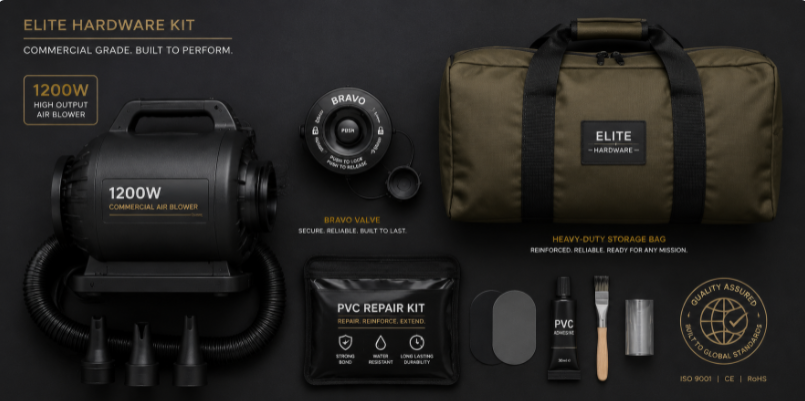
Additionally, always check the quality of the included hardware accessories. A premium commercial package should always include an industrial-grade electric pump (800W to 1200W) equipped with a secure, lock-in Bravo valve adapter, a heavy-duty storage transportation bag made of reinforced canvas, and a customized PVC repair kit with matching patches and a valve-tightening wrench.
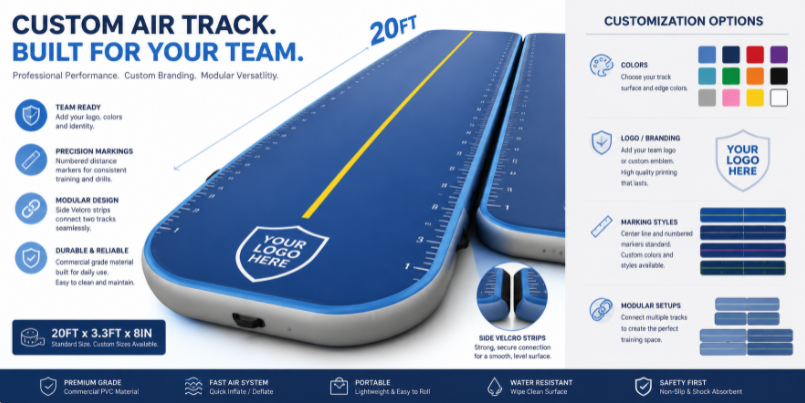
For many premier facilities, buying a plain, out-of-the-box blue or pink mat from a generic warehouse isn't enough. Your training floor is a direct reflection of your business brand. When parents walk into your lobby, the visual presentation of your floor instantly sets the tone for your program's professionalism.
Investing in customized gear allows you to tailor your equipment exactly to your business model. Exploring specialized customization options allows commercial buyers to add high-resolution team logos, select custom color palettes that match school branding, and integrate precision alignment markings across the top surface to help coaches track athletic foot placement visually.
Customizing your gear goes far beyond simple aesthetics. You can request specific functional additions that completely change how your coaches run their classes:
Upgrading your commercial facility with a premium 20ft air track mat is a powerful way to secure your business's future. It solves the everyday problems that facility managers face by maximizing usable floor space, cutting down setup and teardown times, and giving coaches a flexible tool that easily adapts to any athlete's skill level.
By choosing a commercial-grade 6m air track gymnastics surface built with high-frequency heat-welded seams and high-density drop-stitch cores, you protect your athletes from repetitive impact injuries while safeguarding your business from frequent equipment replacement costs.
Ultimately, high-quality equipment is the foundation of a premium training experience. When you give your coaches and athletes the best tools available, you create a safer, more energetic environment where skills are mastered faster, confidence thrives, and your facility stands out as a leader in athletic excellence.
A: A professional-grade mat featuring heat-welded seams and high-quality Bravo valves can easily stay fully inflated for several days without needing a top-off. In an indoor, temperature-controlled facility, you will likely only need to connect the electric pump for a brief 10-second pressure refresh once a week to adjust for minor natural pressure fluctuations.
A: For commercial training facilities, a minimum thickness of 6 inches (15 cm) is highly recommended. An 8-inch (20 cm) thickness is even better if your program focuses heavily on high-impact cheer tumbling or adult acrobatics. A 4-inch thickness is generally too thin for commercial facilities, as heavier advanced athletes can easily bottom out when executing high-velocity landing passes.
A: Because the outer layer is made of completely waterproof commercial PVC, cleaning is incredibly simple. Mix warm water with a mild, antibacterial dish soap or a specialized gym mat cleaner. Wipe the surface down using a wide microfiber mop or cloth. Avoid any harsh cleaning chemicals that contain high concentrations of bleach or alcohol, as repeated exposure can dry out the PVC material and degrade the protective UV coating over time.
A: Yes, absolutely. These mats are incredibly popular for outdoor exhibitions, summer camps, and half-time shows. When moving the mat outdoors, ensure the grass or concrete surface is completely cleared of sharp objects, glass, or thorns. It is always smart practice to lay down a heavy-duty plastic ground tarp beneath the mat to shield the bottom surface from continuous abrasion against dirt, sand, or rough pavement.
A: When you use the deflation port on a commercial electric pump, the pump sucks out all remaining air, making the mat completely flat. Once vacuum-deflated, the 20-foot mat rolls up tightly into a cylinder roughly the size of a large duffel bag (approximately 3.5 feet long and 1.5 feet in diameter). This compact size allows it to be easily tucked away in a equipment closet, under a storage bench, or inside the trunk of a standard car.


![What Is an Air Track in Gymnastics? [Complete Guide]](http://ueeshop.ly200-cdn.com/u_file/UPBF/UPBF509/2605/13/photo/WhatIsanAirTrackinGymnastics.png)


