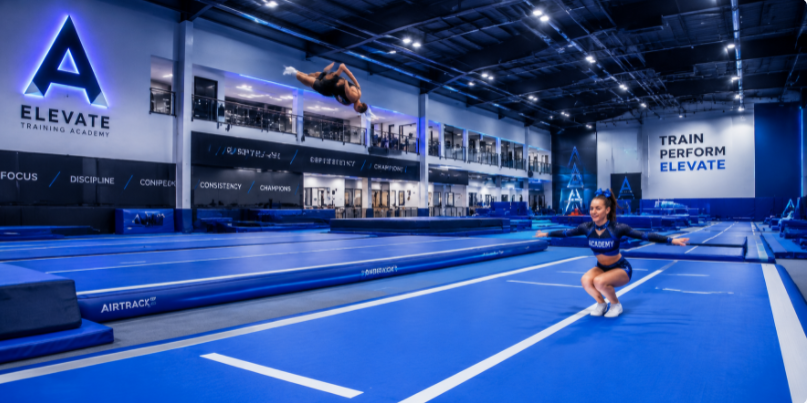
Managing a busy training floor means handling high-impact energy every single hour. Dozens of athletes rotate through tumbling passes, cheer stunts, and gymnastics drills. The energy in the room is fantastic, but the wear and tear on your equipment is relentless. When you run a large sports academy, standard retail gear simply cannot keep up with this level of daily volume.
To keep your classes running safely and efficiently, you need equipment designed for heavy commercial use. Navigating the big air track wholesale market effectively changes the game for large-scale operations. Bulk procurement allows you to outfit an entire facility with professional-grade gear while keeping equipment budgets under control.
This guide breaks down everything facility managers and academy buyers need to know about sourcing wholesale air track mats in bulk. You will learn how to evaluate material engineering, navigate international shipping logistics, and make procurement choices that deliver true long-term performance.
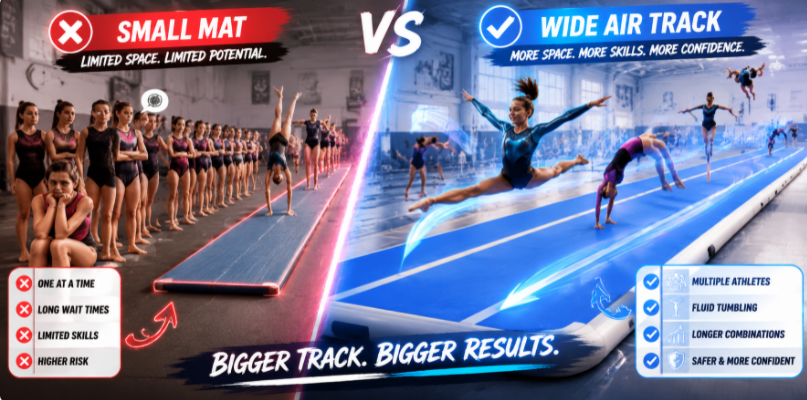
Large academies face unique pressures that small home setups or single-coach studios never encounter. Your training floor sees continuous foot traffic. Athletes of completely different weights and skill levels share the same surfaces back-to-back. Class schedules run on tight timelines with zero room for equipment breakdowns or slow resets.
When facilities try to scale up using standard, consumer-oriented mats, they quickly run into major operational bottlenecks. Smaller, thinner mats mean that athletes spend more time waiting in lines instead of practicing skills. Even worse, limited runway length forces advanced tumblers to shorten their strides or hold back their power. This mental block slows down technical progress and increases the risk of injury due to awkward, cramped landings.
Investing in high-performance oversized mats directly solves these layout challenges. They provide the complete runway distance required for multi-skill combinations, improve the flow of large groups, and offer a much wider safety margin for elite athletes. For an academy preparing competitive cheer squads or artistic gymnastics teams, moving to scaled-up equipment is a necessary step to support advanced athletic development.
Many academies start out by buying a few retail mats to test the waters. However, they soon discover that residential gear breaks down under commercial traffic. Seams begin to leak, surfaces lose their grip, and internal pressure fluctuates constantly. This forces businesses into a frustrating cycle of frequent replacements and unexpected costs. Recognizing these commercial realities early helps you make smarter purchasing decisions from the very start.
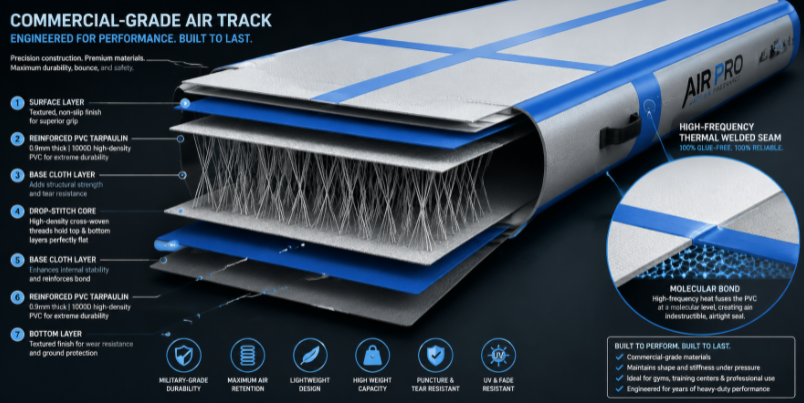
Not all inflatable training surfaces are built the same way. A true commercial-grade big air track stands apart because of how it is engineered from the inside out. To ensure your investment survives years of intense pounding, you need to look closely at the materials and construction techniques used by the manufacturer.
The core of any high-quality air track relies on drop-stitch technology. Inside the mat, thousands of high-tensile polyester threads connect the top and bottom fabric layers perfectly. When the mat is inflated to high pressure, these internal threads pull tight, preventing the surface from bubbling or bowing out. This creates a completely flat, uniform platform that behaves exactly like a traditional spring floor.
Surrounding this drop-stitch core is the outer skin, which must withstand continuous friction and impact. Commercial tracks utilize heavy-duty, double-wall PVC tarpaulin with a minimum thickness of 0.9mm. This material includes an internal fiber mesh layer that prevents stretching or tearing under immense pressure. The top surface should feature an anti-slip, matte finish so that athletes maintain excellent traction even when their hands and feet get sweaty.
The way those PVC sheets are joined together is the single most critical factor determining the lifespan of your equipment. Cheap retail mats rely on industrial liquid glue to hold their seams together. Over time, the constant impact from landings creates micro-vibrations that crack the glue. Changes in gym temperature and humidity cause these glued seams to fail, resulting in slow air leaks that are incredibly difficult to repair.
In contrast, a premier commercial air track supplier will use high-frequency thermal welding. This advanced process melts the overlapping PVC layers together, fusing them into a single, seamless, and virtually indestructible bond. A heat-welded seam will never peel, crack, or leak air, even after years of heavy commercial traffic.
When you weigh the initial purchase price against how many years the equipment remains operational, the importance of long-term value becomes very clear. Budget options might save money upfront, but their fast degradation rate makes them a liability for busy facilities.
| Specification Feature | Consumer/Retail Grade | Commercial/Wholesale Grade |
|---|---|---|
| Material Thickness | 0.5mm to 0.7mm standard PVC | 0.9mm to 1.2mm reinforced PVC tarpaulin |
| Seam Construction | Industrial liquid glue | High-frequency thermal heat welding |
| Internal Thread Count | Low-density linear drop-stitch | High-density cross-woven drop-stitch |
| Daily Usage Rating | 1–2 hours of light residential use | 8+ hours of continuous high-impact training |
| Valve System | Basic plastic screw valves | Industrial Bravo valves with lock-in safety |

Finding a reliable source for bulk gymnastics air tracks requires stepping away from consumer retail platforms and looking directly toward specialized commercial channels. Dealing with factory-direct suppliers gives you access to commercial-grade materials, better customization options, and significant cost savings.
When evaluating potential suppliers, it is important to filter out third-party middlemen or dropshippers who simply rebrand consumer mats. Look for established manufacturers who have a proven track record of supplying large sports clubs, cheer federations, and professional gymnastics centers. A true commercial partner should easily provide independent material safety certificates (such as CE, RoHS, or REACH compliance) to prove their PVC is non-toxic and lead-free.
Understanding the underlying rules of bulk buying is essential before entering negotiations. Wholesale pricing operates on tiered volume structures: the larger your order, the lower your cost per unit. However, you must also look closely at shipping terms, manufacturing lead times, and import duties to calculate your true total landed cost.
Expert Procurement Tip: When requesting wholesale quotes, always ask for the specific incoterms being used. For instance, FOB (Free on Board) means you are responsible for freight costs from the supplier's port, while DDP (Delivered Duty Paid) means the supplier handles all shipping, customs clearance, and local delivery right to your academy doors. For most facility managers, DDP terms offer the most predictable, hassle-free budgeting experience.
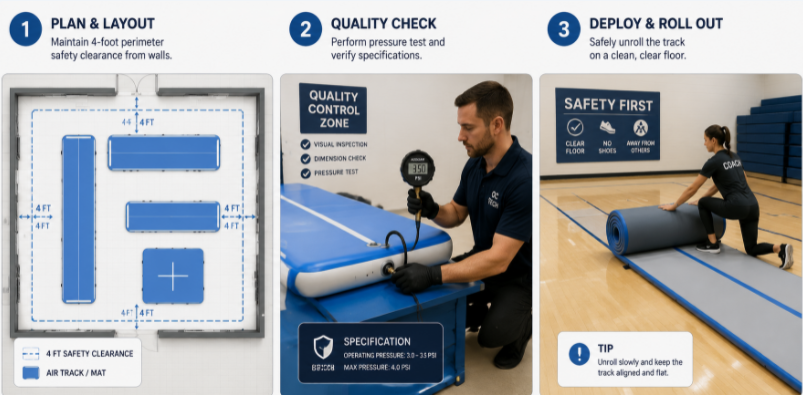
Sourcing wholesale equipment for a large training facility requires a structured approach. Treating this procurement like a standard commercial project protects your budget and ensures that the final products fit your space perfectly.
Before contacting suppliers, measure your active floor spaces precisely. Remember to leave a minimum clearance buffer of 3 to 4 feet around the entire perimeter of each air track to prevent athletes from colliding with walls, structural pillars, or other equipment. Decide on the optimal thickness for your programs: 6-inch (15cm) tracks are excellent for multi-purpose use, while 8-inch (20cm) tracks offer the extra vertical bounce needed for elite cheer and tumbling passes.
Send out a detailed Request for Quote (RFQ) specifying your required quantities, material thicknesses, seam types, and desired delivery timelines. If you are placing a very large order to outfit multiple locations, ask the supplier to send a single sample unit first. Bring this sample onto your training floor and let your coaches and senior athletes put it through intensive use for a week. Check how well it retains air pressure overnight and examine the quality of the valves and side handles.
Once you approve the sample and place your bulk order, maintain regular communication with the manufacturer's production manager. Request live photos or video updates during the manufacturing process. A reputable factory will perform a mandatory 24-hour inflation test on every single track before it enters the packaging area to ensure there are zero micro-leaks.
Wholesale shipments of oversized gymnastics mats wholesale are heavy and bulky, meaning they are usually transported via sea freight in large ocean containers. Track the shipping vessel's timeline closely so you can prepare your facility for arrival. Ensure your loading zone or parking area can safely accommodate a commercial freight truck on delivery day.
When the shipment arrives, unroll each mat and inflate it fully using the included high-velocity electric pumps. Inspect all surfaces for any scuffs or cosmetic defects that may have occurred during transit. ly, hold a brief training session with your coaching staff to review proper operating procedures:
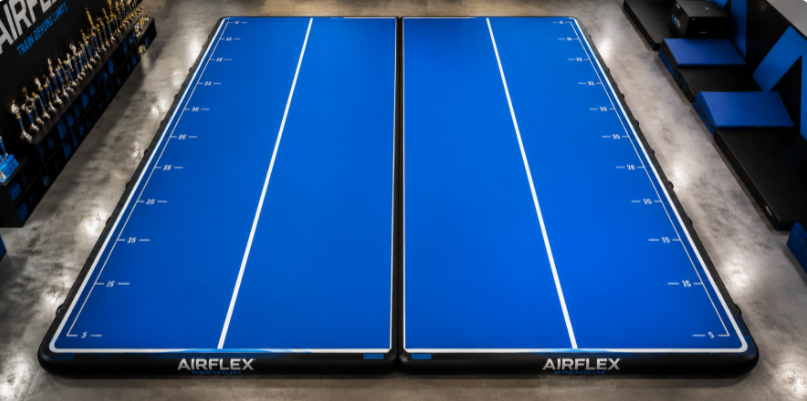
When you purchase premium equipment through wholesale channels, you gain access to factory-level design options that standard retail buyers never see. Utilizing specialized customization options allows you to tailor your gear to match your business model and facility layout perfectly.
For premier sports academies, visual presentation matters. Your training floor is a direct reflection of your brand's professionalism. Custom color coordination allows you to match your tracks to your school or team branding. Adding high-resolution team logos across the surfaces turns your equipment into a powerful marketing asset whenever parents take photos or videos of their children's achievements to share online.
Beyond visual appeal, functional design additions can significantly improve how coaches run their daily classes:
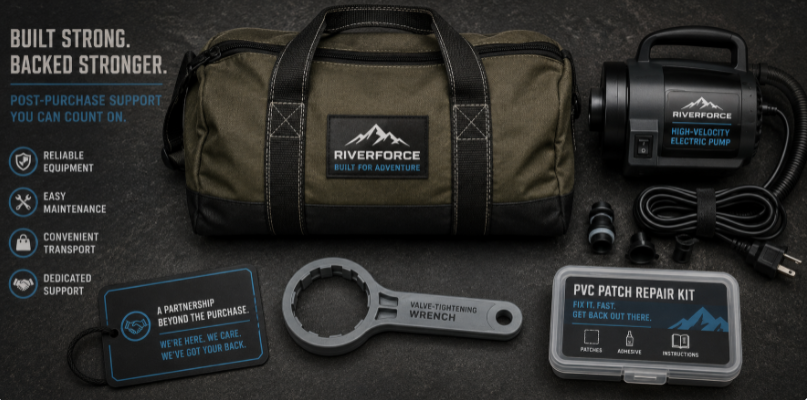
Sourcing wholesale air track mats should not be treated as a simple, one-time transaction. It is the beginning of a long-term operational partnership. As your academy expands, enrollments grow, or you open new satellite locations, having a dependable equipment manufacturer saves your management team hundreds of hours of logistical hassle.
A reliable manufacturer does more than deliver the initial tracks. They provide a continuous supply of compatible commercial hardware accessories. High-volume training facilities always need extra high-velocity electric pumps, heavy-duty transportation bags made from reinforced canvas, and specialized valve-tightening wrenches.
Furthermore, establishing a direct connection with a factory ensures that if a mat ever suffers an accidental puncture from a sharp object brought onto the training floor, you can quickly source matching PVC repair material and technical advice. This responsive support keeps your equipment down-time to an absolute minimum, ensuring your classes keep running smoothly week after week.
Upgrading your sports facility with a coordinated fleet of premium air tracks is a strategic investment in your business’s future. It addresses the daily headaches that facility managers face by maximizing usable floor space, cutting down station setup times, and giving coaches a flexible tool that easily adapts to any athlete's skill level.
By sourcing your gear through the big air track wholesale market and choosing commercial-grade surfaces built with high-frequency heat-welded seams, you protect your athletes from repetitive impact injuries while safeguarding your business from frequent equipment replacement costs.
Ultimately, high-quality equipment forms the foundation of a premium training experience. When you give your coaching staff and athletes the best tools available, you build a safer, more energetic environment where skills are mastered faster, confidence thrives, and your academy stands out as a clear leader in athletic excellence.
A: Most commercial manufacturers establish wholesale pricing tiers starting at a minimum of 5 to 10 oversized units per order. This volume allows factories to optimize production runs and makes ocean container freight cost-effective for the buyer. Some suppliers will accommodate smaller initial orders for verified sports academies looking to test quality before committing to a full facility upgrade.
A: A professional mat featuring high-frequency heat-welded seams and premium Bravo valves can easily maintain its training pressure for several days without needing a top-off. In an indoor, temperature-controlled facility, your staff will likely only need to connect the electric pump for a quick 10-second pressure refresh once a week to adjust for minor natural atmospheric fluctuations.
A: For commercial training facilities, a minimum thickness of 6 inches (15 cm) is highly recommended for multi-purpose youth gymnastics and martial arts. An 8-inch (20 cm) thickness is much better if your facility focuses heavily on elite cheer tumbling, adult acrobatics, or high-velocity tricking. The thicker profile allows heavier, advanced athletes to train at maximum power without the risk of "bottoming out" against the hard floor beneath.
A: Because the outer skin is made of completely waterproof commercial PVC tarpaulin, cleaning is simple and fast. Mix warm water with a mild, antibacterial dish soap or a specialized gym mat cleaner, and wipe the surfaces down using a wide microfiber flat mop. Avoid using harsh chemical solvents that contain high concentrations of bleach or raw alcohol, as repeated exposure can dry out the PVC material and degrade the protective UV coating over time.
A: When you use the deflation port on a high-velocity commercial electric air pump, the pump vacuums out all remaining air, drawing the mat completely flat. Once vacuum-deflated, even an oversized 20-foot track rolls up tightly into a cylinder roughly the size of a large duffel bag (approximately 3.5 feet long and 1.5 feet in diameter). This compact size allows an entire fleet of mats to be tucked away neatly into a standard equipment closet or under a storage bench when clearing the floor for other activities.


![What Is an Air Track in Gymnastics? [Complete Guide]](http://ueeshop.ly200-cdn.com/u_file/UPBF/UPBF509/2605/13/photo/WhatIsanAirTrackinGymnastics.png)


