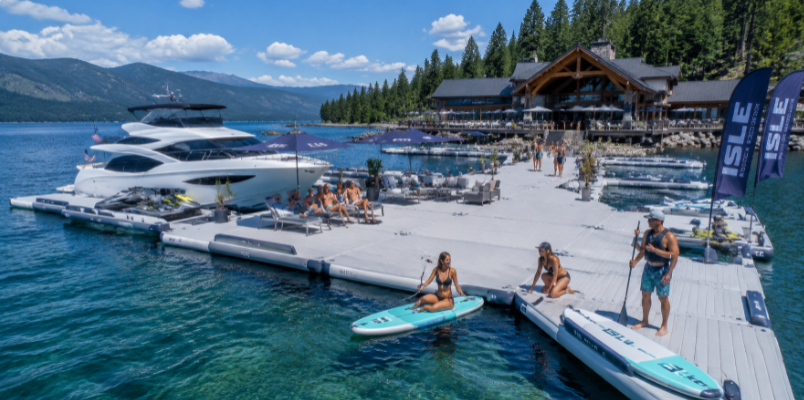
Waterfront real estate has always been valuable, but it is also limited. For decades, expanding a marina, a resort boardwalk, or a lakefront commercial venue meant dealing with heavy construction crews, environmental permits, and massive budgets. If an establishment needed more space on the water to park jet skis, set up lounge chairs, or launch paddleboards, the choices were both limited and permanent.
Today, the entire hospitality and marine industry is shifting toward a much more flexible alternative. Instead of pouring concrete or driving heavy wooden pilings into the seabed, commercial operations are looking to the water itself. They are expanding their footprints using modular, high-stability floating platforms known as wholesale inflatable docks.
Think of these platforms like high-tech, floating Lego bricks. When inflated, they create a surface as flat and rigid as a traditional wooden deck. When deflated, they roll up into compact packages that fit neatly on a standard warehouse shelf. For commercial buyers, distributors, and procurement teams, sourcing these items in bulk unlocks new ways to serve clients, boost rental revenue, and maximize real estate investments.
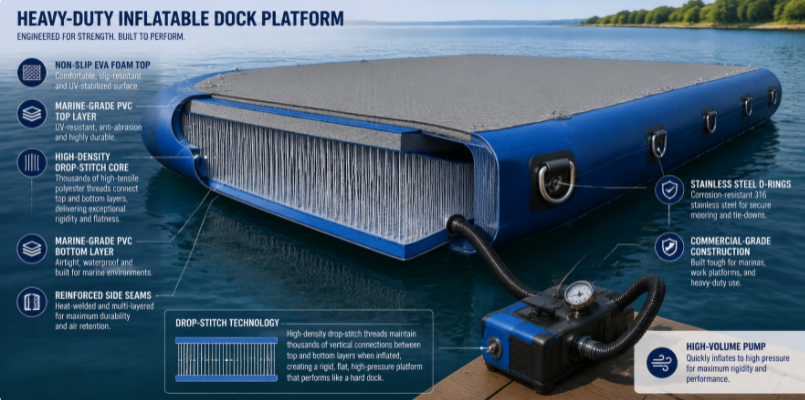
At first glance, an inflatable dock might look like a giant pool float. However, underneath the surface, the engineering is completely different. A standard pool toy is held together by air pressure alone, causing it to bend and sag when a person steps onto it. A heavy-duty inflatable dock uses an entirely different design built for intense commercial use.
The secret behind this rigid strength is drop-stitch technology. Inside every premium platform, thousands of durable polyester threads connect the top and bottom fabric layers. When the dock is inflated with a high-volume pump, these internal threads pull completely taut. This creates an incredibly rigid internal structure that distributes weight evenly across the entire surface.
On the outside, these platforms are wrapped in multiple layers of marine-grade PVC fabric. This specialized vinyl resists punctures, tears, salt water, and UV damage from long hours under the sun. The top surface is typically covered with a soft, non-slip EVA foam pad. This ensures that even when the platform is wet, users can walk, run, or practice yoga without slipping.
Equipped with heavy-duty stainless steel D-rings and reinforced handles, these docks can be safely anchored to shorelines, tied behind yachts, or linked together to create expansive custom layouts.
For commercial buyers and distributors, purchasing industrial equipment one piece at a time is rarely a smart strategy. Sourcing floating platforms through bulk procurement channels offers distinct operational advantages.
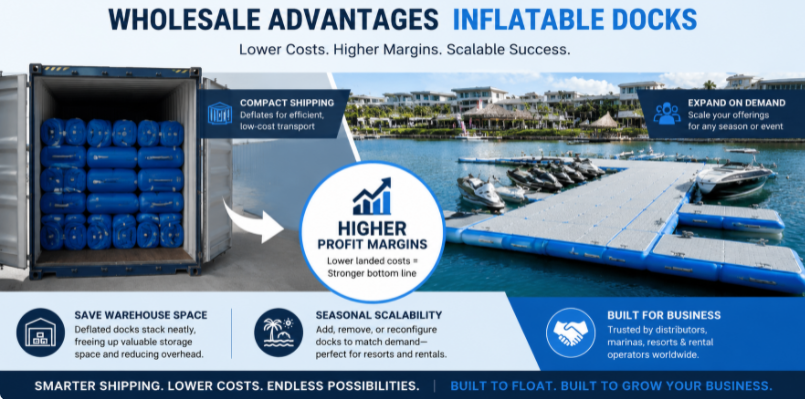
For marine supply businesses, outdoor sports retailers, and commercial distributors, adding high-demand floating assets to an inventory list opens up highly profitable revenue streams. Buying directly from a manufacturer lowers the per-unit cost significantly, allowing for competitive retail pricing while maintaining strong profit margins.
Unlike traditional rigid docks, plastic pontoon blocks, or wooden floating frames, deflated platforms are highly compact. A single shipping container can hold hundreds of deflated units. This small storage footprint significantly reduces international freight charges, customs handling fees, and local warehouse storage costs.
Commercial buyers, such as lakeside resorts, luxury hotels, and water sports hubs, often need to scale their operations up or down based on seasonal demand. Bulk procurement allows these businesses to quickly expand their usable waterfront during busy summer months and store everything away safely when winter arrives.
To build a truly reliable inventory, working with a partner focused on cost-effective sourcing ensures that your initial purchase costs translate directly into long-term operational savings.
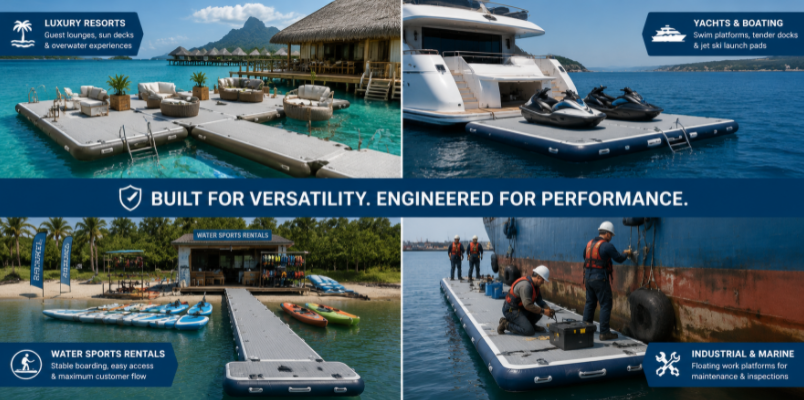
The beauty of a modern floating platform is its incredible versatility. Because these structures can support thousands of pounds without sagging, they are used across a wide variety of commercial sectors.
Beachfront hotels use these systems to build instant over-water lounges. By connecting multiple squares together, a resort can create a floating cocktail deck, a sunbathing island, or a private massage platform right on the water. This adds a premium, high-end experience for guests without requiring permanent, costly construction permits.
An inflatable marina platform serves as an invaluable extension for busy boat docks and luxury charter yachts. Captains can tether these platforms to the back of a vessel to create a mobile swim deck, a safe launch point for scuba divers, or a designated parking area for jet skis and seabobs. This keeps the main boat deck clear of clutter and protects the yacht's hull from scratches.
For operations renting out paddleboards, kayaks, or foil boards, a commercial inflatable dock provides a perfectly stable walkway. Customers can easily step onto their watercraft without slipping or tipping over into shallow water. This improves guest safety, speeds up rental transitions, and reduces the risk of accidental equipment damage.
Beyond recreation, these platforms are highly valued as stable, floating work benches. Shipyard crews, hull cleaners, and dock repair teams use industrial-grade docks to safely hold heavy tools, generators, and paint supplies directly alongside a vessel's hull.
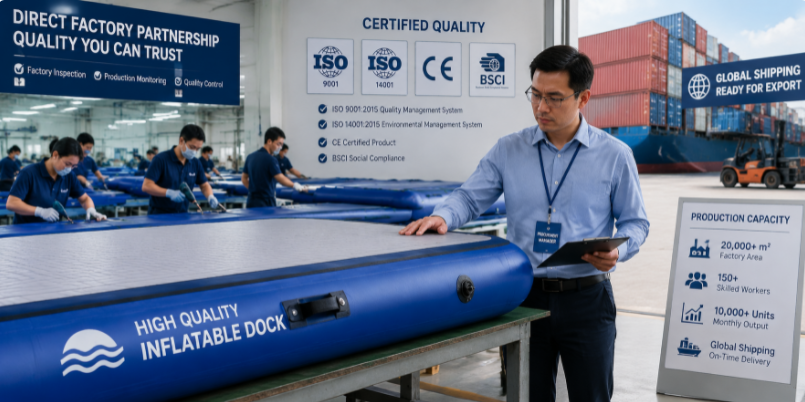
Sourcing products internationally requires careful planning. The market is full of trading companies and small workshops that assemble low-cost inflatables using basic materials. To protect a commercial budget, it is important to find a professional inflatable dock manufacturer that understands strict commercial standards.
Many online vendors are simply middlemen who buy from local factories, add a markup, and resell the items online. A direct factory partnership gives you better control over product quality, shorter production timelines, and much clearer communication when ordering custom designs. Look for suppliers who openly share videos of their production lines, hold ISO 9001 quality certificates, and welcome independent third-party factory audits.
A reliable wholesale partner must have the manufacturing capacity to handle large bulk orders without delays. Ask potential suppliers about their average monthly output and their typical turnaround times during peak spring production cycles. A top-tier factory should be able to produce, inspect, and pack a large container order within 30 to 45 days.
Importing large shipments requires navigating complex international trade rules, customs duties, and maritime freight logistics. Choose a supplier with a proven track record of shipping to your specific country. They should provide accurate HS codes, clear packing lists, and smooth freight forwarding options to make customs clearance hassle-free.
To simplify your search and find vetted suppliers, check out our curated guide on the top manufacturers currently leading the industry.
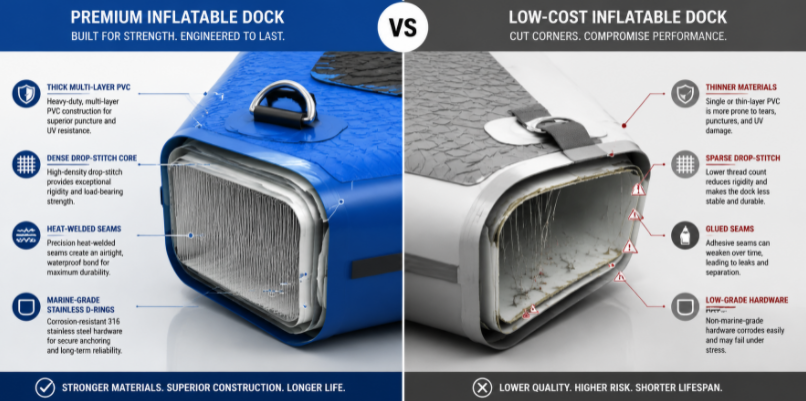
When buying in bulk, a small defect can quickly grow into a widespread inventory problem. Understanding how to judge product quality before a shipment leaves the factory floor is essential.
| Quality Checkpoint | High-End Commercial Standard | Low-Cost Alternative |
|---|---|---|
| PVC Thickness | 1.2mm to 1.5mm military-grade vinyl | 0.7mm to 0.9mm utility vinyl |
| Seam Design | Multi-layer overlap with machine heat-welding | Standard industrial adhesive glue |
| D-Ring Anchor Points | 316 Marine-grade stainless steel | Plated carbon steel or plastic |
| Internal Structure | High-density, multi-thread drop-stitch | Sparse, low-tensile interior threads |
| Air Valve Assembly | Double-seal Bravo or Halkey-Roberts valves | Generic, unbranded plastic valves |
The seams are the most critical part of any high-pressure inflatable. Cheap factories save time by using cold glue to bond the vinyl edges together. Over time, constant exposure to hot sun and salt water breaks down this glue, leading to sudden air leaks.
A premium manufacturer uses advanced thermal welding machines. This process uses precise heat and pressure to melt the vinyl edges together into a single, permanent bond. Heat-welded seams easily handle high inflation pressures and last for years without peeling.
Because these platforms sit in harsh saltwater environments for weeks at a time, every single piece of hardware must resist rust. Low-grade steel corrodes quickly, leaving ugly brown rust stains across the clean EVA foam deck. Ensure your manufacturer uses 316 marine-grade stainless steel for all D-rings, anchor plates, and ladder attachment connections.
Understanding the underlying costs of bulk production helps procurement managers negotiate better deals and spot unrealistic quotes that might indicate poor quality.
The thickness of the platform directly affects its raw material cost. A standard 6-inch thick dock uses less drop-stitch material and air volume than an extra-stable 8-inch or 12-inch commercial model. Additionally, opting for thicker, double-layer PVC walls increases the price but delivers a much tougher product that can handle daily commercial wear and tear.
Factories rely on high volume to keep their production lines running efficiently. A typical manufacturer will set an MOQ ranging from 10 to 50 units per size for standard designs. If you need a smaller test batch, you may pay a slightly higher per-unit price, while large container orders unlock the best factory volume discounts.
A complete wholesale package includes more than just the floating platform. It typically comes with heavy-duty storage bags, high-pressure hand pumps or electric inflation tools, and complete repair kits.
When comparing quotes, always confirm the international shipping terms (Incoterms). A FOB (Free on Board) quote means you are responsible for freight charges from the supplier’s port, while a CIF (Cost, Insurance, and Freight) quote includes delivery to your local destination port.
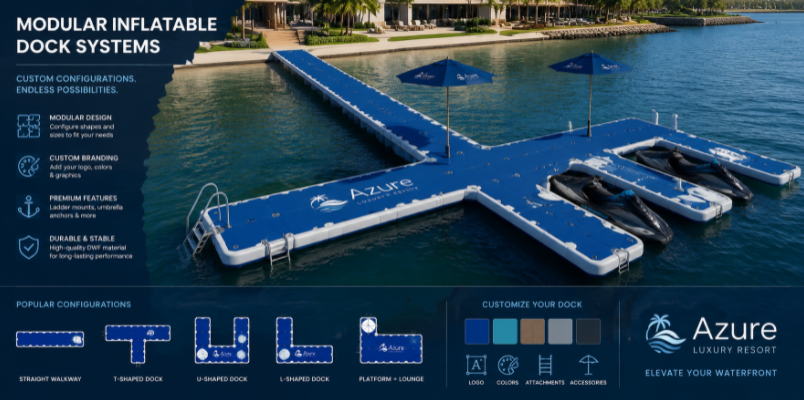
In a competitive market, selling standard, generic products can limit your business growth. Partnering with a factory that provides original design manufacturing (ODM) services allows you to build a unique product line that stands out.
For commercial resorts, rental hubs, and private yacht fleets, having matching, branded equipment looks incredibly professional. A top-tier manufacturer can print high-resolution corporate logos, specific brand colors, and custom safety warning labels directly onto the PVC fabric or the non-slip EVA deck pads.
Different waterfront setups require different shapes. A factory can customize your platforms to fit your exact space requirements, whether you need long, narrow floating walkways, large T-shaped jet ski docks, or specialized platforms with built-in cutouts to hold kayaks safely.
You can customize your bulk order by adding unique functional upgrades. This includes adding built-in velcro connection strips to link multiple docks seamlessly, heavy-duty swim ladder mounts, built-in cooler holders, or integrated structural anchor lines for securing umbrellas and storage boxes.
To explore the full business value of custom shapes, colors, and branding options, read our comprehensive guide on customization options.
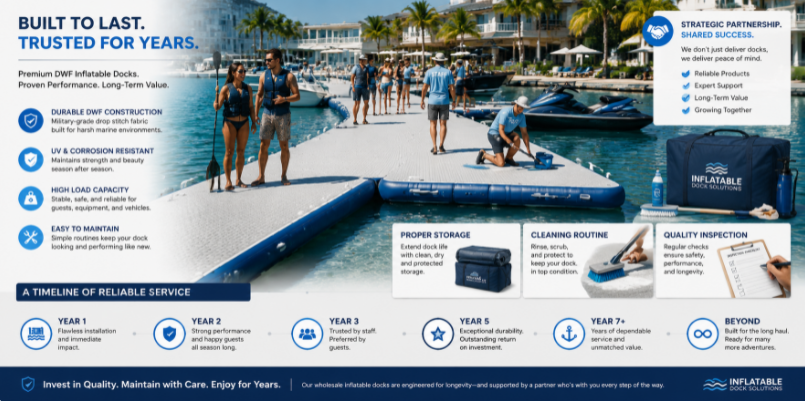
Bulk international purchasing offers great rewards, but it also comes with common supply chain risks. Knowing how to spot these challenges early keeps your procurement process smooth and cost-effective.
A common issue in bulk manufacturing is quality drift. This happens when the initial factory sample looks perfect, but the final bulk units use cheaper internal threads or thinner foam pads to cut costs.
Many buyers wait until early spring to place orders for the upcoming summer rush. This causes factory production lines to clog, leading to missed deadlines and delayed deliveries that can hurt your seasonal sales.
Large, heavy pallets can cause unexpected expenses if your shipping paperwork contains errors or missing certifications.
Moving from a basic, transactional relationship to a true strategic partnership with a manufacturer helps secure stable pricing, priority production spots, and reliable product quality for years.
Do not rely on quick, vague text messages for complex orders. Use clear, organized emails or shared design sheets to document every detail of your product requirements. Respect the factory's local time zone and holiday schedules, especially during major annual factory closures like Chinese New Year.
Factories love predictable schedules. If you can provide a reliable annual ordering plan instead of sudden, erratic requests, the manufacturer is much more likely to offer you lower pricing, protect your territory from competitors, and prioritize your orders during their busiest production months.
When your clients or field teams notice a way to improve the design—such as moving a carrying handle or reinforcing a specific D-ring—share that feedback directly with the factory engineering team. A forward-thinking manufacturer welcomes this data and will gladly update your future production runs to make your products even more competitive.
Sourcing high-quality floating platforms in bulk is one of the smartest ways for modern B2B buyers to grow their business. Whether you are expanding a luxury resort's waterfront, equipping a busy commercial marina, or building a profitable distribution network, these versatile platforms deliver outstanding return on investment.
By choosing a trusted, direct factory partner that uses heavy-duty drop-stitch technology and advanced heat-welded seams, you ensure your equipment stays safe, reliable, and durable. Taking the time to verify supplier credentials, plan your ordering schedules early, and protect your inventory with clear quality standards gives you a powerful competitive edge on the water.
A: When built with heavy-duty PVC fabric and advanced heat-welded seams, a commercial platform can easily last between 5 to 10 years. Its actual lifespan depends on UV exposure, proper cleaning habits, and safe off-season storage.
A: Premium docks feature built-in pressure relief valves. When hot sunshine causes the air inside the dock to expand, the safety valve automatically releases small amounts of excess pressure. This protects the internal drop-stitch threads and welded seams from over-inflating or tearing.
A: While they are built with marine-grade PVC and rust-resistant 316 stainless steel, it is best not to leave them in the water year-round. To keep them in top condition, pull the platforms out every few weeks to rinse away salt buildup, barnacles, and algae growth.
A: Standard manufacturing takes about 30 to 45 days after your deposit is confirmed. International ocean freight shipping can add another 30 to 45 days depending on your target destination port, so it is best to plan your orders 3 to 4 months ahead of your peak season.


![What Is an Air Track in Gymnastics? [Complete Guide]](http://ueeshop.ly200-cdn.com/u_file/UPBF/UPBF509/2605/13/photo/WhatIsanAirTrackinGymnastics.png)


