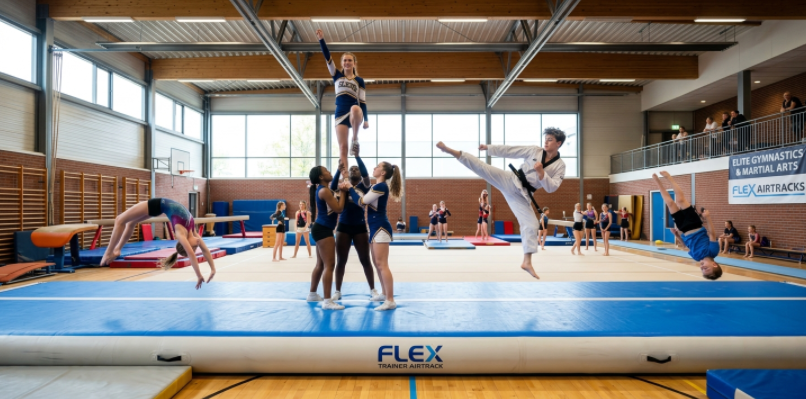
If you're in the business of importing or sourcing inflatable products, particularly gymnastic mats, you’ve likely come across the term "airtrack." These inflatable mats have become incredibly popular due to their versatility and high-performance benefits. In this article, we'll explore what an airtrack is, how it’s made, and why it’s become a favorite in various sports and fitness industries. Whether you're in the market for an airtrack for your business or just curious about how these mats work, keep reading for a comprehensive guide.
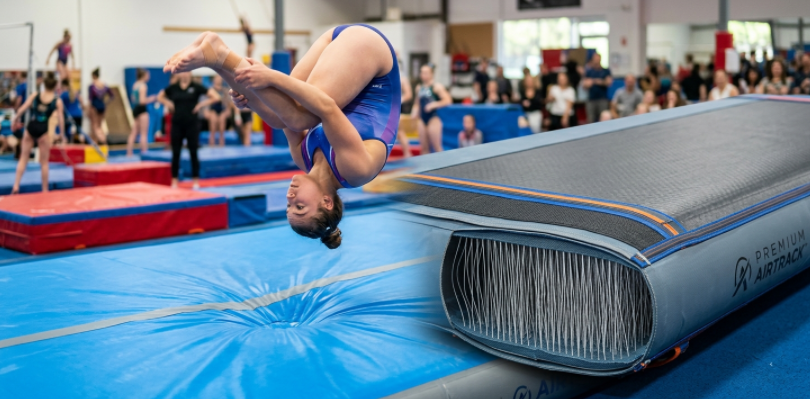
An airtrack is an inflatable training mat primarily used in gymnastics, cheerleading, martial arts, dance, and other physical activities that require a safe, soft, and resilient surface. Unlike traditional mats, airtracks are filled with air, making them lighter, bouncier, and easier to transport. This inflatable design provides a cushioned landing, reducing the impact on joints and muscles.
The unique feature of an airtrack is its ability to adjust the firmness of the surface. By controlling the amount of air inside, users can modify the bounce to match their specific training needs. This makes airtracks ideal for both beginners and advanced athletes. The mats can be used for various activities, from practicing flips and cartwheels to executing more complex stunts in cheerleading or parkour.
While you may have heard about air tracks as products mainly used in gymnastics, their versatility has made them a go-to choice in many fitness-related industries. They are often seen in commercial gyms, physical therapy clinics, and even in home setups.
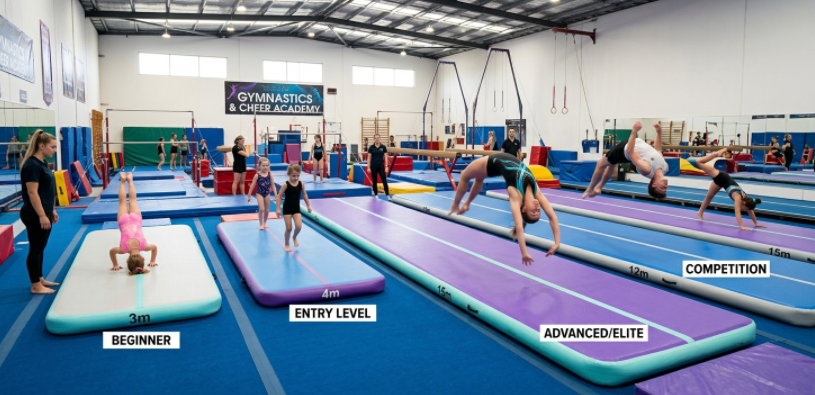
Airtracks come in different configurations, but the most common types include:
By Shape
Airtracks come in various shapes to accommodate different sports and training types. Some of the most common shapes include:
Airtracks can also vary in size, with length, width, and thickness being the most important factors to consider. When choosing an airtrack, you’ll want to select the appropriate dimensions based on your available space and the type of activities you'll be performing.
For a more detailed guide on choosing the right size and type for your needs, you can refer to our sizes & types guide.
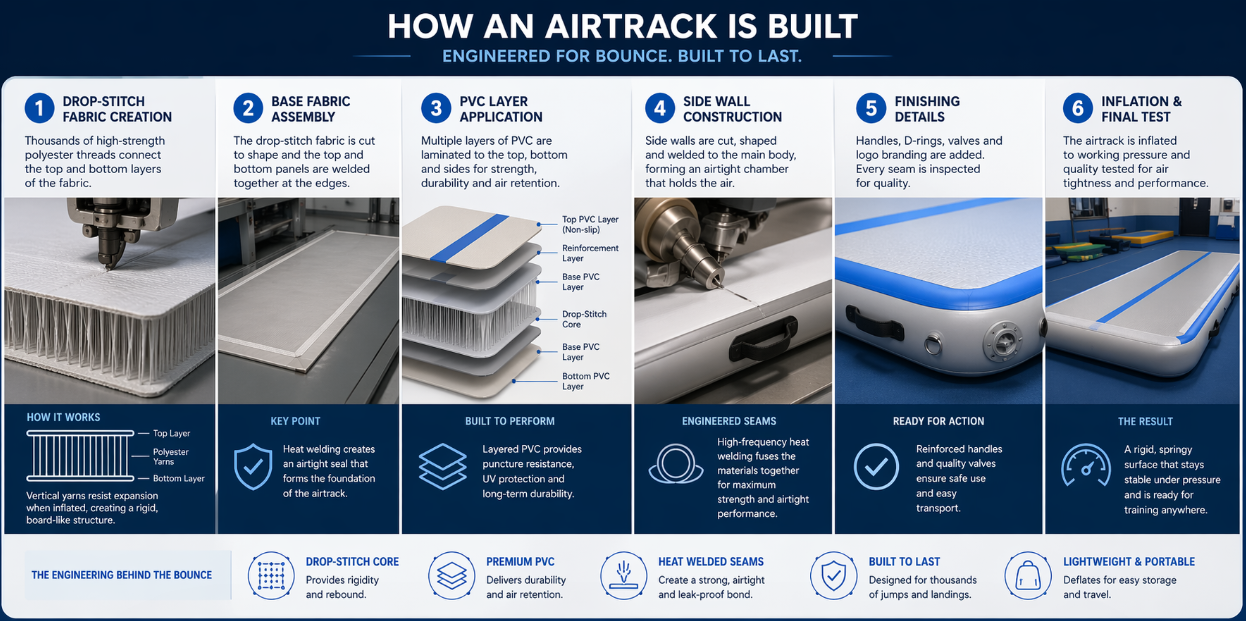
The concept of an airtrack is simple: take a durable, inflatable structure and fill it with air. This results in a soft yet resilient surface that can absorb shock, making it perfect for activities like tumbling, cheerleading, or gymnastics. But while the idea is simple, the materials and engineering behind an airtrack are what make it work so well.
Airtracks are typically constructed from a strong, airtight fabric known as drop-stitch material. This material is composed of thousands of tiny threads running vertically between two layers of PVC. This structure ensures the mat retains its shape and can withstand high pressure when inflated. Once the drop-stitch fabric is layered and stitched together, it’s sealed with an airtight valve, ensuring it won’t lose air while in use.
Additionally, airtracks are often coated with a durable PVC layer that offers resistance to punctures, abrasions, and UV damage. This makes them suitable for both indoor and outdoor use. Some commercial airtracks may also have additional protective coatings for extra durability.
The combination of high-quality materials and air pressure results in a versatile mat that can be adjusted for different training needs. The ability to control the firmness of the surface is particularly important for high-impact activities, as it helps to reduce the risk of injury during practice. Whether you're landing a somersault or jumping into a split, the cushioning provided by the airtrack absorbs impact, reducing strain on muscles and joints.
In one sentence, an airtrack is a high-performance, inflatable training mat designed to provide a safe, adjustable surface for physical activities.
To dive deeper into the materials and durability of airtracks, check out our detailed post on airtrack materials.
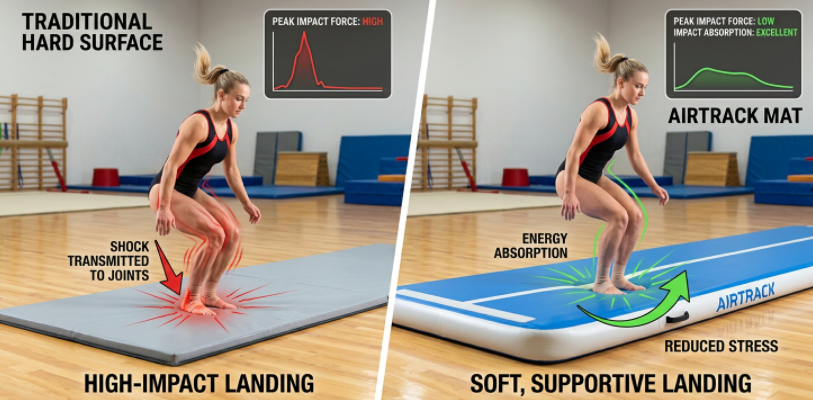
One of the most obvious benefits of using an airtrack is the soft landing it provides. Whether you’re practicing flips, stunts, or even just stretching, the airtrack's cushioned surface absorbs impact, reducing the risk of injuries like sprains or fractures. This is especially beneficial for athletes who practice high-impact routines.
Along with the softer landing, the airtrack's design promotes safer practice. The inflated mat reduces the hard impact on joints, making it easier for athletes to push themselves without worrying about damaging their bodies.
Airtracks also provide an extra bounce compared to traditional mats. By adjusting the air pressure, users can make the mat firmer or softer, providing more or less bounce as needed. This added bounce is especially beneficial for gymnastics, cheerleading, and parkour, where high jumps and flips are common.
Because airtracks are inflatable, they’re incredibly portable. They can be easily deflated, rolled up, and stored in small spaces, making them a great choice for businesses or individuals with limited storage. Whether you're setting up for a competition, practice session, or just need to store your equipment, the portability of an airtrack makes it much easier to manage.
Let’s not forget that airtracks are just plain fun! The combination of safety, bounce, and comfort makes them enjoyable for athletes of all ages. Whether it’s used for professional training or for recreational purposes, airtracks bring an element of excitement to any practice.
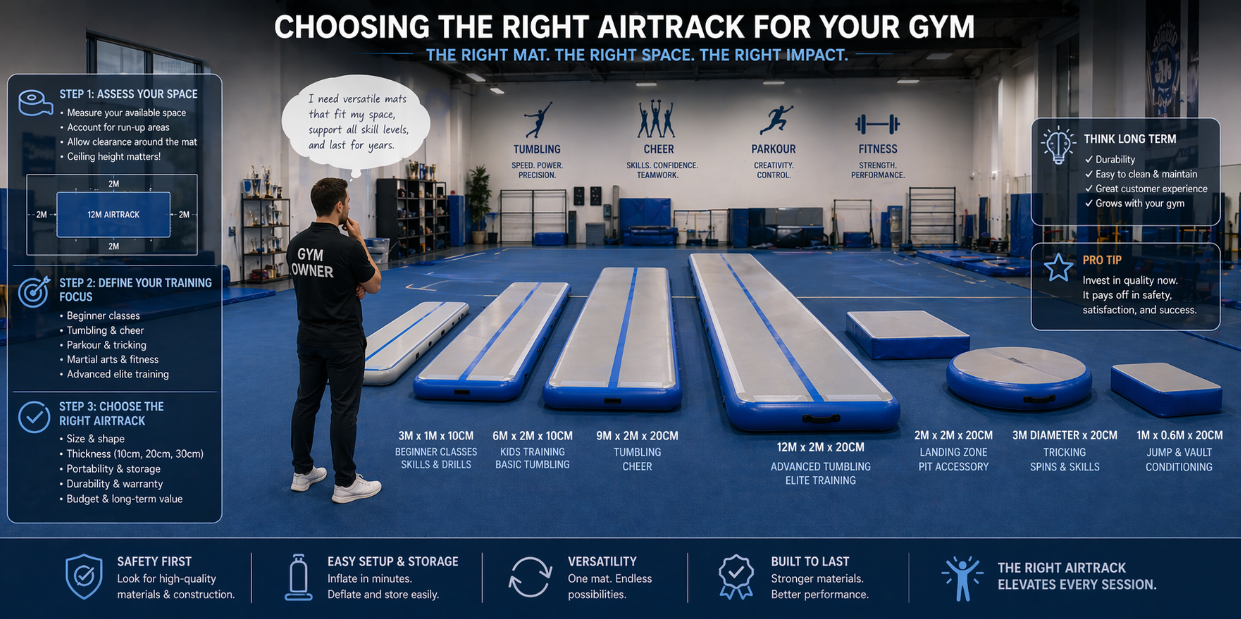
Choosing the right airtrack for your business involves considering several factors. Here's a breakdown of what to look for:
Before buying an airtrack, assess the space where you'll be using it. Whether it's a commercial gym or a smaller studio, understanding your available space will help you determine the right size.
Will your airtrack be used by beginners or advanced athletes? If it's for beginners, a softer, more forgiving mat is better. For advanced athletes, you'll want something with more bounce and durability.
Thicker airtracks provide more cushioning but may feel less responsive. If you’re practicing high-impact moves, a thicker mat may be preferable. If you need more bounce, a thinner mat might work better.
Choose an airtrack length that suits the types of training you do. Longer airtracks are ideal for gymnastics and cheerleading, where athletes often need space to run or tumble.
Ensure the airtrack is made with high-quality, durable materials. Check for features like anti-slip surfaces, safety valves, and a robust air seal.
Airtracks come in a variety of price ranges, so it’s essential to match your budget with the quality and features you're looking for. Keep in mind the ongoing maintenance costs as well, such as repairs and replacements.
For more tips on selecting the right airtrack, our sizes & types guide can provide more insights.
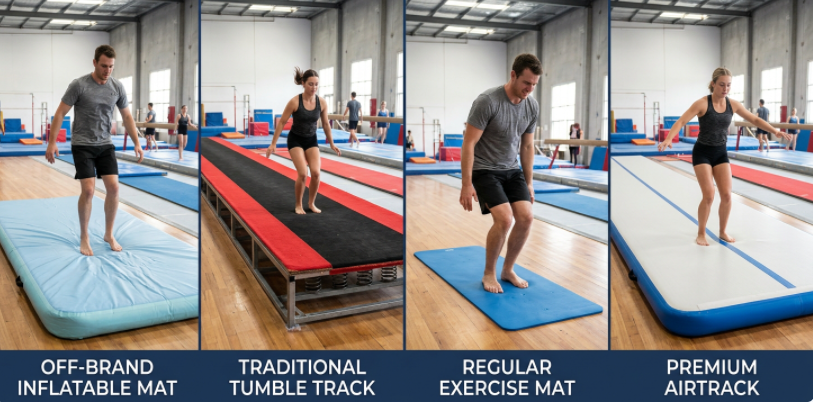
While cheaper airtracks may be tempting, they often come with durability issues. Low-quality materials can lead to faster wear and tear, reducing their lifespan. Commercial-grade airtracks, on the other hand, are built to last and offer better performance for high-use environments.
Traditional tumble tracks are great, but they lack the portability of airtracks. Airtracks are inflatable, making them easier to store and transport. They also offer a more adjustable surface, which allows athletes to fine-tune the bounce to suit their needs.
Regular exercise mats work well for stretching or light floor work, but they are not built for repeated jumps, flips, or tumbling drills. They are usually flat, thin, and firm, which means they absorb very little impact. That can be tough on ankles, knees, and wrists over time.
Airtrack mats, on the other hand, act like a cushion filled with controlled rebound. They soften the landing while still giving enough support for movement. Think of a regular mat like a thin carpet, while an airtrack feels more like a shock absorber. For gyms, schools, and training centers, this difference matters because it improves both comfort and safety.
For buyers looking at air track mat wholesale options, this performance advantage makes airtracks a much stronger value than standard foam mats.
Hard training floors like wood, vinyl, or concrete are durable, but they are unforgiving. Every landing sends force back into the body, which increases fatigue and raises the chance of injuries. This is one reason many gyms now add commercial air track systems to their training areas.
An airtrack creates a forgiving layer between the athlete and the ground. It protects the body while still allowing strong, controlled movement. For professional facilities, it also helps athletes build confidence because they can practice new skills with less fear of hard falls.
Compared to harder surfaces, airtrack mats offer the best balance of bounce, safety, and portability, making them one of the smartest investments in modern sports training equipment.
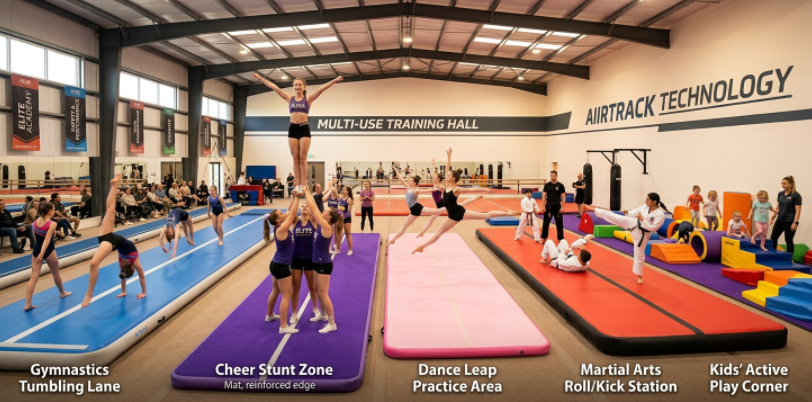
Airtracks are used in many sports and activity settings because they combine safety with performance. Their inflatable design creates a soft but supportive surface that adapts to different types of movement.
In gymnastics, airtracks are perfect for practicing cartwheels, flips, handstands, and tumbling passes. The bounce helps athletes gain lift, while the soft landing reduces stress on the body. This makes them useful for both beginners learning basics and advanced athletes refining routines.
Cheer teams use airtracks for jumps, stunts, and tumbling practice. Since cheer routines often involve repeated jumping and flipping, the extra cushioning lowers the impact on joints. This makes training safer and helps athletes practice longer.
Dancers use airtracks for leaps, turns, and choreography drills. The soft surface gives confidence when practicing high-impact moves and helps reduce fatigue during long sessions.
For martial arts and parkour, airtracks provide a safer place to practice rolls, kicks, jumps, and landings. Athletes can focus on technique without the harsh impact of harder surfaces.
Beyond sports, airtracks are popular for general exercise, kids’ play areas, and active games. They are fun, easy to set up, and suitable for many environments.
For businesses offering inflatable equipment, promoting outdoor use can expand customer interest, especially for schools, camps, and event spaces: https://aftersea.net/blog-detail/air-tracks-on-grass,-concrete-water-safety-usage-guide
This wide range of uses is one reason wholesale gymnastics airtrack mats continue to grow in demand across sports and recreation markets.
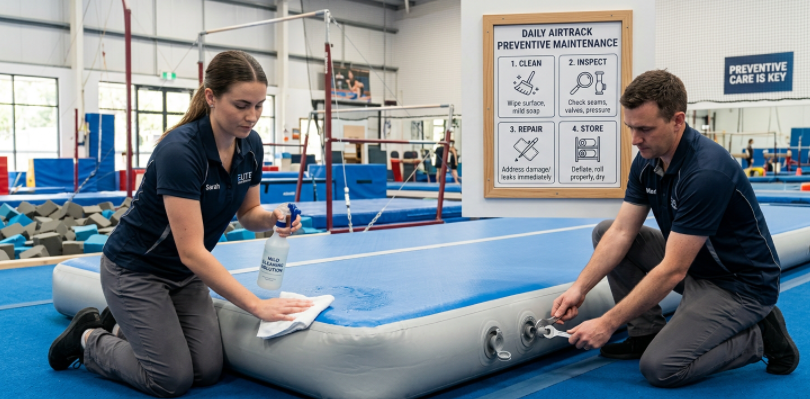
Taking care of an airtrack is simple, but regular maintenance can greatly extend its life. For businesses investing in commercial air track products, proper care protects both performance and long-term value.
Wipe the surface after use to remove dirt, sweat, and dust. Dirt can slowly wear down the PVC surface, especially in busy gyms or outdoor settings. A mild soap solution and soft cloth usually work best.
Inspect the mat often for leaks, cracks, or loose valves. Small issues can quickly turn into larger repairs if ignored. Catching them early saves time and money.
Every product comes with recommended inflation pressure and cleaning instructions. Following these guidelines helps the mat perform correctly and prevents unnecessary wear.
If a puncture appears, repair it right away using the provided patch kit. Quick repairs stop air leaks from spreading and keep the mat usable.
Avoid dragging the airtrack over rough surfaces or using sharp objects nearby. Proper handling helps maintain the material and protects the seams.
Create a regular schedule for inspection and cleaning. A simple maintenance routine can add years to the life of airtrack mats.
For a detailed care guide, check these helpful maintenance tips: https://aftersea.net/blog-detail/air-track-maintenance-cleaning-guide-keep-your-mat-fresh-durable
A high-quality airtrack can last 5 to 10 years or longer with proper care. Commercial-grade models often last longer because they use stronger materials.
Use the included electric pump to inflate the mat to the recommended pressure. To deflate, open the valve and let the air escape before rolling it up.
Yes. Most airtracks can be used outdoors on grass or smooth surfaces, but rough ground can damage the material.
Yes, when used correctly. The soft surface helps reduce injury risk, making them safer than hard floors for supervised play and training.
It depends on the size and build, but most commercial air track products can support several hundred pounds.
Yes. Many air track mat wholesale suppliers offer custom sizes, colors, and branding for business buyers.
Use the repair kit to patch the puncture quickly. Small punctures are usually easy to fix.
Most airtracks are water-resistant because they use PVC materials, but they should still be dried before storage.
Shipping usually takes 15 to 45 days depending on production time, order size, and shipping method.
Most suppliers offer warranties ranging from 1 to 3 years. Warranty terms vary based on the manufacturer.
An airtrack is more than just an inflatable mat—it is a versatile training tool that improves safety, performance, and convenience across many activities. For businesses sourcing inflatable sports products, investing in quality airtrack mats can open doors to growing demand in gymnastics, cheerleading, fitness, and recreation.
Whether you're searching for air track mat wholesale, comparing commercial air track options, or sourcing wholesale gymnastics airtrack mats, understanding the product is the first step to making smarter buying decisions.
The right airtrack offers the perfect mix of bounce, durability, and portability—helping your business deliver better value while meeting the needs of today’s active training market. Contact us for the quote now.


