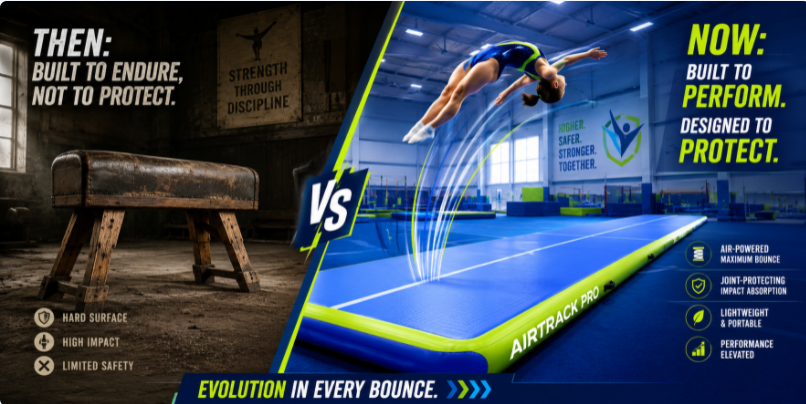
Gyms are changing. If you step into a modern facility, you probably will not just see heavy wooden vaulting horses or thick, dusty foam pits anymore. Instead, you are highly likely to see long, brightly colored inflatable tracks that look like giant pool floats but act like high-powered springboards.
These tracks have fundamentally changed how athletes train. They absorb the heavy impacts that hurt ankles and wrists, while giving tumbling passes an extra bit of height. But if you run a facility, shopping for an air track mat is not quite the same as picking out standard floor mats. The choices you make around length, thickness, and inner construction will directly impact safety, performance, and your business budget. Choosing the right one takes a bit of strategy.
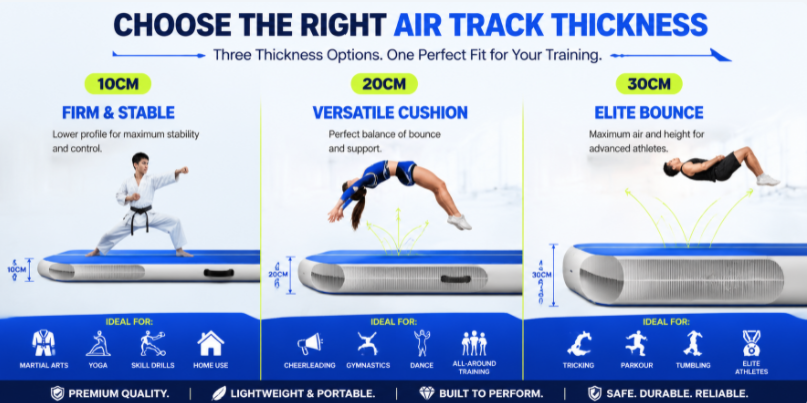
Size is the absolute first thing to iron out. If a track is too short, your athletes will run out of room before they finish their tumbling pass. If it is too thick, it might feel like a bouncy castle instead of a stiff floor. Balancing these dimensions requires a clear understanding of who will be using the gear.
Thickness changes everything about how a commercial air track performs. It dictates the bounce, the stability, and the level of joint protection.
A standard residential mat might only stretch 10 feet, but a professional facility needs real estate. Most commercial tracks run anywhere from 20 feet (6 meters) up to 50 feet (15 meters) or more.
A 20-foot track works beautifully for small studios or for practicing isolated skills like a round-off or a single flip. However, if your team is working on full tumbling passes—like a round-off back handspring layout—you will likely want at least a 40-foot run so athletes have enough runway to build momentum and decelerate safely. For a deeper breakdown of exact measurements, checking out a dedicated size guide can keep you from ordering a size that does not fit your floor plan.
From a distance, almost every inflatable gymnastics mat looks identical. They all have smooth PVC skins and colorful sidewalls. But the real difference between a mat that lasts for five years and one that splits down the middle in five weeks lies entirely inside the fabric.
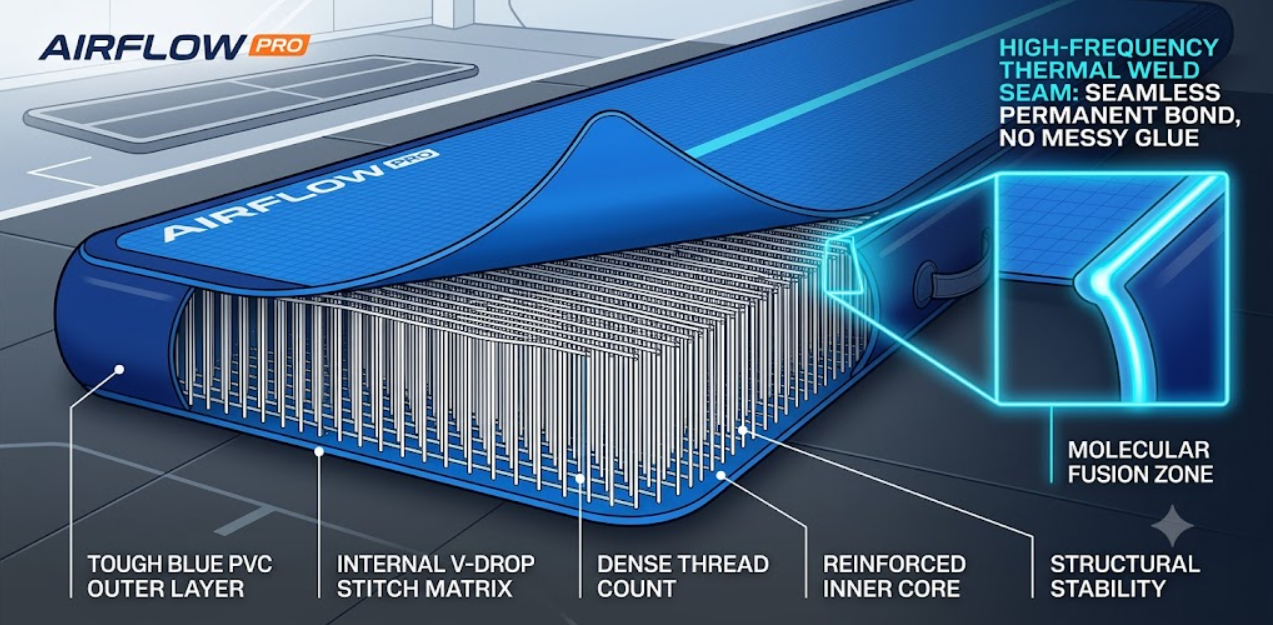
An air track is not a balloon; it cannot expand into a round tube when filled with air. It must stay perfectly flat and uniform. This is achieved through Double-Wall Fabric, which utilizes tens of thousands of nylon threads connecting the top and bottom PVC layers.
Cheap mats use low-density stitching. When you pump them up to high pressures, they bow, twist, or create hard lumps. A premium track uses high-density, V-drop stitch technology. This keeps the deck completely flat from edge to edge, ensuring that an athlete landing on the very corner gets the exact same bounce as someone landing dead center.
How those fabric layers are joined matters immensely. Historically, factories used industrial glue to seal the edges of an air track for gym use. While glue is fine for occasional backyard use, it is a ticking time bomb in a commercial gym.
Gyms get warm, and air inside a mat expands when the temperature rises. Over time, that pressure, combined with constant pounding from athletes, degrades the glue. The seams start to leak, or worse, they pop entirely. High-quality manufacturers use high-frequency thermal welding. This process melts the PVC layers together to create a single, continuous bond that simply will not peel apart under heavy stress. Diving deeper into the specifics of materials and durability is highly recommended before writing any checks.
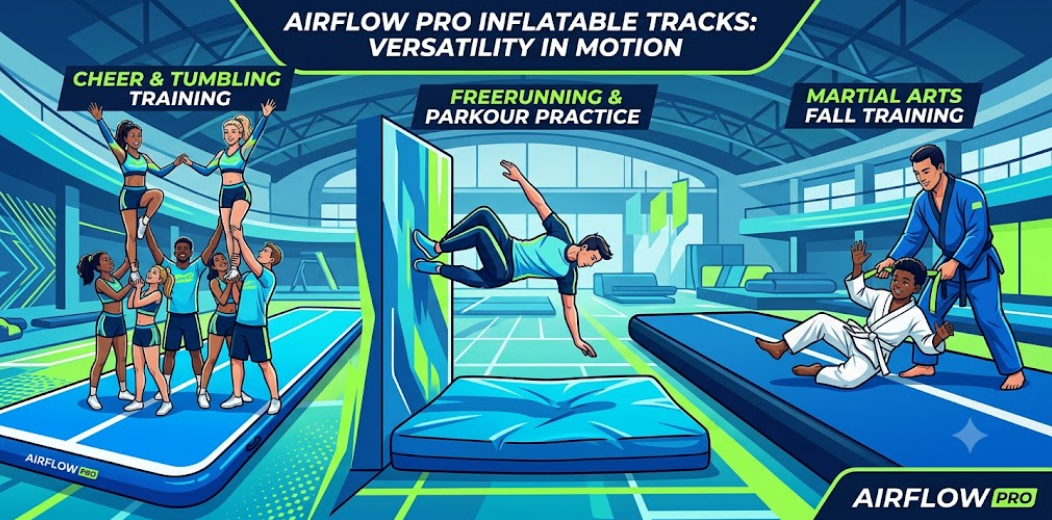
We tend to group these tracks under the umbrella of gymnastics, but their actual day-to-day utility inside a sports facility is incredibly broad. They are modular tools that can open up entirely new revenue streams for your business.
Cheer squads love these tracks because they mimic the spring floors used in major competitions while saving their flyers and tumblers from shin splints during long weekend choreo sessions. Because these mats are lightweight, coaches can easily drag them around to position them directly under stunt groups to act as extra catch-pads.
The parkour and tricking communities have exploded over the past decade, and they require unique setups. They need gear that can handle awkward, off-axis landings. A thick, slightly under-inflated air track provides a forgiving sandbox for athletes trying to figure out twisting flips without risking a trip to the emergency room.
Interestingly, these mats are popping up in places you might not expect. Mobile sensory gyms use them for therapeutic play for children with autism, as the predictable texture and deep-pressure feedback can be highly regulating. Martial arts schools use them for high-fall training. To see just how versatile these tools can be across different sectors, read about how facilities are taking them beyond gymnastics to maximize their square footage.
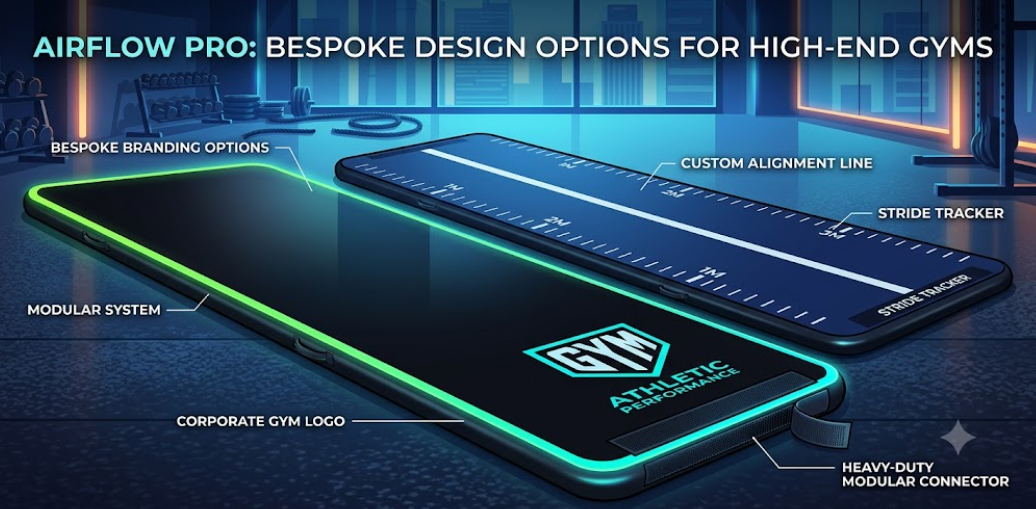
If you are running a high-end commercial gym, generic blue-and-white mats might make your space look a bit disorganized. Customizing your gear does more than just look pretty—it builds a sense of professionalism and helps protect your brand image if parents are constantly filming videos of their kids for social media.
A professional air track manufacturer should be able to match your gym’s exact color scheme. Whether you want a sleek, all-black mat with neon green trim or a bright red runway, custom colors make your facility look cohesive.
More importantly, you can customize the lines on the mat. Adding a bold center line helps young gymnasts track their alignment visually during a round-off. You can also request crosswise measurement lines to help coaches track the length of an athlete's stride or tumbling distance.
If you plan to order multiple tracks or even distribute them locally, adding your logo is a no-brainer. Ensure the manufacturer uses high-grade, UV-cured inks. Standard screen printing will crack and peel away when the mat is deflated, rolled up, and stored inside a tight bag.
One of the smartest upgrades you can make on a bulk order is adding heavy-duty Velcro strips to the ends and sides of your mats. This allows you to chain multiple short tracks together to make a super-long runway, or attach them side-by-side to create a wide square floor for group floor routines. If you are ready to explore these bespoke setups, a guide on wholesale custom tracks offers a great blueprint for structuring your factory order.
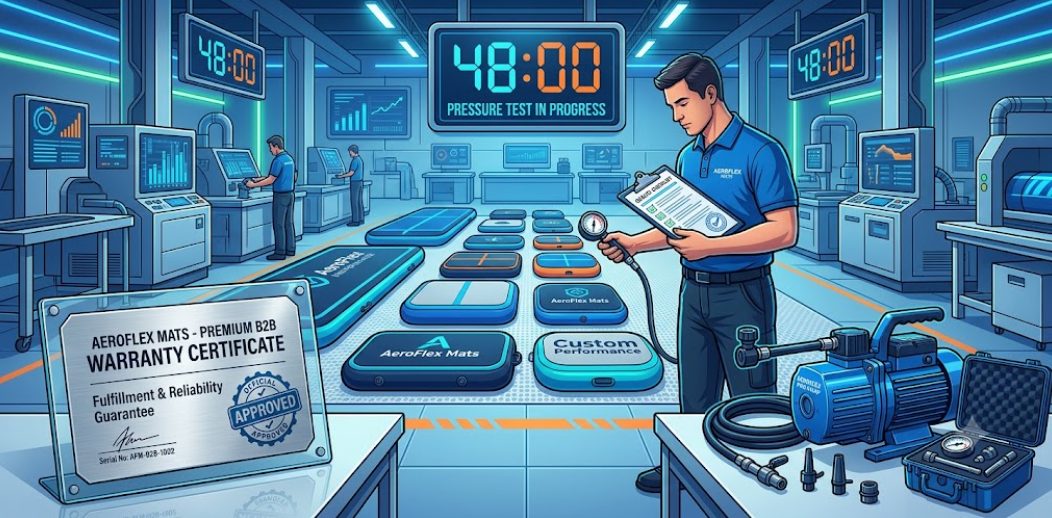
It is incredibly easy to jump online and find hundreds of cheap inflatables on generic consumer marketplaces. But for a business owner, taking that shortcut is a massive gamble. Buying directly from a dedicated manufacturer who understands commercial athletic safety changes the equation entirely.
A trading company buys from whatever factory is cheapest that week. A dedicated manufacturer owns their machinery and controls their supply chain. They run standardized pressure tests, checking every single professional air track mat for 24 to 48 hours before it ever goes into a shipping container. You get a paper trail and a level of consistency that prevents unexpected surprises when you open the boxes.
If a valve breaks on a cheap mat, you are usually out of luck. If a valve fails on a mat backed by a legitimate manufacturer, you can get a replacement part or a repair video sent over within twenty-four hours. They understand that every day your gear is out of commission is a day your classes are disrupted.
A: Maintenance is surprisingly simple. Use warm water and a mild, non-abrasive soap (like dish soap) to clean off footprints and chalk. Avoid harsh chemical cleaners or bleach, as they can slowly break down the protective UV coating on the PVC. Always ensure the mat is completely dry before rolling it up for long-term storage to prevent mold.
A: With a high-output commercial electric pump, a standard 40-foot track can be fully inflated in about 3 to 5 minutes. Deflation takes roughly the same amount of time, especially if your pump has a "vacuum" mode that actively sucks the remaining air out of the core so the mat rolls up tightly.
A: If the mat is constructed with heat-welded seams and heavy-duty 1.2mm PVC, it should easily last between 3 to 5 years under daily, high-intensity commercial use. Mats used in lower-impact environments or for younger recreational classes can easily last much longer.
A: Yes, but you need to be careful with the surface underneath. Always place a protective tarp down first to guard against sharp gravel, sticks, or glass. Also, keep an eye on the sun. The air inside the mat will expand as it gets hot outside, so you may need to release a tiny bit of air during the hottest part of the day to prevent over-pressurization.
Investing in new training surfaces is a big step for any gym, cheer school, or fitness center. The right tracks will keep your athletes safer, help them learn skills faster, and make your coaches' jobs significantly easier.
Do not settle for generic, low-grade gear that will leave your business deflated. Take the time to map out your floor plan, think about the age and skill level of your tumblers, and pick a manufacturer that values high-density construction and thermal welding. If you are ready to elevate your facility's training game, reach out to a trusted specialist today to get a quote on a custom package built precisely for your brand.


