Do inflatable gymnastics mats from China contain allergens or harmful substances? It largely depends on the factory's quality standards. While premium B2B manufacturers use non-toxic, eco-friendly Polyvinyl Chloride (PVC) and safe adhesives, low-end suppliers might use materials containing toxic phthalates, heavy metals, or high-VOC glues. To guarantee product safety for your customers, buyers must request valid third-party chemical testing reports, such as REACH (for Europe) or CPSIA (for the US), before placing a bulk order.
For B2B buyers—whether you are stocking up an Amazon storefront, outfitting a chain of gymnastics centers, or supplying yoga studios—product liability is a major concern. You need to know that the air tracks you import are safe for end-users, especially children and athletes who have prolonged skin contact with the equipment.
Ensuring your mats are free from harmful substances starts with stringent factory vetting. Don't just look at the product photos; look at the supplier's supply chain transparency. A reliable Business-to-Business (B2B) partner will proactively share information about their raw materials. Furthermore, pay attention to the "smell test" during sampling. While a faint "new plastic" scent is standard for airtight PVC products, a harsh, headache-inducing chemical odor is a glaring red flag for high Volatile Organic Compounds (VOCs). ly, be cautious of prices that seem too good to be true. Eco-friendly, phthalate-free drop-stitch materials cost more to produce; extreme discounts usually mean compromised chemical safety.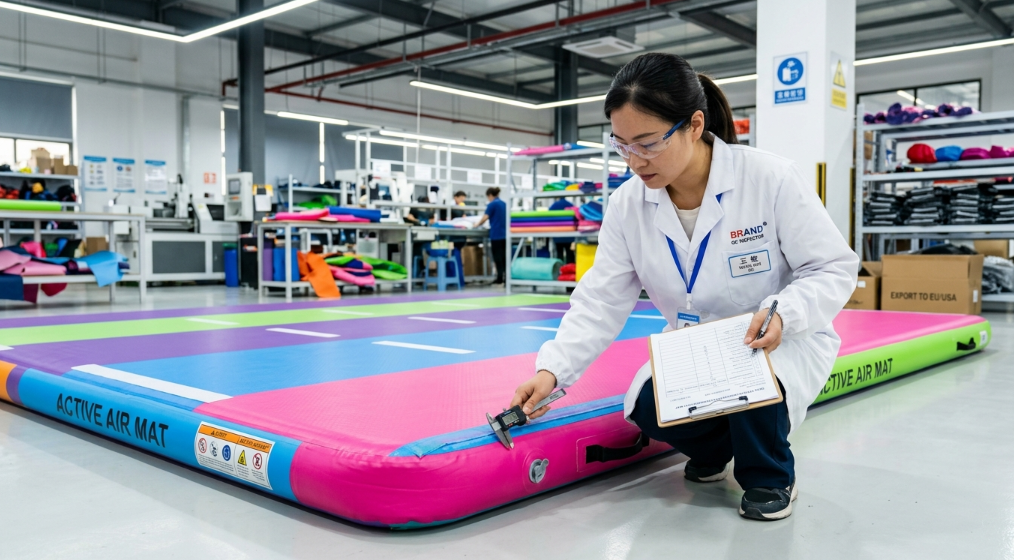
Fact Claim: Under the European Union’s REACH regulation, consumer products containing more than 0.1% of certain hazardous phthalates (like DEHP, DBP, and BBP) cannot be legally sold in the European market.[1]
Navigating international trade means navigating international safety laws. To protect your business from costly customs seizures or product recalls, you must verify that the manufacturer's materials comply with the specific regulations of your target market.
Below is a quick reference table of the essential certifications you should demand from your supplier:
| Certification | Target Region | Primary Focus | Importance for B2B Buyers |
|---|---|---|---|
| REACH | European Union | Chemical Registration & Restriction | Mandatory for EU imports; proves the absence of thousands of toxic chemicals. |
| CPSIA | United States | Consumer Product Safety (Children) | Legally required for items used by children under 12; strictly limits lead and phthalates. |
| RoHS | Global (Originated EU) | Hazardous Substances in Electronics | Crucial for the electric air pumps included with your bulk mat orders. |
| CE Mark | European Economic Area | General Health & Safety | Indicates overall conformity with EU health, safety, and environmental standards. |
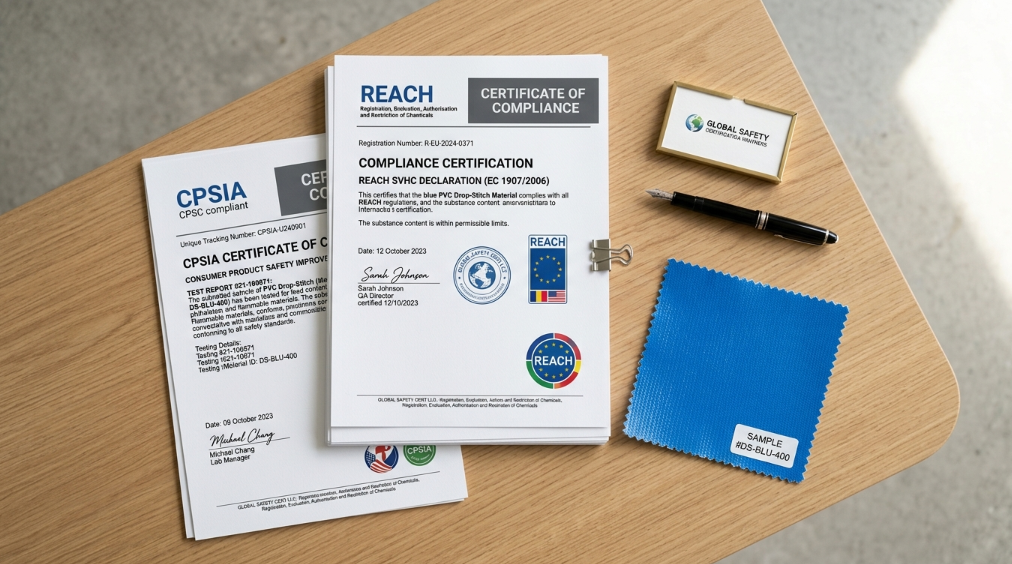
You don't need to be a chemist or hire your own lab to verify product safety—you simply need to know how to ask the factory for their existing paperwork.
When negotiating with a potential supplier, explicitly ask for a Certificate of Analysis (COA) or a third-party test report. You can use this exact phrasing in your communications: "To proceed with our bulk order, please provide a recent third-party chemical test report (such as SGS or TÜV Rheinland) verifying that your PVC and adhesives are REACH/CPSIA compliant."
When you receive the document, check three critical details:

Inflatable air tracks are predominantly constructed using PVC and a specialized "drop-stitch" fabric core. The PVC itself isn't the issue; the danger lies in the cheap chemical additives used to make the plastic flexible and the adhesives used to bind the seams.
Harmful Materials to Exclude from Your Supply Chain:

Is Your Supplier Safe? Test your B2B sourcing instincts with this quick quiz! First, if your supplier offers a price that is 40% below the market average, should you (A) buy immediately, or (B) ask for chemical safety reports? (Answer: B, because cheap PVC often contains banned phthalates). Second, if you are selling mats to a youth gymnastics club in California, which certification is most critical: (A) CE Mark, or (B) CPSIA? (Answer: B). ly, is a strong, lingering chemical smell on a new mat a sign of (A) high VOC off-gassing, or (B) high-quality drop-stitch material? (Answer: A).
Sourcing inflatable gymnastics mats from China is a highly profitable venture for B2B enterprises—provided you partner with a manufacturer that prioritizes human safety. By understanding global regulations, requesting legitimate third-party laboratory reports, and knowing exactly which harmful plastics and adhesives to avoid, you can build a reputable brand that your customers trust.
At our factory, we specialize in customizing premium, strictly compliant inflatable products for international buyers. We are fully transparent about our materials and gladly provide up-to-date testing reports. Are you ready to elevate your product line with safe, high-quality air tracks? Contact us today for a free consultation and sample request!


![What Is an Air Track in Gymnastics? [Complete Guide]](http://ueeshop.ly200-cdn.com/u_file/UPBF/UPBF509/2605/13/photo/WhatIsanAirTrackinGymnastics.png)


